What Is a Bulk Material Conveyor?
A direct answer to “What is a Bulk Material Conveyor?”: it’s a continuous mechanical handling system that moves unpackaged bulk solids—like ore, coal, clinker, grain, or aggregates—along a defined path using a powered conveying medium (most commonly a belt supported by idlers and driven by pulleys). Design and operation are guided by established standards such as the CEMA Belt Book for bulk belt conveyors and international methods for power and tension validation like ISO 5048, with pulley sizing guided by ISO 3684.
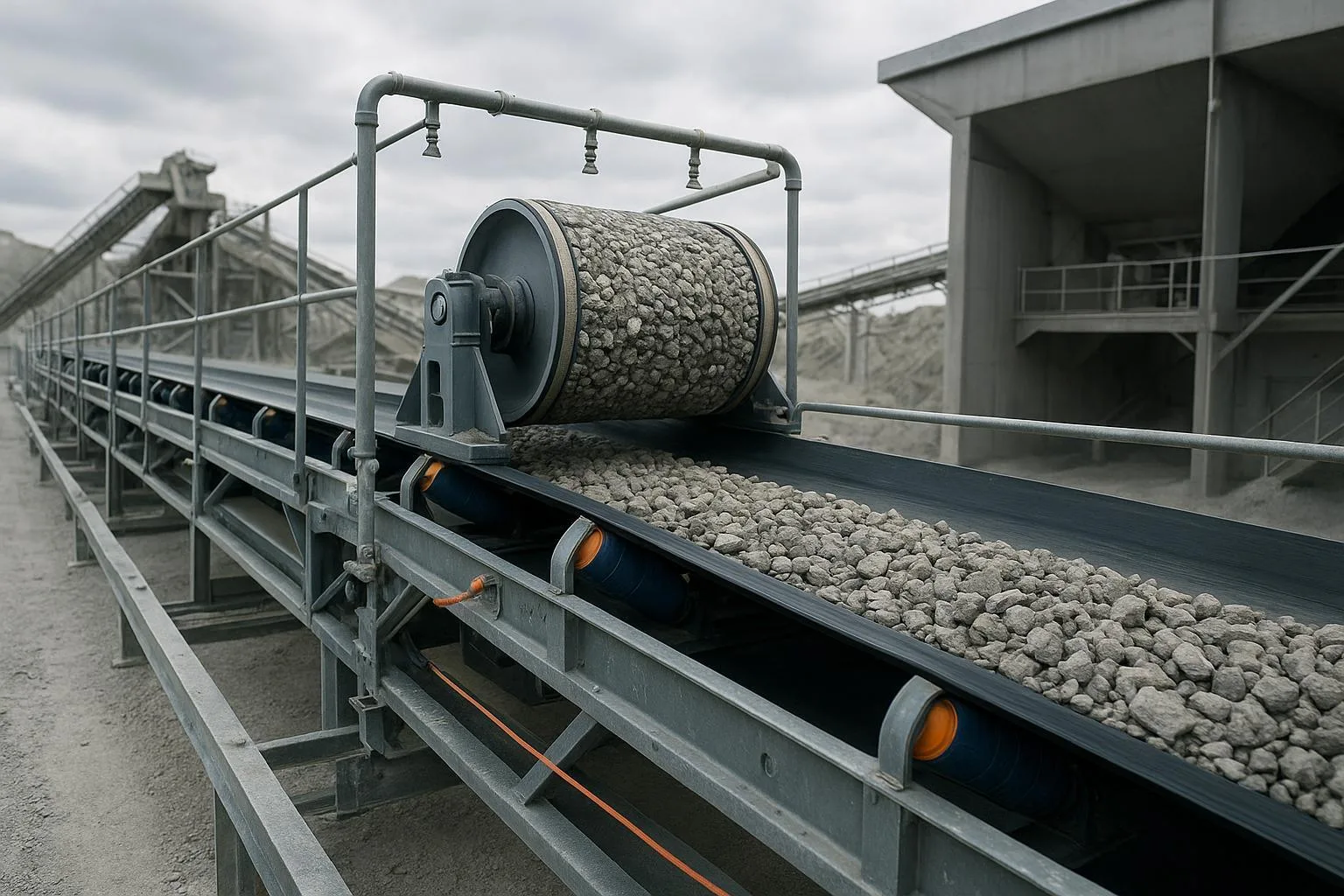
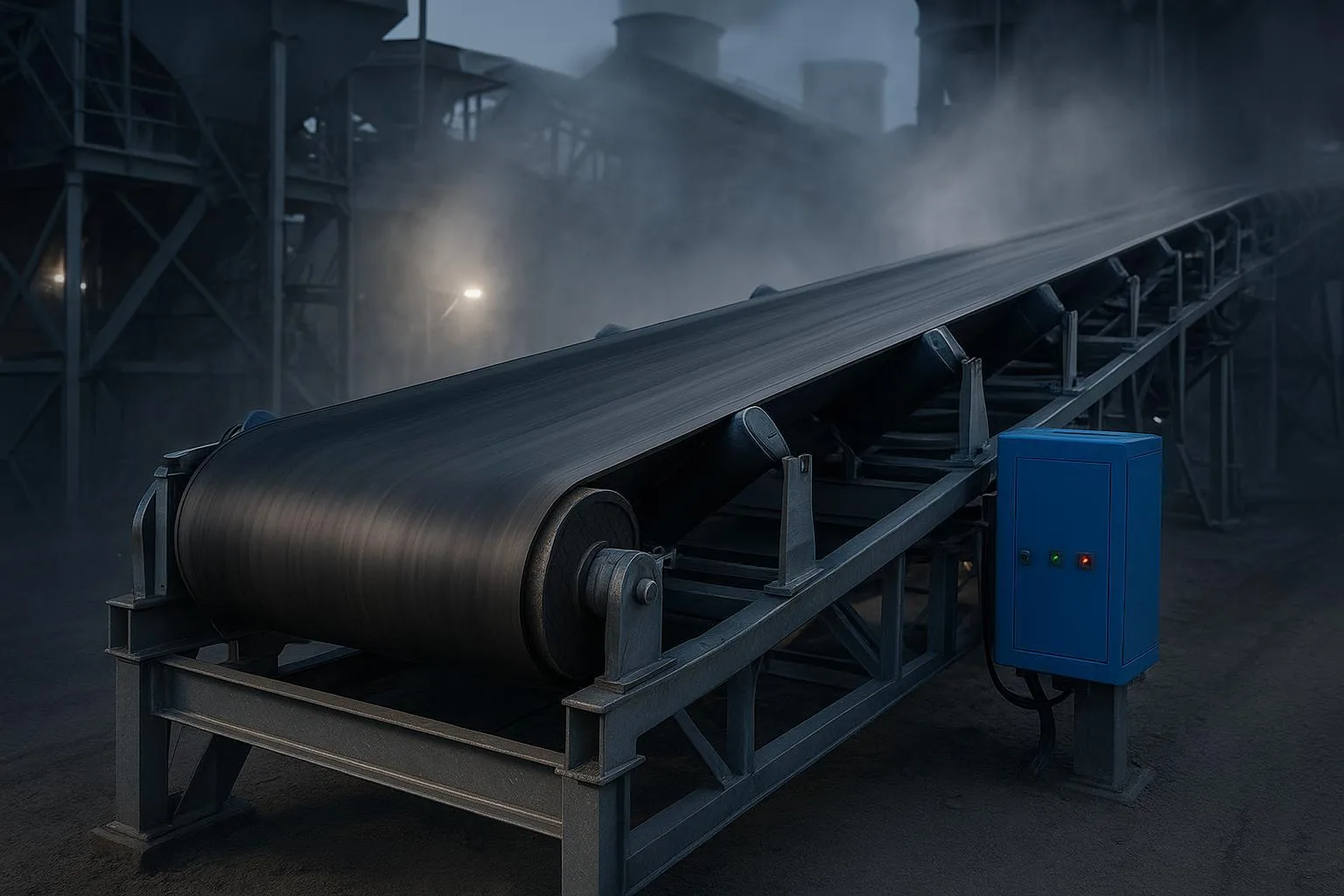
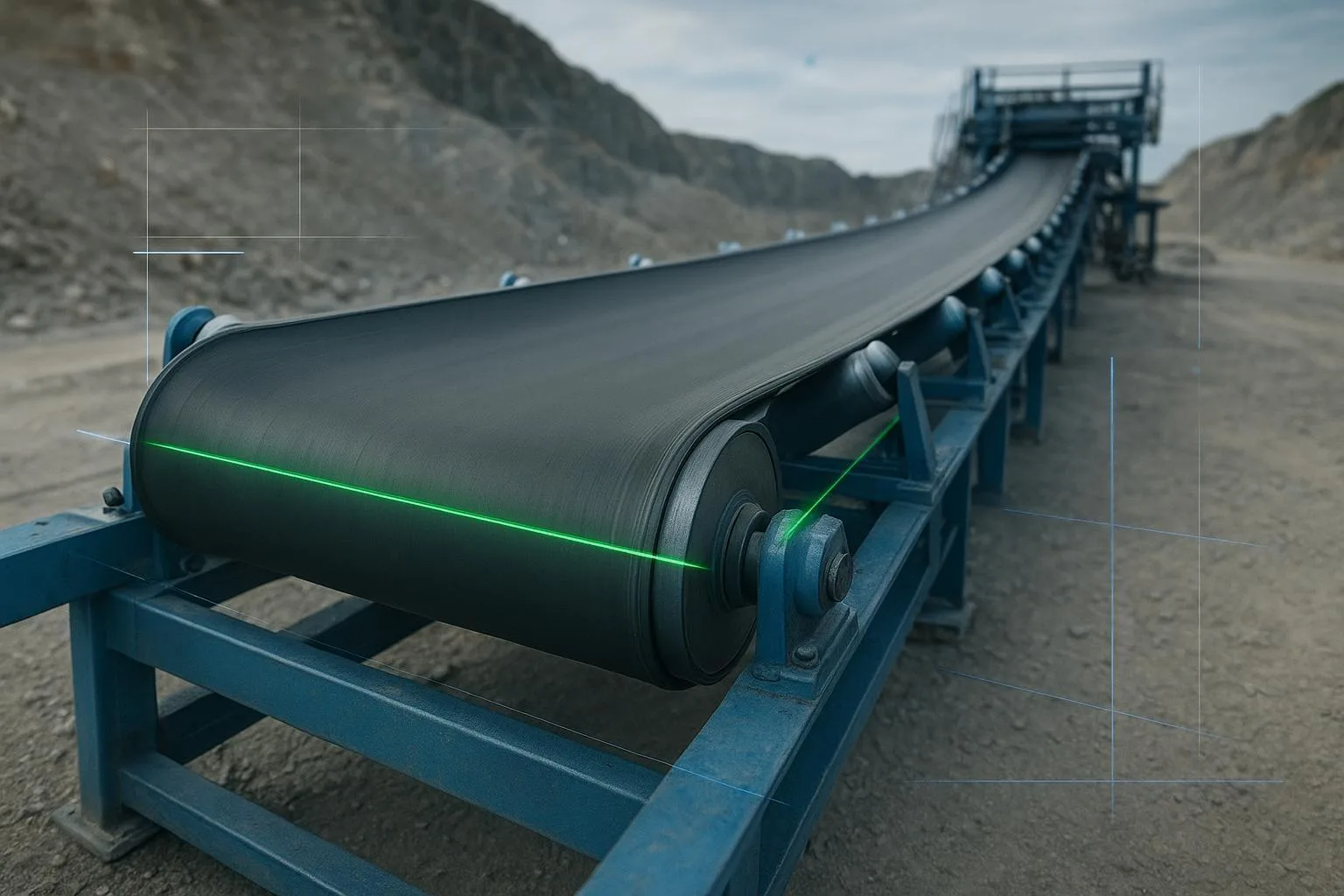
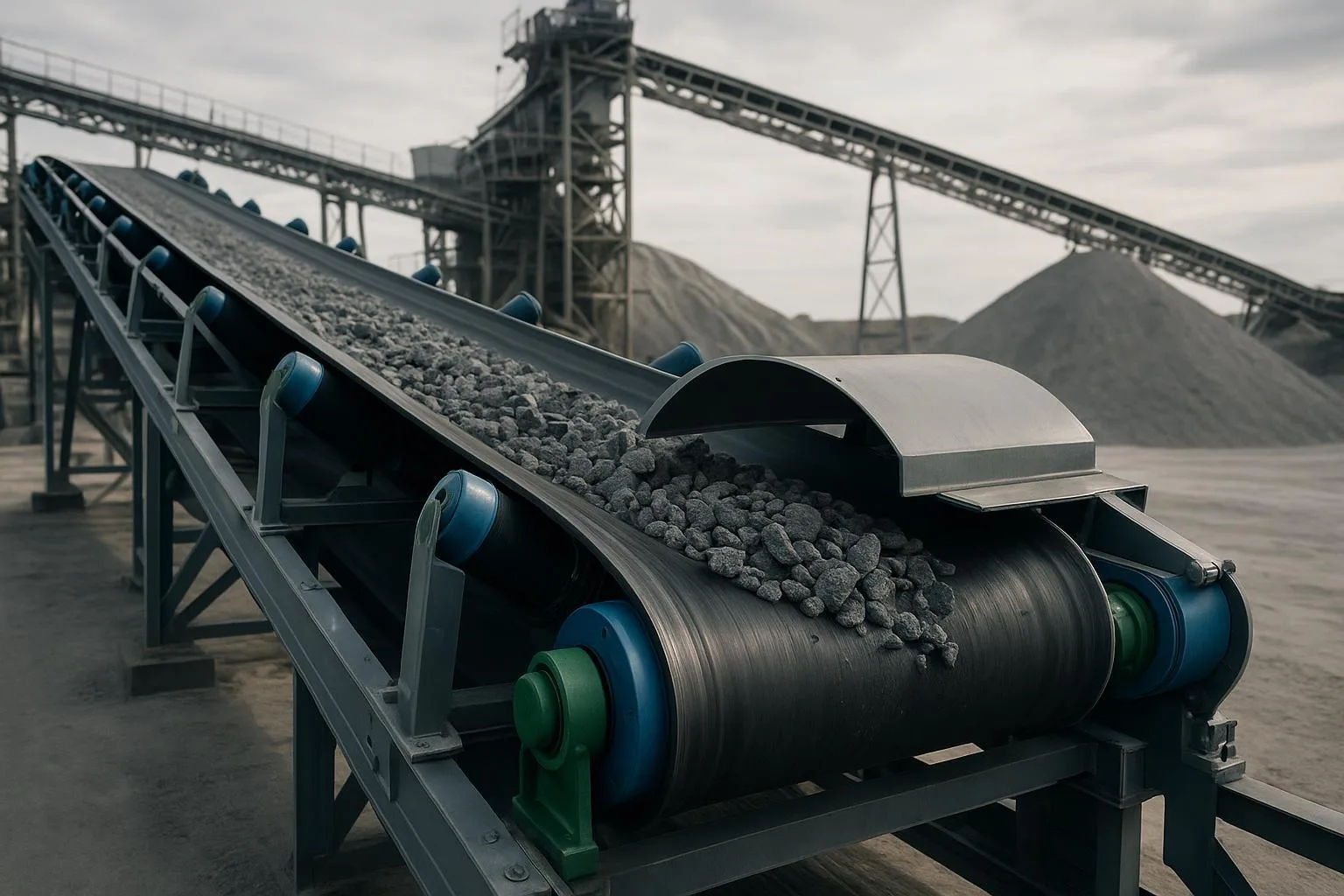
Core elements you’ll see on most systems include: the belt (textile or steel‑cord carcass with protective covers), troughing and return idlers, head/tail and bend/snub pulleys, a drive and reducer (often with a VFD), a take‑up (gravity or screw), engineered loading and discharge points, belt cleaners, containment (skirting/enclosures), and safety controls.
Key takeaways
-
Bulk material conveyors provide predictable capacity and safe, continuous transport of loose solids in mining, cement, ports, and heavy industry.
-
Belt conveyors are the dominant bulk solution; alternatives (drag/chain, screw, bucket elevator, pneumatic) serve niche geometries or materials.
-
Use standards for design decisions: CEMA for capacity/terminology and components; ISO 5048 for power/tension; ISO 3684 for pulley diameters; ISO 14890/15236 for belt specs; DIN 22101 as a widely used calculation basis.
-
Selection starts with material characterization and geometry, then proceeds to belt width/speed/class, idlers and spacing, pulleys/lagging, power/tension checks, and transfer/containment design.
-
Reliable operation depends on transfer‑point design, cleaner selection per application class (e.g., CEMA 576), and disciplined inspection and maintenance.
What is a Bulk Material Conveyor? (Definition)
A bulk material conveyor is a continuous mechanical system for transporting unpackaged solids using a powered conveying medium, most often a belt supported by idlers and driven by pulleys. The system is engineered for sustained throughput, predictable capacity, and safe operation under standards frameworks such as the CEMA Belt Book for capacity and selection concepts and ISO 5048/ISO 3684 for power/tension and pulley diameter checks.
Core Concepts — How Bulk Conveyors Work
A bulk conveyor is continuous: once running, it delivers a steady mass flow rate (t/h or mtph) defined by cross‑sectional loading and belt speed. In belt systems, carrying idlers form a trough that stabilizes the material cross‑section; the belt transmits tractive forces around pulleys. Effective tension is supplied by the drive, managed by the take‑up system to maintain sag and traction.
Typical performance envelopes (conservative ranges for orientation, actual design must be calculated):
-
Belt speed: roughly 1.5–3.0 m/s is common for many bulk belts; slower in dust‑sensitive services, faster where transfers and controls support it. Guidance on speed trade‑offs appears in Martin Engineering practice notes and cleaner limits in manufacturer guides such as Flexco’s.
-
Capacity: from a few hundred to several thousand tph depending on width, speed, trough angle, surcharge angle, and density. CEMA capacity relations and vendor handbooks provide the method; validate power with ISO 5048 or DIN 22101.
-
Distance and incline: from short plant runs to long overland flights measured in kilometers; conventional smooth belts handle moderate inclines, while cleated/sidewall or pipe/U‑belts cover steeper or more contained routes.
Authoritative references for scope and methods include the CEMA Belt Conveyors for Bulk Materials “Belt Book” (capacity, nomenclature, selection methods) and ISO/DIN calculation bases for power and pulley sizing. For example, ISO’s method for power/tension is summarized under ISO 5048, and minimum pulley diameters are addressed in ISO 3684.
Bulk Material Conveyor Components Explained
Belt construction (carcass and covers)
The belt’s carcass provides tensile strength (textile EP/NN or steel cord), while top and bottom covers protect against abrasion, heat, oil, or flame depending on service. ISO 14890 outlines requirements for textile belts used in surface applications, and ISO 15236 covers steel‑cord belts (including underground mining parts). Proper cover selection and thickness balance wear life with energy efficiency.
Idlers (troughing and return)
Idlers support and shape the belt. Troughing idlers (commonly three‑roll, 20–45°) create the material cross‑section; return idlers support the empty belt. Selection considers load, spacing, sealing, and operating environment. CEMA 502 provides dimensional classes (B through F and beyond) and a framework that helps ensure interchangeability and appropriate load ratings. For a deeper primer on roles and selection, see the internal explainer on belt conveyor idlers and why they matter: Belt conveyor idlers: definition and why they matter.
Pulleys and lagging
Head (drive), tail, snub, and bend pulleys redirect and drive the belt. Traction depends on wrap angle, lagging type/condition, and take‑up tension. Minimum pulley diameter must be checked against belt carcass and splice type; ISO 3684 provides the calculation method. Ceramic or grooved rubber lagging is used to improve traction and shed water or fines.
Drive and take‑up
A motor, reducer, and sometimes a VFD provide controlled torque. The take‑up (gravity, screw, or hydraulic) keeps belt tension within a target sag and traction range. Validate power and tension with a recognized method such as the ISO 5048 belt conveyor power calculation approach; DIN 22101 is also widely used globally for dimensioning.
Loading and discharge; belt cleaners and containment
Engineered transfer chutes establish central, low‑impact loading and manage dust and spillage. Primary and secondary cleaners remove carryback; their selection should match the application class per CEMA 576 (which considers belt width, speed, splice, abrasiveness, and moisture/stickiness). Adequate skirting and support in the loading zone stabilize the belt line and seal effectively.
Safety provisions
Provide guards at nip points and rotating parts, tested emergency‑stop circuits and pull‑cords, and safe access platforms. OSHA 29 CFR 1910 covers guarding and control requirements in the U.S., and ASME B20.1 is the safety standard for conveyors and related equipment. Always apply local regulations in addition to these references.
Conveyor Types Compared (belt vs. alternatives)
The belt conveyor is the default choice for long distances and high capacity. Other mechanisms solve steeper angles, short transfers, or specialty materials.
References and overviews for configuration choices and performance can be found in knowledge pages from BEUMER Group and neutral topic summaries such as ScienceDirect’s belt conveyor and screw conveyor topic pages.
Design & Selection Workflow
A practical, standards‑aligned sequence that I use on projects:
- Material characterization
- Define bulk density (loose/operating), particle size and distribution, abrasiveness (e.g., CEMA 550 nomenclature), moisture/stickiness, temperature, degradation sensitivity, and any special hazards (explosibility, oil, flame).
- Capacity and geometry
- Establish design rate (tph) with surge factor, conveyor length and routing, elevation change, and transfer points. Choose initial trough angle and surcharge assumptions consistent with CEMA methods.
- Belt width, speed, and class
- Select a width/speed pair that achieves capacity with acceptable dust/spillage risk. For dusty terminals, I often favor wider belts at lower speeds. Choose carcass rating (textile vs. steel cord) tied to calculated tensions, and define cover compounds per ISO 14890/15236 scopes.
- Idler class and spacing
- Use loading, sag targets, and environment to set idler class (per CEMA 502) and spacing—tighter in loading zones with impact idlers/beds as needed. See our design fundamentals overview for broader context: Belt Conveyor System Design Guide — Ultimate Guide.
- Pulleys and lagging
- Confirm wrap angles, select lagging type, and check minimum pulley diameters per ISO 3684 for the chosen carcass and splice. Ensure proper transition lengths into/out of troughing.
- Power and tension verification
- Validate with ISO 5048 or DIN 22101. Keep an eye on effective tension vs. available traction (lagging, wrap, and take‑up). Compare calculated power to commissioning readings; significant deviation signals abnormal drag.
- Loading/discharge, cleaners, and containment
- Engineer chute geometry, skirting, dust enclosures, and cleaner package based on the CEMA 576 application class. Confirm maintenance access and safe isolation.
- Safety & maintainability
- Integrate guarding and emergency stops consistent with OSHA/ASME requirements. Provide service platforms, pull‑cord reach, and safe belt lifter/maintenance provisions. Plan installation and commissioning per a documented procedure like the internal installation guide: Conveyor Belt Installation Guide — Ultimate Guide.
Practical micro‑example (neutral): In a mining plant upgrade moving 1,200 tph of crushed ore over ~800 m, the design landed on a 35° trough with a belt speed near 1.8 m/s. Idler classes aligned with heavy‑duty service (CEMA E/F), the drive pulley used ceramic lagging for traction in wet conditions, and cleaner selection followed a high application class per CEMA 576. Components like belts, idlers, and pulleys from a specialist supplier such as BisonConvey can be specified to meet these calculated requirements and environmental constraints.
Industry Use Cases
-
Mining (crushed ore, 1,200 tph, 800 m): Emphasize robust idler classes, ceramic‑lagged drive pulleys, controlled speed for dust/impact, and multi‑stage cleaners appropriate to the application class. Verify tensions versus ISO 5048 and check pulley diameters per ISO 3684.
-
Cement (hot clinker ≈150 °C): Specify heat‑resistant covers, reinforced loading‑zone support, and moderated speeds to control degradation. Maintain skirting and cleaners vigilantly; thermal expansion can affect take‑up behavior.
-
Ports/terminals (grain 2.0–3.0 m/s): Prioritize dust containment (enclosures, engineered transfers), tracking stability, and gentle handling. Many terminals choose wider belts at modest speeds to reduce dust. For broader context on sectors and applications, see the internal overview of industrial uses: Industrial Uses of Belt Conveyor Systems — Ultimate Guide.
Troubleshooting & Maintenance Best Practices
Common symptoms with fast diagnostics:
-
Mistracking: First, inspect structure and pulley squareness, confirm centered loading and clean return runs, then make small idler adjustments upstream of the problem. Training idlers are fine‑tuning, not a cure‑all. See the practical guide: How to Fix Conveyor Belt Misalignment (Mistracking).
-
Slippage at the drive: Check take‑up force and wrap angle, inspect lagging condition and contaminants, and compare measured loads with your ISO 5048 power/tension model.
-
Carryback/spillage/dust: Verify cleaner set‑up vs. CEMA 576 class, adjust skirting pressure/flatness, and stabilize belt line through adequate support in the loading zone.
-
Excessive noise/vibration: Listen for failing idlers (bearing noise), check roll rotation, contamination ingress, and frame resonance. For deeper diagnostics, see: How to Fix Conveyor System Noise (Mining Maintenance).
Field‑proven maintenance cadence:
-
Daily: Operator walk‑throughs during safe operation—check alignment visually, look for spillage/carryback, verify skirt/cleaner condition, confirm guards and pull‑cords are intact.
-
Weekly: Listen for idler noise and feel for vibration/heat; clean buildup at pulleys and return runs; confirm cleaner tension.
-
Monthly/Quarterly: Inspect splices and lagging, review power‑draw trends for rising drag, test emergency stops per site policy, and replenish spare idlers and cleaner blades.
Standards & Safety You Should Know
-
CEMA Belt Conveyors for Bulk Materials (“Belt Book”): North American reference for capacity, cross‑section, and selection concepts; see the publications page under CEMA resources: CEMA publications overview.
-
CEMA 502 (Idlers): Dimensional classes and selection framework for idlers—useful for class and spacing decisions.
-
CEMA 576 (Belt Cleaner Application Guidelines): Defines application classes to match cleaner packages to belt width/speed/splice/material properties. An overview is provided in the 2021 CEMA committee document: CEMA 576 overview (2021).
-
ISO 5048: Method for calculating operating power and belt tensile forces for belt conveyors with carrying idlers; use to validate power/tension alongside your CEMA‑based capacity assumptions. See ISO’s catalog entry: ISO 5048 summary.
-
ISO 3684: Procedure for minimum pulley diameters for rubber/plastic belts; apply when selecting pulleys for your carcass/splice. See: ISO 3684.
-
ISO 14890 / ISO 15236: Belt specifications for textile and steel‑cord belts; informs cover compounds and belt classes.
-
DIN 22101: Widely used basis for calculation/dimensioning of belt conveyors for loose bulk materials (check current edition/draft on DIN’s site).
-
OSHA 29 CFR 1910 and ASME B20.1: Guarding, E‑stop, and safe operation frameworks in the U.S.; see OSHA guarding requirements at OSHA 1910.212 and the ASME B20.1 standard page at ASME B20.1.
FAQ — What engineers ask most
-
What is a Bulk Material Conveyor? It’s a continuous mechanical system that transports unpackaged solids using a powered conveying medium, most commonly a troughing belt supported by idlers and driven by pulleys.
-
Which standards should I start with for belt design? Use the CEMA Belt Book for capacity and cross‑section relationships, and validate power/tension with ISO 5048 (or DIN 22101). Check pulley diameters with ISO 3684, and select belt specs per ISO 14890/15236.
-
Belt conveyor vs drag conveyor: how do I choose? For long distance and high capacity, belt is usually first choice; for steep inclines, hot/abrasive or sticky materials over short runs, drag/chain can excel. See the comparison table above.
-
How fast should my belt run? Many plant belts run between ~1.5 and 3.0 m/s. For dust‑sensitive materials or fragile products, consider wider belts at lower speeds. Cleaner limits and transfer design also influence the upper bound.
-
What are the most common failure causes? Poor transfer design, inadequate belt support in loading zones, mismatched cleaner class, misalignment of structure/pulleys, and insufficient maintenance access.
-
How to select a belt conveyor for mining or cement? Start with material properties and rate, map the route and elevation, choose width/speed, confirm carcass and covers, set idler class/spacing, verify pulleys per ISO 3684, and validate power/tension through ISO 5048 or DIN 22101. Then design transfers and containment and ensure safety/maintenance access.
-
Where can I learn more about idlers and pulleys specifically? See the idlers explainer linked earlier and vendor handbooks; many also publish pulley lagging selection notes. Our design guide compiles the system‑level view.
-
Do I need pipe or U‑belt? Consider them where dust containment is critical, routing is complex, or steeper inclines are required; they trade higher capital for enclosure benefits.
Conclusion & Key Takeaways
Bulk material conveyors—especially belt conveyors—are the backbone of continuous transport in heavy industry. Sound design follows a consistent workflow: characterize the material; set capacity and geometry; select belt width/speed and carcass/covers; size idlers and pulleys; verify power/tension; and engineer transfers, cleaners, and containment. Operability and safety hinge on access, guarding, E‑stops, and a disciplined inspection cadence.
Key points to remember:
-
Use CEMA for capacity and component terminology; verify power and pulley diameters with ISO/DIN methods.
-
Stabilize the loading zone with proper support, skirting, and cleaner selection per CEMA 576.
-
Track power draw and condition metrics to catch rising drag or failing components early.
If you need component specifications aligned to a calculated duty—belts, idlers, or pulleys—contact BisonConvey for neutral engineering support and custom options that match your application.