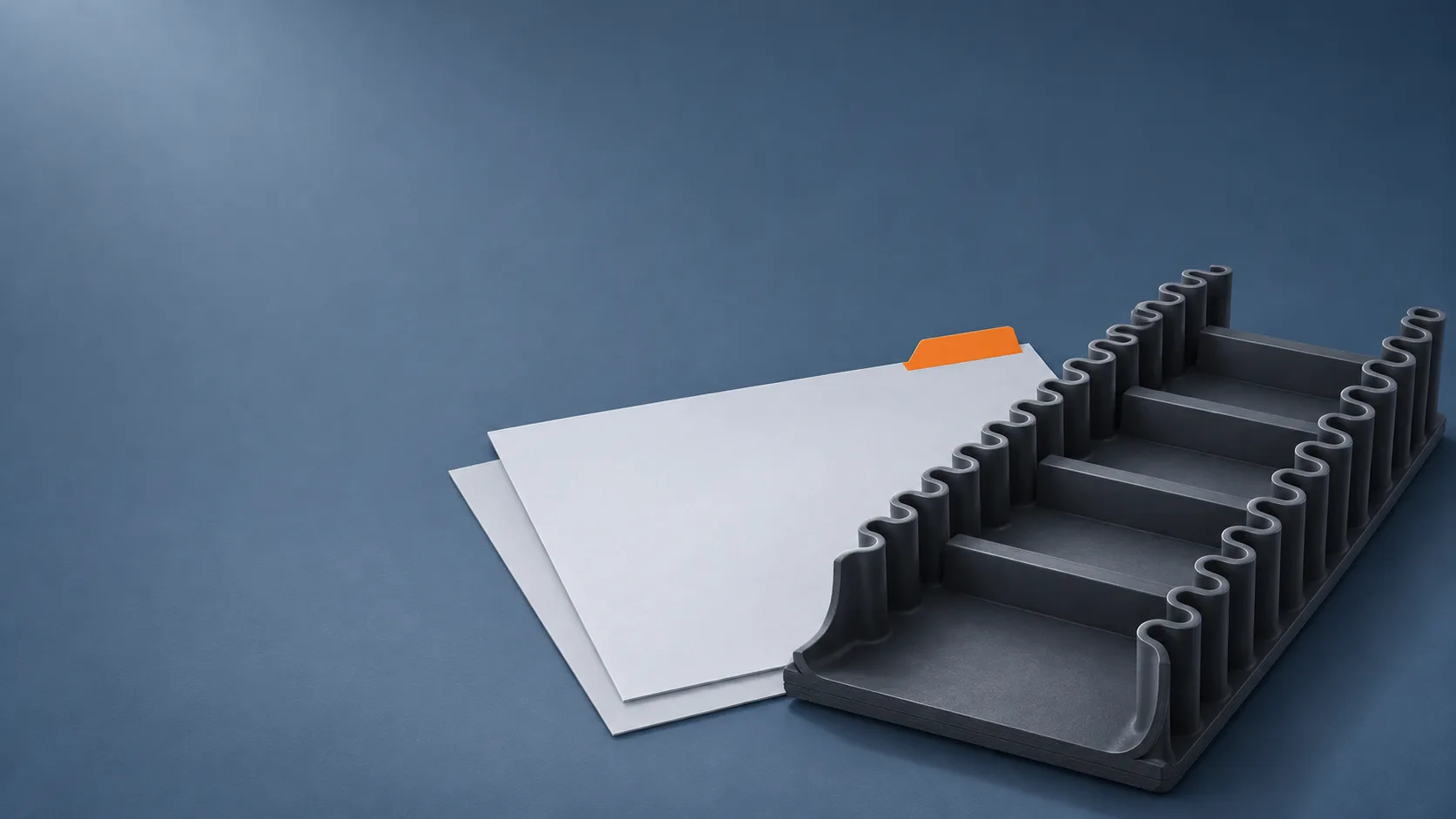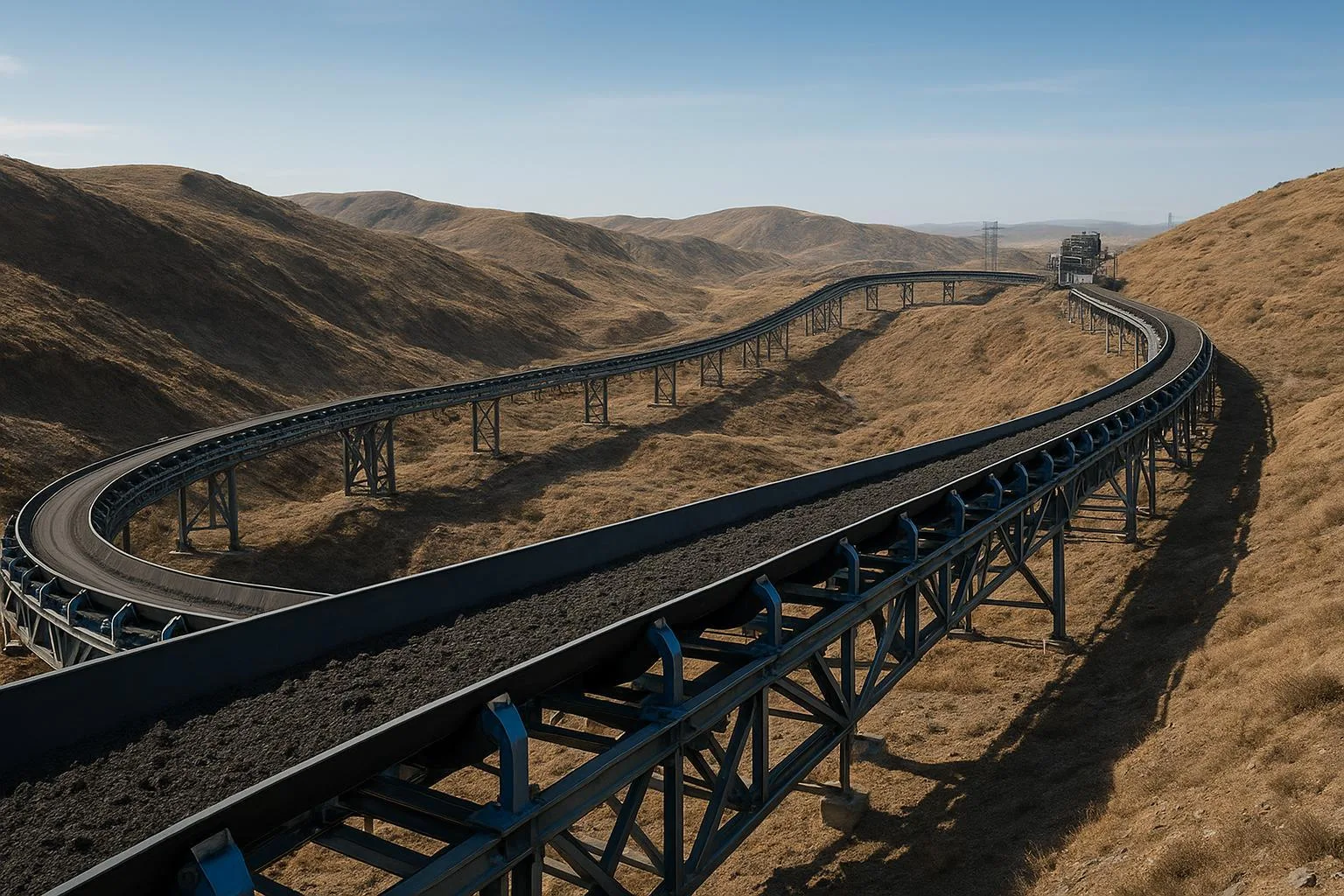
An overland conveyor belt supplier should be able to explain how its proposed belt fits the conveyor designer’s duty and interfaces, what documentation supports the offer, and who is responsible for the belt from factory acceptance through installation. A matching width and nominal tensile rating are only the start. Two offers can specify the same rating and still differ in cord construction, splice requirements, roll lengths and what the buyer must arrange on site.
This guide is for project teams buying belting for a long-distance bulk-material conveyor. If the project is still comparing routes, conveyor flights or haulage alternatives, start with the overland conveyor system cost guide. Once the route and design basis are defined, use the eight checks below to compare the belt offers.
1. Put every bidder on the same duty basis
Give each bidder the same dated duty sheet and drawings. Include the route profile, design capacity, belt speed, conveyed material and ambient conditions. Have the conveyor designer identify the load cases governing belt selection, including relevant starting, stopping and loaded restart conditions. If the installation involves regenerative duty, curves or multiple drives, identify the project documents that govern those interfaces. Give bidders a way to flag missing inputs instead of asking them to fill gaps silently.
Ask each supplier to list the documents and revisions it used and identify every assumption it introduced. A belt proposed using steady-state data alone cannot be compared directly with one reviewed against more demanding load cases. If you use a conveyor belt tension calculator to organize preliminary inputs, keep the design authority’s issued load cases separate from those preliminary results.
Ask for: a signed or otherwise traceable design-input acknowledgement, with assumptions and exceptions on separate lines.
2. Compare the construction behind the tensile rating
For a steel cord belt, request the nominal breaking strength per unit width, the belt width, the cord layout, the cover thickness on each side, the finished thickness and the belt mass per unit length. Record the revision of the cross-section drawing and the tolerances that apply. A nominal breaking-strength rating describes the belt’s strength class. Allowable working tension is determined separately through the conveyor design and the splice assessment.
The Continental steelcord product overview illustrates that cord number and size are selected for the application. Compare those details and the proposed cover properties using the supplier’s actual drawing and data. For example, if one offer changes the cord layout while retaining the same nominal rating, ask the designer and splice supplier to assess the proposed construction before accepting equivalence.
Ask for: a proposed belt datasheet and cross-section, with requested and offered values side by side. The steel cord belt specification page explains common fields to include.
3. Ask who owns splice compatibility
Request the splice drawing reference, the compatible material list and the party responsible for approving the combination. Identify whether the offer includes splice materials, site supervision, installation or only the belt. Ask who will address a deviation if the belt and splice materials come from different suppliers. For a replacement section that will join retained belt, give both constructions and available records to the responsible parties for written review.
Metso’s Flexocord brochure shows how splice design and materials relate to a specific belt family. Treat it as an example of the detail a supplier can document, and use the approved documents for the actual belt when comparing bids. The commercial question is whether one accountable party has accepted the combination and whether the offer includes what the installation team needs.
Ask for: the splice drawing reference, a material schedule and a responsibility matrix. Keep site execution and acceptance under the project’s approved procedures.
4. Check the belt against the conveyor interfaces
List pulley diameters and roles, transition geometry, take-up travel and applicable curve details. For an existing system, record drawing revisions and identify any conditions that differ from the drawings. The conveyor designer should decide which interfaces need rechecking when a bidder proposes a change in construction, thickness, mass or stiffness. A thicker belt may meet the wear specification while creating a separate compatibility question.
Ask the bidder to state the limits associated with the proposed construction. Compare them against the actual conveyor data, and track outstanding questions against named owners. The minimum pulley diameter selection guide explains why the pulley check depends on the belt construction, tension and pulley role.
Ask for: a list of reviewed interfaces and any limits, departures or missing inputs, tied to the offered belt drawing.
5. Compare energy claims on a common basis
Some bids name a low rolling resistance cover or offer a power-saving estimate. Ask for evidence that identifies the proposed compound and the test conditions. The conveyor engineer should decide whether the evidence can be applied to the route and use the same load, speed, temperature assumptions and calculation basis for every bid. Put any assumptions about idlers, alignment or operating hours in the comparison sheet so the source of a difference is visible.
BEUMER’s overland conveyor overview describes energy and layout at the system level. A belt quotation covers a narrower scope. If a bidder quantifies energy savings, ask it to identify the reference belt, the proposed belt and which part of the system calculation changes. If the basis cannot be reproduced, record the saving as unverified and leave it out of the cost comparison.
Ask for: the test evidence and the assumptions behind the estimate. Have the design team record a comparable energy scenario for each accepted offer.
6. Quote the rolls the site can actually receive
Ask for a roll-by-roll schedule. Compare supplied lengths, the installed length requirement, allowances included in the offer, roll diameters, gross masses, core details and packing. Assess where the rolls will be unloaded, stored and handled, and have the installation team check the schedule against its access and equipment constraints.
Longer rolls can reduce the number of joints required for an installation plan, while increasing the size and weight of individual packages. Ask bidders to price alternatives against the same site restrictions. Count planned joints, splice-material quantities and spares explicitly. The roll length and packing checklist gives the buyer a way to separate delivered quantities from installed quantities.
Ask for: a dimensioned packing plan, a roll list and the quantity basis used for splice materials and spares. Flag split shipments that could affect installation sequence.
7. Specify acceptance evidence before the order
Define what you expect to see before manufacture, before shipment and at receipt. For each required property, state the test method, acceptance criterion, applicable sample or lot, and document owner. Ask how roll markings will link the shipment to its inspection and test records. If independent inspection or witnessing is part of the purchase, agree who arranges it, where it occurs and which hold points affect the schedule.
| Evidence | What to confirm | When to close it |
|---|---|---|
| Datasheet and cross-section | Match to offered construction and controlled revision | Before technical approval |
| Inspection and test plan | Methods, acceptance criteria, lot traceability and any witness points | Before production |
| Inspection records and roll markings | Evidence can be matched to the specific shipment | Before release |
| Packing and receipt records | Roll IDs, packaging condition and any discrepancy process | At delivery |
A reference brochure can explain a product family. For acceptance, request evidence tied to the belt or production lot under the agreed purchase terms. If a bidder proposes substitute evidence, record it and have the buyer’s technical team approve the change in writing.
8. Compare the delivered scope and remedy
Put the same items on every bid tabulation: belt, splice materials, spare rolls, documentation, inspection, packing, freight, site support and any exclusions. Confirm the actual manufacturer and the contracting seller, and identify who handles a defect at receipt or after installation. Review the warranty start point, any conditions relating to storage or splicing, the evidence required for a claim and what remedy is offered. Make separate entries for replacement material, freight, site labour and access costs if their treatment differs.
Consider two hypothetical offers at the same price per metre. Offer A includes the approved splice materials, a roll schedule that fits the receiving plan and specified inspection records. Offer B quotes only the belt and leaves the roll schedule and material compatibility open. Before comparing the totals, obtain separate prices and responsibilities for the gaps in Offer B. Keep unresolved technical questions visible even after a price has been assigned.
Ask for: a line-item scope and exclusions sheet, with the responsible party and quotation reference next to each item.
Turn the eight checks into a bid sheet
Record one status for each requirement: accepted, deviation stated, or clarification required. Give each departure an owner and a closure date. Three rows illustrate how that works:
| Requirement | Bid response | Next action |
|---|---|---|
| Belt construction against the issued duty | Same nominal rating, different cord layout | Request the cross-section and have the designer and splice supplier review the difference |
| Receiving and installation plan | Roll mass missing | Obtain gross roll mass and have the site team verify the handling limit |
| Installed splice scope | Compatible materials listed, supervision excluded | Confirm who supplies site supervision and how the splice is accepted |
Settle construction, interface and acceptance questions before the purchase order turns an indicative quote into an approved specification. Keep commercial qualifications in the same decision record so the supplier, purchaser and site team can see what was actually agreed.
For a belt-supply enquiry, send the overland belt RFQ and available drawings. Include the duty revision, proposed construction, roll limits, splice scope and evidence requirements. BisonConvey coordinates quotation review with partner factories. The responsible supplier, quoted scope and documentation should be confirmed for the specific order.