Confirm conveyor belt roll length as part of a delivery schedule, not just a total number of meters. Before ordering, agree the length and quantity of each roll, the splice-allowance basis, packed dimensions, net and gross weights, identification and required documents. A quotation for the correct belt can still leave these delivery details unresolved.
This checklist is for industrial belt procurement. It does not calculate installed belt length or provide lifting, unloading or transport-securing instructions.
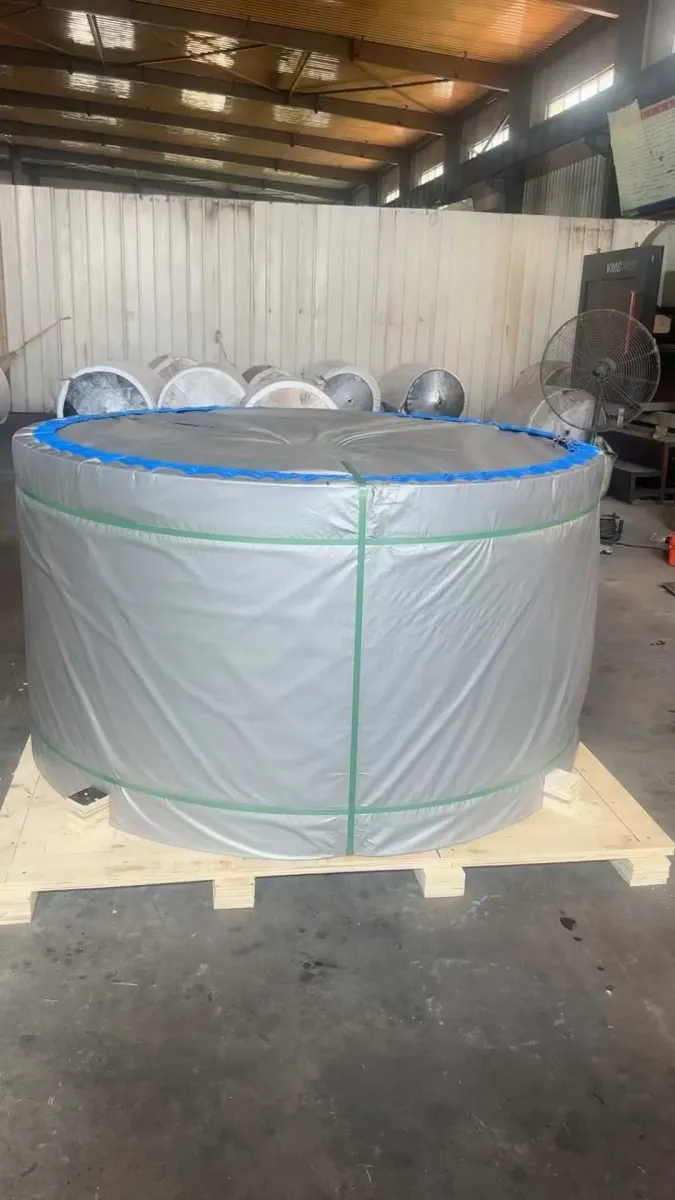
Supplier-provided packing view; it does not establish packing strength, shipment dimensions or suitability for a specific route.
1. Define the conveyor belt roll length you are buying
Start with the belt specification and say what every length represents. A purchase total, an individual delivery roll and a finished endless belt are different quantities.
| Length field | What to record | What it does not establish |
|---|---|---|
| Total purchase length | Combined length ordered for the specified belt item, with units | Number or size of delivery rolls |
| Delivery roll length | Length supplied on each roll, plus quantity for that length | Finished installed loop length |
| Finished endless length | Required completed loop under the agreed measurement basis | Extra material needed for field splicing |
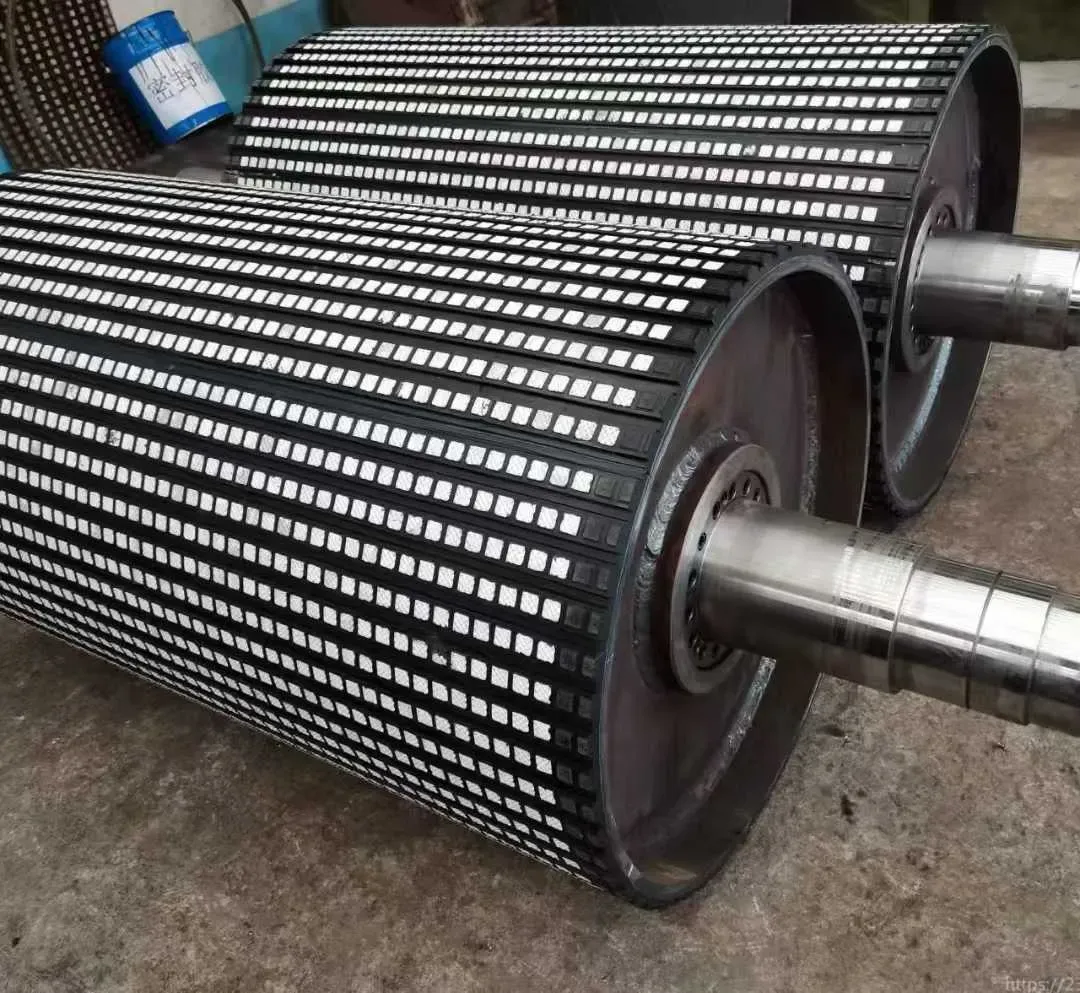
Conveyor center distance is another separate dimension. The installed belt path also involves pulley diameters, routing and the take-up position; center distance alone is not the purchase length or a roll schedule. Larger pulley diameters change the belt path around those pulleys, so an installed-length check must use the actual pulley layout rather than center distance alone. Those pulley dimensions still do not specify how the purchased belt will be split into delivery rolls. Use the replacement belt specification inputs to establish that requirement before discussing packing.
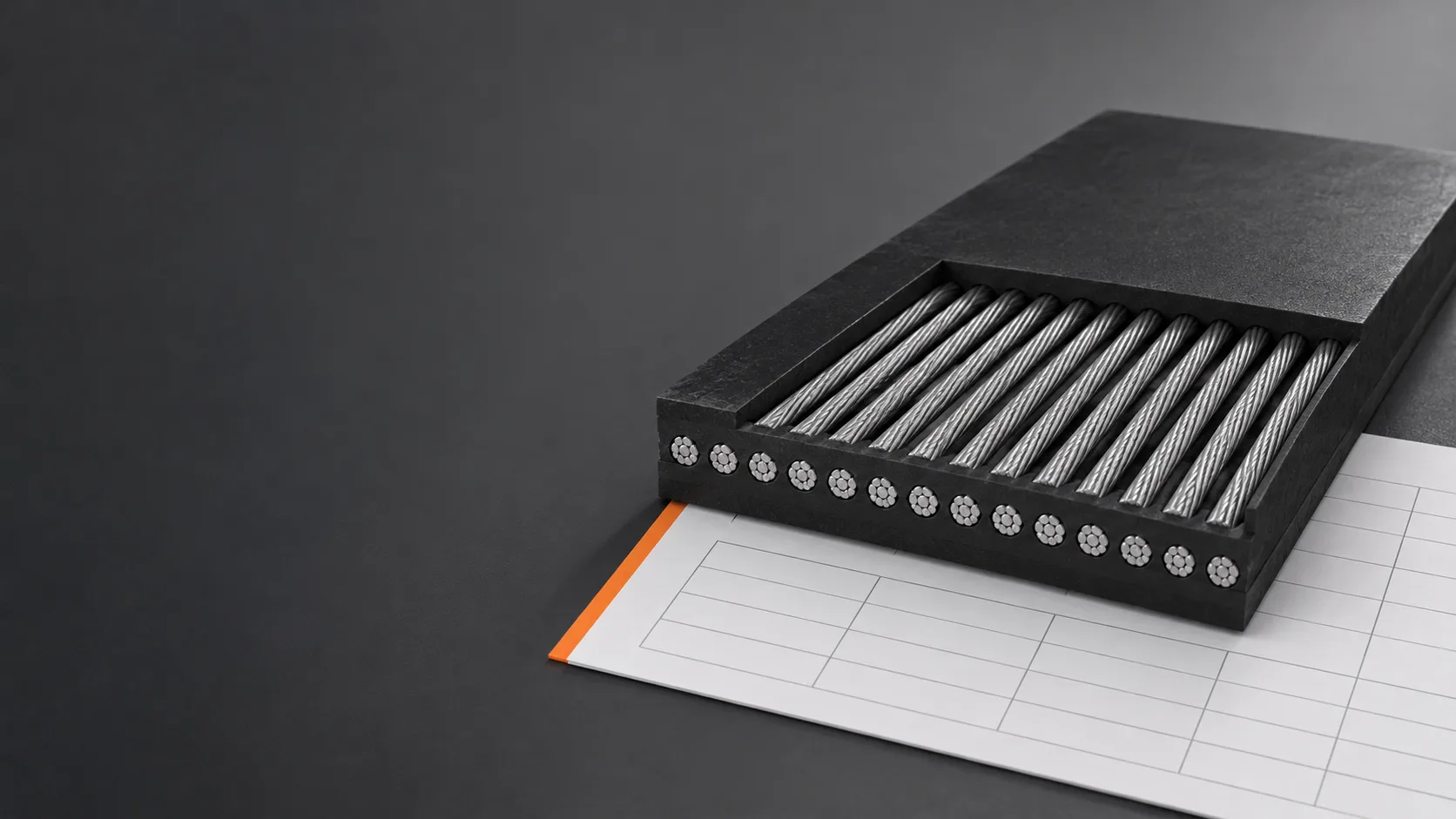
Keep width, construction, belt thickness and cover specification attached to the length schedule. For a multi-item order, identify the fabric belt construction requirements or the steel cord belt specification review separately. Do not assume that a packing arrangement proposed for one construction applies to another.
The output of this step is one unambiguous belt item and a clearly labeled length basis.
2. Agree the roll schedule and splice allowance
Ask the supplier to show each proposed delivery length and its quantity. Multiply each row's length by its quantity, then add the subtotals and reconcile them with the purchase total. Mixed roll lengths are not inherently a mistake, but they should be intentional and agreed.
Next, resolve the allowance question. Does the supplied length already include material needed for the approved splice arrangement, or must an allowance be added? Record who confirms the splice design, the allowance basis and the resulting order length. Avoid an unexplained instruction such as “add the normal allowance.”
Roll count does not, by itself, establish how many joints or splice-material kits you need. The installation layout, delivered belt sections, existing belt retained and approved joining method determine that scope. Order the materials against the agreed joint plan, not a guessed relationship between rolls and kits.
Also confirm whether the delivery schedule supports the replacement sequence. If rolls need to reach different conveyors or arrive in a particular order, identify that requirement before the supplier finalizes the schedule.
If the supplier proposes a split that differs from the request, put it in a deviation list. The useful result is an approved schedule, not just an arithmetically correct total.
What if the total length matches but the delivery does not?
A matching purchase total is only the first check. Suppose a buyer requests separate rolls for two replacement jobs and the supplier proposes combining the material into fewer, longer rolls. The total can remain correct while the proposal no longer matches the receiving limits or installation sequence.
Compare the proposed split against each job before accepting it. Confirm who will cut the belt, where cutting will take place, and whether the revised sections still provide the length required by the approved splice plan. If these points remain open, keep the roll schedule open too.
3. Request roll dimensions and weight at two stages
Ask for roll dimensions and weight during quotation, then request final dispatch information when the packing is complete. Mark estimates as estimates. They help screen the proposed delivery but should not be presented as measured shipment data.
| Information | During quotation | Before dispatch |
|---|---|---|
| Roll diameter and reel size | Proposed dimensions and assumptions | Confirmed dimensions for each identified roll |
| Packed dimensions | Estimated outer length, width and height, with orientation stated | Final package envelope, including projecting supports or reel parts |
| Net and gross weight | Estimates with the supplier's definitions | Final values with their measurement or calculation basis stated |
Conveyor belt roll diameter is not necessarily the largest outside dimension of the packed unit. Reel flanges, supports or a crate may extend beyond the belt. Ask for the full package envelope rather than using belt width and bare-roll diameter as shipping dimensions.
Likewise, clarify whether net weight means the belt alone and which core, reel, support and wrapping components are included in gross weight. State the weight units explicitly.
In its 2023 guide to transporting and storing rubber conveyor belts, Fenner Dunlop EMEA recommends that the supplier provide dimensions and gross weight for each roll or drum. That supports requesting per-roll information; it does not establish a universal roll size or validate another supplier's packing.
4. Specify the packing and receiving conditions
Describe the conditions the package needs to meet, then ask the supplier to confirm its proposal. “Export packing” alone leaves too much unspecified.
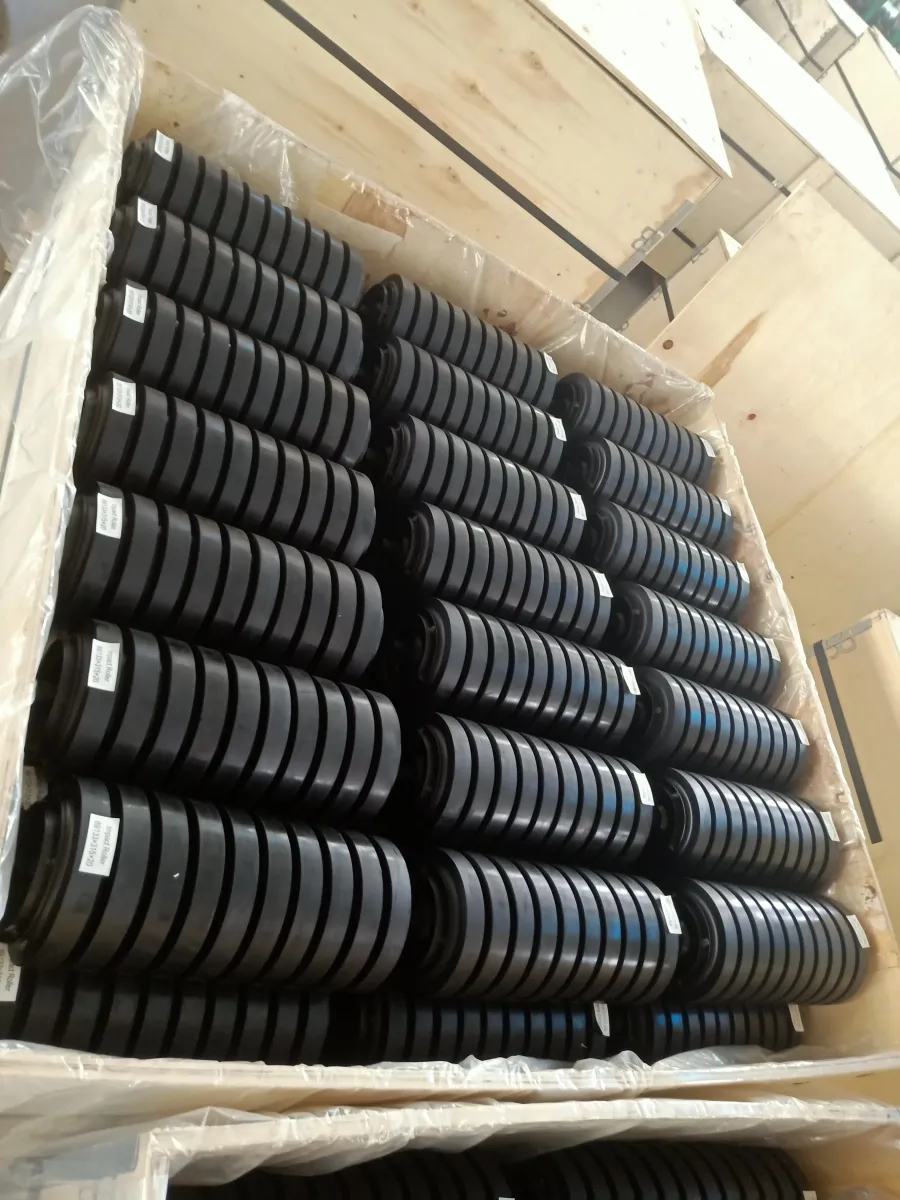
For conveyor belt packing, record the proposed wrap or edge protection, core or reel, and any support frame or crate. Ask whether these are included in the price, optional or subject to a revised quotation. If the receiving team requires an interface drawing for a reel or support, request it explicitly.
Explain any expected outdoor exposure, transshipment or storage before installation. The supplier should confirm appropriate packing and product-specific storage instructions for that situation. A wrapped roll in a photograph does not demonstrate suitability for every route or storage condition.
Give the destination team the proposed package dimensions and gross weight. Ask it to confirm receiving limits, access restrictions and whether its arrangements are suitable. If they are not, request a revised roll or package proposal before approval. Competent site personnel must plan handling using the relevant supplier instructions; this checklist is not that plan.
Finally, identify the named delivery or handover point, the parties involved and the charges included or excluded from the quotation. Do not assume that “port delivery” describes the same scope in every offer. The packing and delivery review checklist helps organize these questions for supplier confirmation.
5. Match roll IDs to the dispatch documents
Give each roll a traceable identity. The receiving team should be able to connect the physical roll to its belt item, length, packing details and relevant supplier documents without relying on a photograph alone.
Before dispatch, request a reconciliation of:
- The purchase-order item and agreed belt specification.
- Each roll ID and its supplied length.
- The associated package ID, dimensions and net/gross weights.
- The packing list and agreed inspection or test documents.
- Any accepted deviations and their approval record.
If several rolls share one package, or one order contains different constructions, make that relationship explicit. The supplier's actual identification format can vary; the important point is that the records connect consistently.
A general product datasheet explains a product or proposed specification. It is not automatically a batch inspection report. If the order requires test evidence, agree what document will be provided, the relevant belt or batch identification, the test basis and the acceptance criteria. Do not list a certificate as included unless its availability and scope have been confirmed.
6. Copy this belt roll and packing RFQ checklist
Use these tables as a blank request-and-confirmation template. Fill the buyer requirements first, ask the supplier to complete its proposal, and mark each item agreed, open or accepted with a documented deviation. Empty cells are for your order details, not assumed specifications.
Order-level confirmation
| Field | Buyer requirement | Supplier proposal | Confirmation status |
|---|---|---|---|
| Belt item, drawing and specification revision | |||
| Total purchase length and units | |||
| Finished loop requirement, if applicable | |||
| Splice allowance included/excluded and approval basis | |||
| Joint plan and splice-material scope | |||
| Destination, handover point and receiving restrictions | |||
| Expected storage/exposure and requested instructions | |||
| Required documents and acceptance criteria | |||
| Included/excluded packing and delivery charges | |||
| Deviations and approving party |
Roll schedule
Use one row per roll, or per group of identical rolls at quotation stage. Before dispatch, replace group references with individual roll IDs so that every delivered roll can be reconciled with the order.
| Belt item / roll ID | Length per roll and unit | Quantity | Total length |
|---|---|---|---|
Reconcile the sum of the row totals with the agreed purchase length. Keep that arithmetic separate from checking whether each roll suits its intended job.
Per-roll or package confirmation
Repeat this table for each roll or package, then confirm final IDs and values before dispatch.
| Field | Buyer requirement | Supplier proposal | Confirmation status |
|---|---|---|---|
| Roll length, quantity and subtotal | |||
| Roll ID and purchase-order item | |||
| Core/reel and support or crate arrangement | |||
| Roll diameter and reel dimensions, with units | |||
| Packed outer dimensions and orientation | |||
| Net/gross weight, units and basis | |||
| Package ID and packing-list reference | |||
| Estimate or final dispatch value |
A short cover note can make the request clear:
Please quote the attached belt specification and proposed roll schedule. Confirm the allowance basis, packing arrangement, estimated package dimensions and net/gross weights, required documents, and included/excluded delivery scope. Identify deviations separately and state when final per-roll dispatch details will be available.
Keep the approved revision with the purchase order. If the supplier changes the schedule or packing proposal, update the linked fields rather than leaving several conflicting versions in email.
Answer three final questions before ordering
Is there a standard maximum conveyor belt roll length?
Do not use a single number as the limit for every belt. The supplier must confirm feasible roll lengths for the selected construction and the proposed delivery, while the buyer confirms receiving and installation constraints. This article does not establish a tested manufacturing or transport maximum.
Can conveyor belt roll weight be taken from a generic calculation?
A calculation can support an initial estimate if its inputs and assumptions are clear. It cannot replace the supplier's final dispatch information for the packed roll. Confirm the belt specification, actual supplied length, included packing components and reported weight basis.
Do packing photographs prove the agreed delivery requirements?
No. They can show visible wrapping, supports or labels, but cannot establish hidden construction, weight, packing strength or compliance with the order. Use them alongside the confirmed schedule and appropriate documents, not as substitutes for those records.
Send one specification and packing schedule for review
BisonConvey is a trading company working with multiple partner factories. Send your belt and packing requirements with the specification, proposed roll schedule and receiving limits. Available supply, packing, documents, costs and the parties responsible for each part of the order must be confirmed for the specific quotation.