Selection guide for industrial conveyor belt materials
If you specify, buy, or maintain conveyors, the belt material you choose dictates uptime, safety compliance, and total cost of ownership. This guide summarizes how to match carcass constructions and cover compounds to duty, temperature, chemicals, and regulatory needs—backed by relevant ISO/DIN/MSHA references—so your RFQs are precise and your installations last.
Key takeaways
-
Start with duty and environment: abrasiveness, impact/lump size, temperature envelope (continuous/peak), oils/chemicals, and static/fire risk.
-
Choose carcass first (EP, NN, steel cord) for tension, elongation, troughability, and minimum pulley diameters; then select the cover compound and grade.
-
Document compliance early: ISO 14890 for textile belts, ISO 4195 for heat, ISO 340 for flame reaction (above ground), ISO 284 for antistatic, and MSHA 30 CFR Part 14/75 for U.S. underground coal.
-
Verify numeric limits from the selected belt’s datasheet (continuous/peak temperatures, abrasion grade, electrical resistance) rather than relying on generic ranges.
-
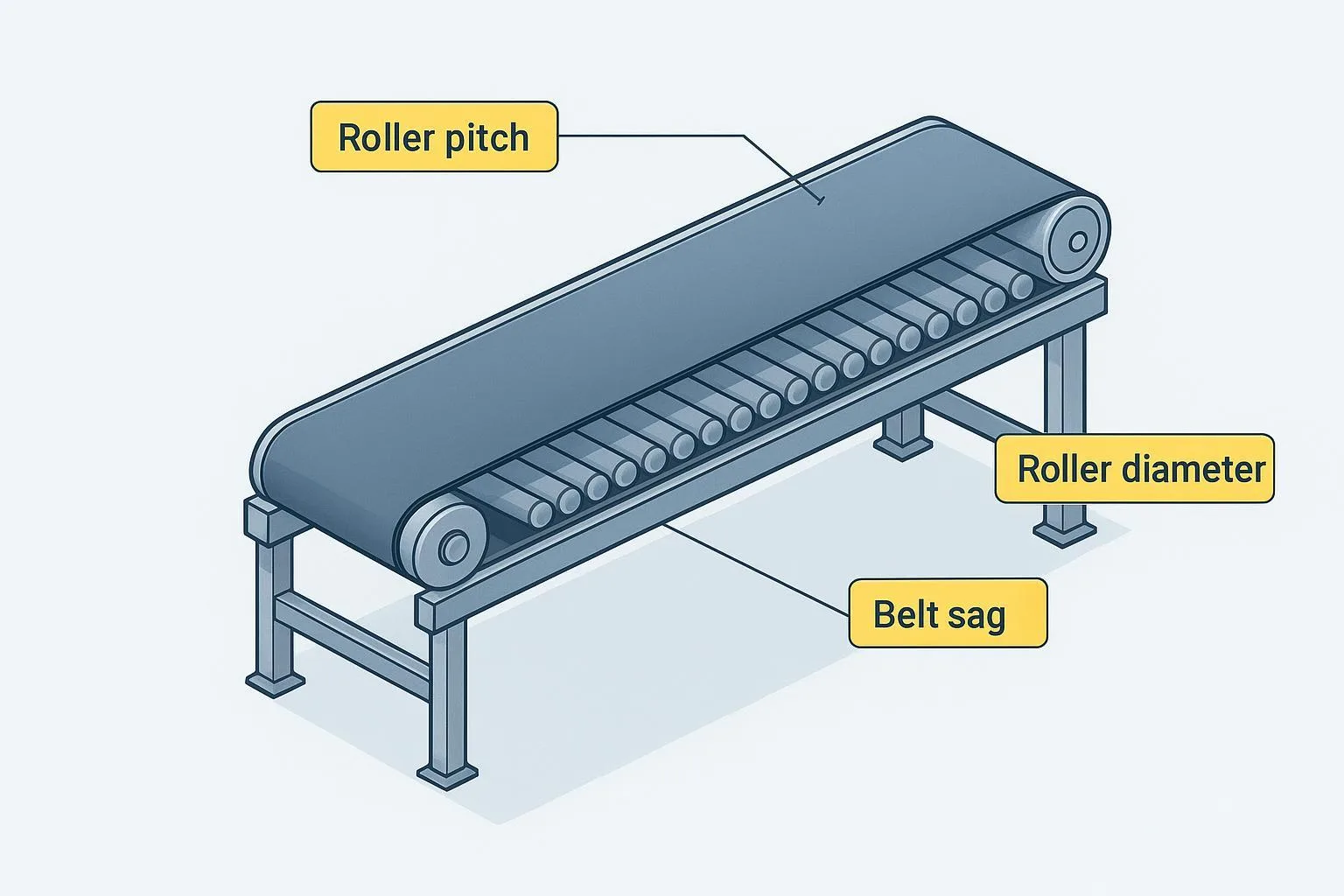
Align belt selection with idlers, pulleys, transition distances, cleaners, and splicing; components must be compatible with the belt’s D_min and compound.
-
Build the RFQ around measurable specifications and attach test certificates to reduce change orders and downtime.
Core concepts: carcass and cover fundamentals
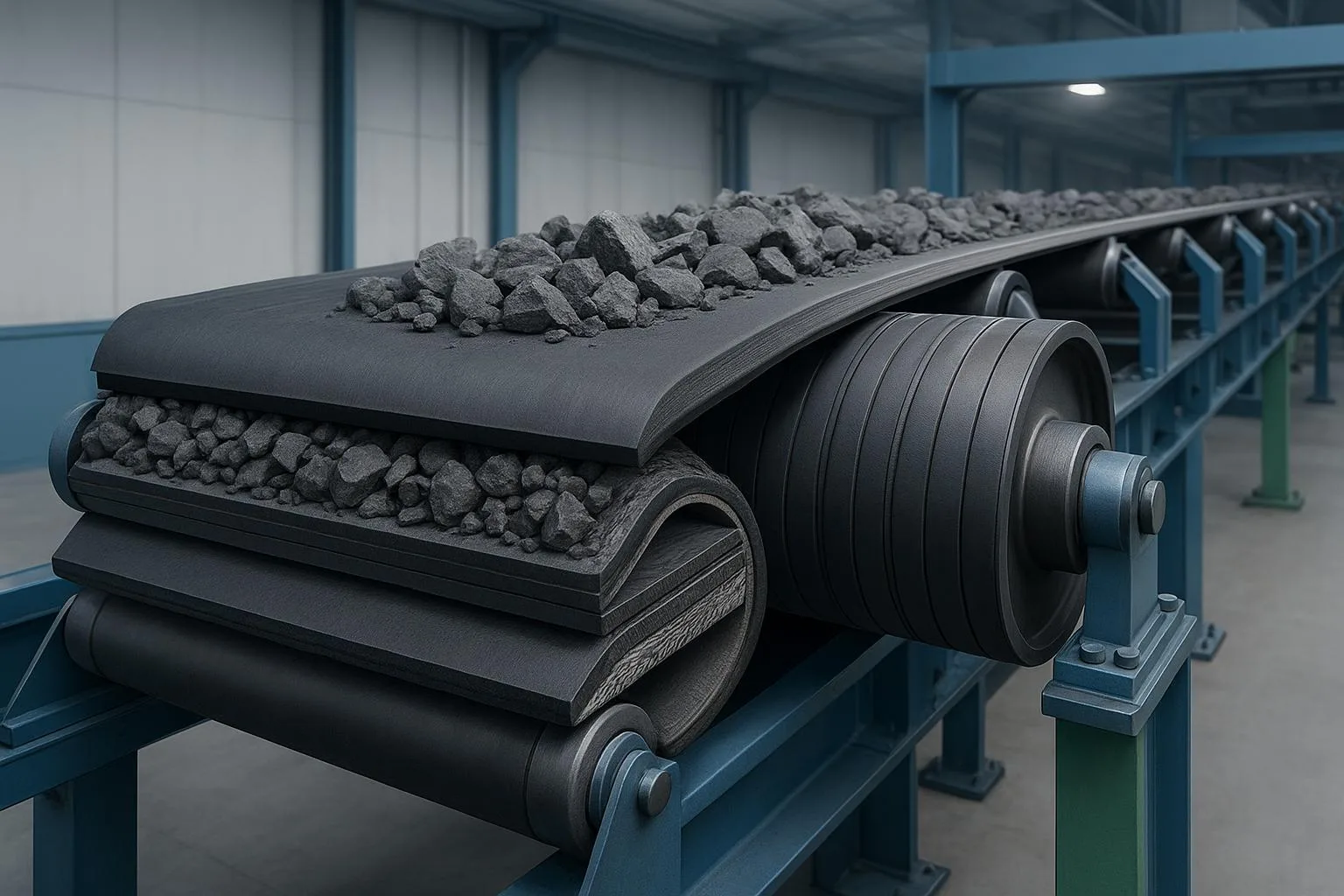
A conveyor belt is a composite: a load‑bearing carcass that provides tensile strength and stiffness, and rubber/plastic covers that protect the carcass from wear, heat, oil, and fire. Selecting materials is about matching these functions to your loads and environment.
Carcass constructions explained
The carcass determines tensile rating, elongation, and minimum pulley diameter. Fabric belts are designated and specified under ISO 14890 for general surface use, while steel‑cord belts follow the ISO 15236 series.
-
EP: Polyester warp with polyamide (nylon) weft. Balanced elongation, good troughability, common in multi‑ply belts.
-
NN: Polyamide (nylon) warp and weft. Higher elasticity and impact absorption; often used where shock loads dominate.
-
Steel cord: Parallel steel cords embedded in rubber. Very low elongation, high tension classes, and long‑distance haulage; larger pulley diameters required.
According to ISO’s conveyor belting catalogues, ISO 14890 defines how textile belts are designated (plies, thickness, tensile classes), and ISO 15236‑1 covers design and mechanical requirements for steel‑cord belts used in general service. Always check the manufacturer’s minimum pulley diameter (D_min) tables and provide safety margin—industry guidance cautions against selecting “the smallest allowable” if reliability is critical.
Carcass comparison (selection cues)
References: ISO 14890 (textile belts), ISO 15236‑1 (steel‑cord belts); CEMA/Martin engineering cautions on transitions and pulley sizing.
Cover compounds and performance properties
Covers protect the carcass against abrasion, heat, oils/chemicals, fire, and static build‑up. Specify by compound and by required test performance.
Cover compounds and what they solve
Citations used later in-text reference: ISO/TC 41/SC 3 listings for ISO 4195, ISO 340, ISO 284, and ISO 14890; DIN 22102 context; U.S. eCFR for MSHA Parts 14/75.
Applications and real‑world scenarios
-
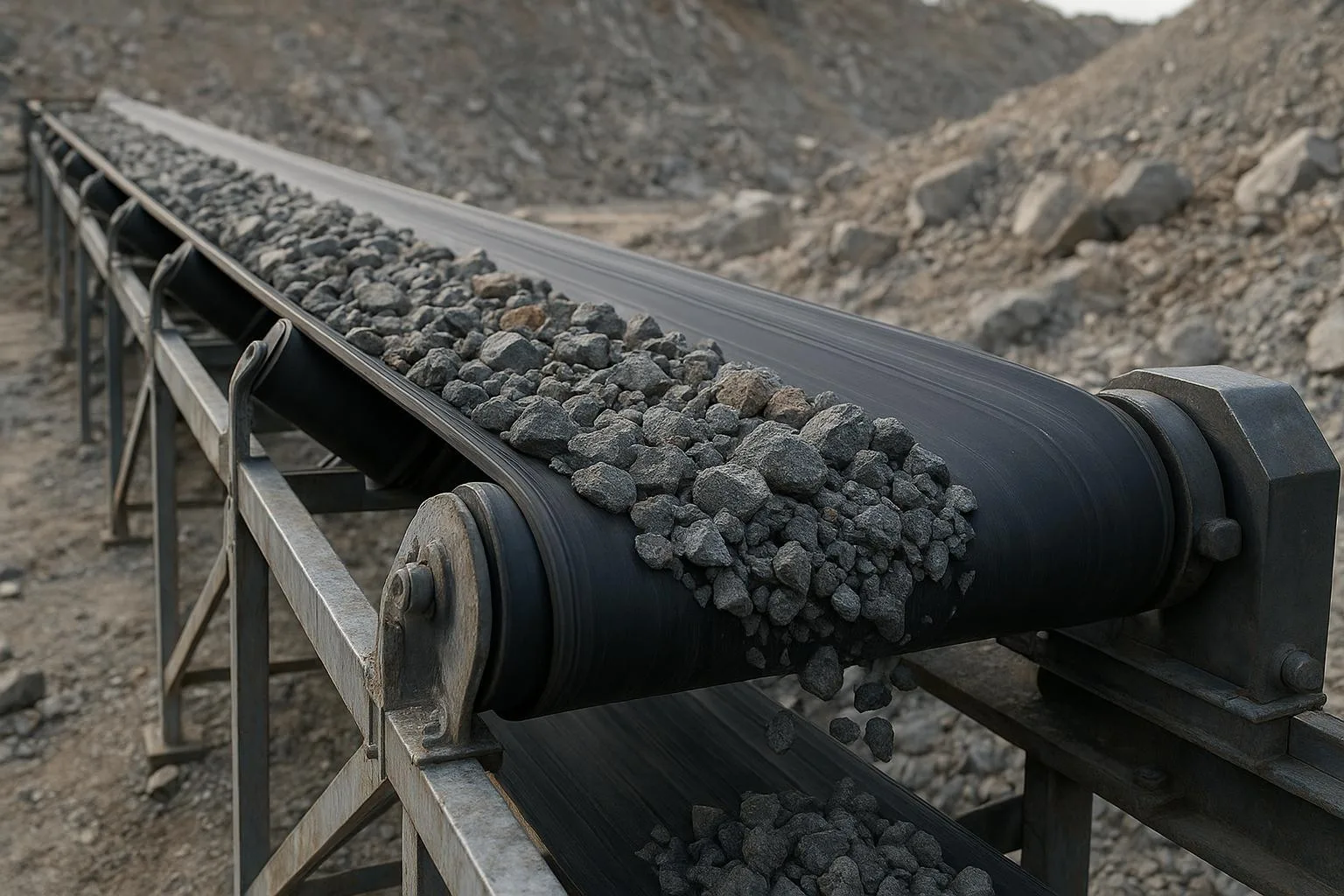
Mining and quarrying (abrasive rock): Favor EP or NN multi‑ply carcasses with abrasion‑resistant covers (DIN 22102 classes used as a practical reference). Where fine dust is present near transfer points, specify antistatic compliance to ISO 284. For open‑pit primary crushing with heavy impact, NN’s elasticity can help absorb shocks; check idler class and skirt wear.
-
Cement and clinker: Hot clinker can lead to cover hardening and crack growth. Select a heat‑resistant cover validated by ISO 4195 test class, and confirm the belt’s continuous/peak temperature range on the OEM datasheet. EP carcasses are common; ensure transition distances prevent cupping. Use ceramic lagging on drive pulleys when slip risk increases at high temperature.
-
Steel and sinter plants: Near sinter or hot slabs, temperature spikes and radiant heat dominate. Use an ISO 4195‑validated heat grade; add shielding and ensure cleaners are rated for temperature. Splicing must suit heat exposure; hot vulcanized splices typically perform best in these zones.
-
Biomass and recycling (oily fines, static): NBR covers resist swelling from oils/hydrocarbons. Keep belts within the compound’s temperature envelope, and request ISO 284 antistatic compliance if handling dry fines. Regularly audit belt cleaners to limit carryback that can accumulate oils on return idlers.
-
Underground coal (U.S.): Belts must be approved under MSHA 30 CFR Part 14, and operations must comply with Part 75. Splicing is critical: §75.1731 requires that any splice maintain the belt’s flame‑resistant properties. Keep documentation of approvals and splice kit compatibility in the maintenance records.
Selection workflow: how to specify the right materials
Use this sequence during design or procurement. Think of it as a short pre‑RFQ due‑diligence process.
1. Define the material and loading duty
Capture bulk density, lump size and drop height (impact energy), abrasiveness, moisture, and fines/dust behavior. Decide if gouging or sliding abrasion dominates—this affects cover choice and thickness.
2. Define the environmental envelope
Record continuous and short‑term peak temperatures at loading, along the carry, and on the return. Note oils/solvents/chemicals, UV/ozone, water exposure, and housekeeping limits. Heat and oil resistance decrease splice life—plan accordingly.
3. Confirm compliance and safety requirements
Above ground, many buyers request ISO 340 flame reaction and ISO 284 antistatic when dust or enclosed conveyors are present. Textile belts should be designated per ISO 14890. Underground coal in the U.S. requires MSHA Part 14 approvals and adherence to Part 75 operational rules.
-
According to ISO/TC 41/SC 3 records, ISO 14890, ISO 4195, ISO 340, and ISO 284 are part of the conveyor belting standards portfolio; use them as specification anchors.
-
The eCFR states under Part 75 that splicing must maintain flame resistance of approved belts.
4. Shortlist the carcass
Estimate tension class and elongation limits from your design. Choose EP/NN for moderate tensions where flexibility and smaller pulley diameters are needed. Choose steel cord for long runs and high tensions where very low elongation is essential. Cross‑check the belt’s D_min against all pulleys and the planned splice type; increase diameters if you’re near the limit.
5. Select the cover compound and grade
-
Abrasion: reference DIN 22102 classes (Y/W/X) as a common market shorthand, and verify numeric thresholds with the OEM or the DIN text.
-
Heat: select per ISO 4195 validation class; confirm the OEM’s continuous/peak values for the named grade and ensure cleaners/lagging can handle the heat.
-
Oil/chemicals: pick NBR or other compatible compounds; verify swelling resistance and temperature window from the datasheet.
-
Flame/antistatic: specify ISO 340 and ISO 284 as required by site policy and risk assessment.
6. Check components for compatibility
Ensure idler class and spacing, trough angle, transition distances, pulley diameters and lagging hardness/profile all align with the selected carcass and cover. For high‑temperature service, confirm cleaner blade material and adhesive systems are rated for the heat.
7. Define splicing and QA
Choose mechanical fasteners only where permitted and where D_min and impact allow; otherwise use hot (or cold) vulcanized splices per the OEM method. Underground coal users in the U.S. must ensure splices preserve MSHA flame resistance (see §75.1731). Record batch numbers for rubber, cement, and primers.
8. Assemble the RFQ package
Include measurable requirements and request certificates. A compact RFQ checklist is below.
RFQ checklist (attach to your specification)
A neutral supplier example
Many buyers pair the workflow above with a short vendor shortlist. For instance, a team may review catalog options for EP/NN and steel‑cord belts, idlers, and pulleys using a single supplier hub to check carcass types and cover grades. See the product overview at BisonConvey products for an example of how options are organized; the same approach works with any qualified manufacturer.
Problems and troubleshooting: symptoms, causes, fixes
Use this matrix during inspections and root‑cause reviews. Maintenance sources from Martin Engineering’s Foundations and inspection guides inform the actions cited.
Sources: Martin Engineering Foundations and inspection manuals; ISO/TC 41/SC 3 standards for material properties.
Best practices and maintenance
Keep selection and upkeep connected—materials last when the system supports them.
-
Commissioning and transition tuning: Verify transition distances and troughability before full load. Premature cupping or bowing is a red flag; adjust idler spacing and heights.
-
Cleaning and skirting: Cleaner blades must match the belt compound and temperature window. Inspect and tension per manufacturer guidance to reduce carryback that accelerates wear.
-
Pulley lagging and alignment: Choose lagging compatible with heat/oil exposure; ceramic lagging improves traction in high‑temp dusty service. Regularly laser‑align pulleys to prevent edge wear.
-
Storage and handling: Keep belts on proper cores, covered, and off the floor; protect splicing kits from temperature and humidity swings to preserve adhesive performance.
Standards appendix (quick explanations with sources)
-
ISO 14890 — Textile conveyor belts for general surface use; defines designation and performance elements for rubber/plastics covered belts. See the scope summary in the ISO catalogue and technical committee page under ISO/TC 41/SC 3. Reference: ISO 14890:2013 scope and designation requirements and the ISO/TC 41/SC 3 portfolio.
-
ISO 4195 — Heat resistance of covers; classifies performance via heat ageing at 100/125/150 °C and measuring hardness/tensile/elongation changes. Reference: ISO 4195:2012.
-
ISO 340 — Reaction to fire (above‑ground belts); commonly summarized as lab self‑extinguishing performance. Context: Agg‑Net’s explainer and the ISO ICS listing. References: Agg‑Net standards explainer and ISO 340 ICS page.
-
ISO 284 — Electrical conductivity/antistatic; sets maximum belt electrical resistance at 3 × 10^8 Ω. Reference: ISO 284:2012.
-
ISO 22721 — Underground mining belts of textile construction; performance and safety requirements for belts used underground. Reference: ISO 22721:2023.
-
ISO 15236 series — Steel‑cord belts; Part 1 covers design/dimensions/mechanical requirements for general use, Part 3 addresses underground safety. References: ISO 15236‑1:2016 record and ISO ICS 53.040.20.
-
DIN 22102 — Practice reference for abrasion‑resistant cover grades (Y/W/X). Numeric thresholds should be confirmed directly from the DIN text or an OEM technical bulletin. Context: Agg‑Net explainer.
-
U.S. MSHA — Underground coal conveyor belts must be approved under 30 CFR Part 14; operations follow Part 75. Splices must maintain flame resistance per §75.1731. References: eCFR Part 75 and the 30 CFR index for Part 14.
Conclusion and next steps
Selecting belt materials is an engineering decision first. Start with duty and environment, lock the carcass type, then name the cover compound and verification tests. Align components, splicing, and maintenance to the chosen materials, and attach certificates in your RFQ to make compliance and commissioning straightforward.
If you need a second set of eyes on a specification or want to benchmark options for a given duty, a qualified supplier can help organize carcass and cover choices without marketing spin. For a neutral starting point, review EP/NN and steel‑cord options on the BisonConvey products hub and contact the team for custom configurations or documentation support.
Got a tricky temperature‑plus‑oil application or a MSHA splice question? Send it over—there’s almost always a standards‑based path to a durable solution.