Pete Savage Appointed President and CEO of West River Conveyors
In October 2021, West River Conveyors named Pete Savage as President/CEO, a detail corroborated on the company’s management page and subsequent communications signed by the President/CEO. See West River’s leadership listing in the Management Team and a later Fire Update post signed by the President/CEO for on-site confirmation of the role and timeframe. Sources: West River’s Management Team page (accessed 2026) and Fire Update note. This article recaps the fact pattern—“Pete Savage Appointed President and CEO of West River Conveyors” (also phrased publicly as “Named President/CEO”)—and, more importantly, offers practical engineering guidance for reliability, component selection, and maintenance aligned to CEMA/ISO practices.
Why “Pete Savage Appointed President and CEO of West River Conveyors” matters to engineers
Leadership influences how vendors prioritize reliability engineering, standardization, and after-sale support. For buyers and plant teams, that translates into better alignment with CEMA dimensions, ISO belt specifications, and the day-to-day basics that prevent downtime.
Key takeaways
-
West River’s leadership appointment occurred in October 2021; confirm via the firm’s Management Team page and later CEO-signed updates.
-
For plant engineers, leadership priorities can shape vendor practices: reliability focus, standards alignment, and lifecycle support.
-
Use CEMA for idler dimensional classes and selection cues; use ISO 14890 (textile belts) and ISO 15236 (steel cord) for belt specification and splice requirements.
-
Practical engineering wins come from basics done well: alignment, correct lagging, clean loading, and disciplined LOTO-backed maintenance.
Core concepts and standards that matter on the plant floor
Leadership changes often translate into execution priorities: delivery reliability, standardization across models, and sustained support. For bulk handling teams, those priorities show up in how vendors specify idlers, pulleys, and belts—and how they support commissioning, troubleshooting, and maintenance.
-
CEMA idler classes (C/D/E, and higher) are dimensional and duty categories used across vendors. Selecting the correct class aligns roll diameter, shaft size, and frame design to load, speed, lump size, and environment. For scope and publication access, see CEMA’s publications page.
-
ISO 14890 (textile belts) defines requirements for rubber- or plastics-covered belts with EP/NN carcasses used in general surface applications; you’ll specify cover grade and application properties against this standard. Reference: ISO 14890 catalogue.
-
ISO 15236 (steel cord belts) covers constructional/performance requirements and, in Part 4, vulcanized joints (splice) design. Reference: ISO 15236-1.
Simple glossary for clarity:
-
TIR (Total Indicator Runout): a measure of the roundness/concentricity of a pulley or roll; excessive TIR can drive belt vibration and tracking drift.
-
Lagging: a friction and wear surface bonded to pulleys (rubber or ceramic) that improves traction and reduces slip.
-
Take-up: the mechanism (gravity, screw, hydraulic) that maintains belt tension. Incorrect take-up travel or force can cause slip or tracking instability.
Why this matters: in my field work, most chronic conveyor issues trace to a handful of fundamentals—misalignment, poor lagging choice, under/over-tensioned belts, and contamination. When leadership emphasizes reliability engineering and standards alignment, plants see fewer surprises and faster root-cause resolution.
Practical applications and use cases (engineer’s-eye view)
-
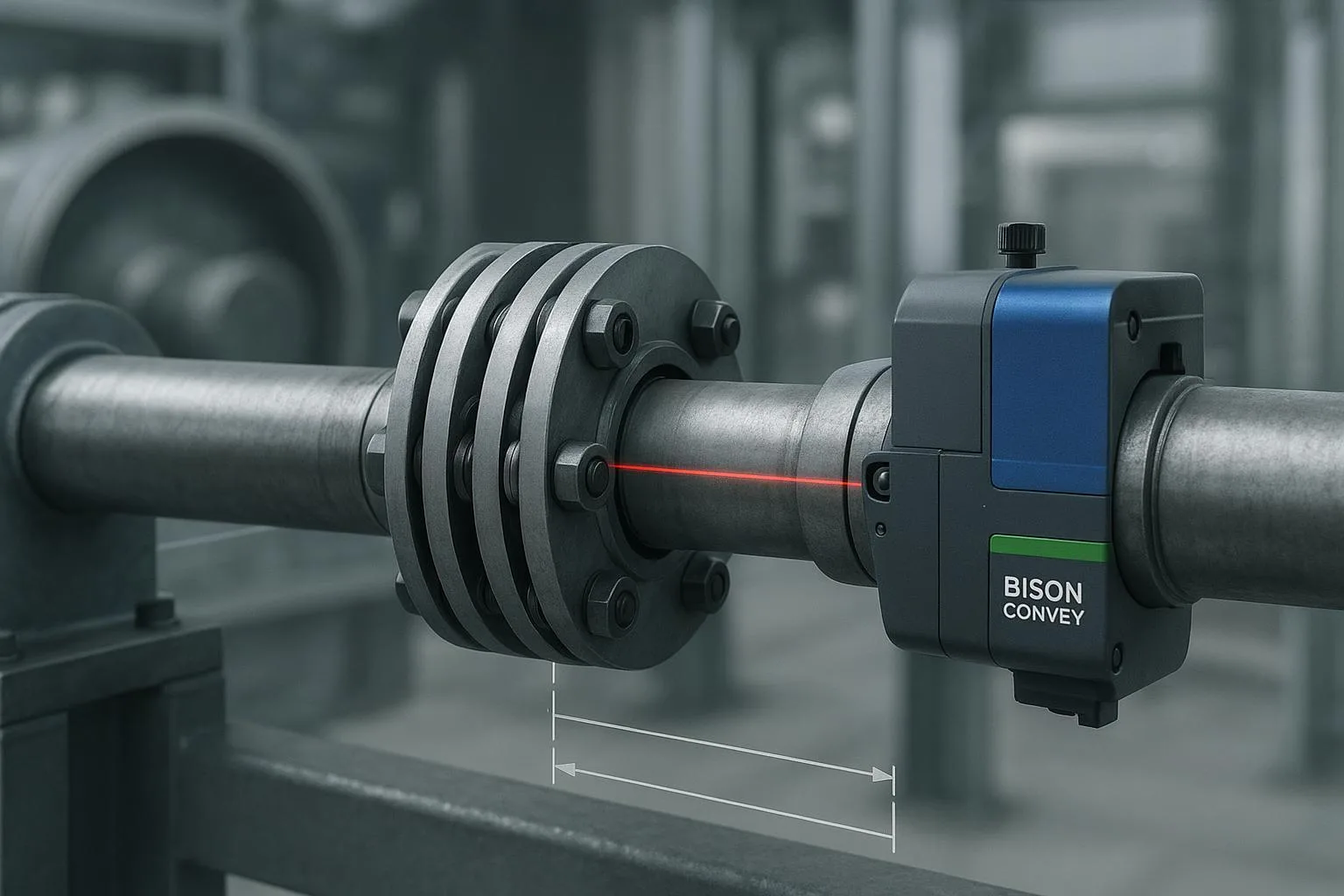
Tracking drift due to idler frame squareness (typical plant scenario). A 1–2 mm skew in troughing frame alignment over several stringers can walk a belt off-center within minutes. Corrective actions: laser or string-line frame alignment, verify pulley centers, clean build-up at return rolls, and fine-adjust low-tension idlers in ~3 mm increments. You’ll often see belt edge wear easing once skew is corrected.
-
Slippage at the head pulley in wet ore. A line with clay carryback switched from smooth rubber lagging to diamond-pattern rubber, which shed water and increased effective friction. When carryback persisted, ceramic lagging at the head solved the seasonal slip without over-tensioning, stabilizing throughput.
-
Spare-parts standardization across twin conveyors. By standardizing on CEMA D class idlers and consistent bearing housings, the site consolidated spares and shortened MTTR. This also simplified inspection training because technicians worked with a narrower set of components.
Selection and implementation guidelines (CEMA/ISO-aligned)
Use these as directionally accurate guidelines; always validate against your OEM data, site duty, and standards.
Mapping CEMA idler classes to typical duty bands
CEMA classes correlate to duty and dimensions. Use this table as a quick orientation; consult CEMA 502 and OEM catalogues for exact dimensions and ratings.
Textile vs. steel cord belts
-
Textile carcass (EP/NN) belts: specify to ISO 14890; suitable for short-to-medium runs, moderate tensions, and easier splicing/repairs.
-
Steel cord belts: specify to ISO 15236; preferred for long overland runs, high tensions, and low elongation; follow Part 4 guidance for splice design and QA.
Pulley lagging selection — traction vs. wear vs. environment
Decision drivers include moisture, contamination, tension, and wear. The matrix below summarizes common options.
Selection notes: For deeper guidance on lagging types, see Flexco’s technical overview on lagging choices: Which pulley lagging should you choose?. During inspections, include lagging condition as a root-cause check alongside loading and tracking, as outlined in Martin Engineering’s inspection guidance: nine critical conveyor inspection points.
Implementation reminders
-
Verify minimum pulley diameter vs. belt construction per OEM/ISO guidance; under-sizing increases flex fatigue and splice stress.
-
Match idler sealing to environment (water, fines, corrosives) to avoid premature bearing failures.
-
Don’t “tension away” a traction problem. If slip occurs, reassess lagging and wrap angle before increasing take-up force.
For commissioning/alignment specifics, see the step-by-step methods in our Conveyor Belt Installation Guide — Ultimate Guide.
Common problems and troubleshooting (field-proven cues)
Instead of a long list, use this quick diagnostic matrix to connect symptoms with likely causes and first checks.
For visual pattern recognition (edge wear, gouging, blistering), you can reference our internal photo library in the Rubber Conveyor Belt Visual Resources & Imagery after you’ve stabilized tracking and cleaning.
Best practices and maintenance (keep availability high)
Commissioning checklist (do this before load)
-
Verify structure and pulley centers are square; measure and record TIR on critical pulleys.
-
QA the splice: check squareness, steps/gaps, and profile; confirm cleaners won’t strike the splice.
-
Calibrate take-up travel and set initial tension; jog empty at low speed, then introduce load gradually and recheck tracking at intervals.
Safety note: Always follow lockout/tagout and site procedures. OSHA requires written LOTO, personal lock/tag application and verification of zero energy; MSHA emphasizes locking/tagging and physically blocking against hazardous motion. See OSHA’s LOTO scope summary and MSHA’s best-practice alert. Remember stored energy in gravity take-ups and coast-down hazards.
Preventive rhythm that works
-
Inspect cleaners, lagging, and loading points on a fixed cadence; most plants succeed with weekly quick looks and monthly deep-dives. Tie findings to MTBF/MTTR and availability to prioritize work.
-
Use thermography on head, snub, and take-up rolls to spot hot bearings before failure, and note vibration/noise trends on idlers.
-
Keep a parts standardization plan to cut MTTR. The fewer idler classes and bearing styles you stock, the faster your changeouts will be.
For a ready-to-use checklist you can adapt on site, see our Mining Conveyor Belt Maintenance Checklist.
Conclusion and next steps
The fact pattern is clear: Pete Savage was appointed President/CEO at West River Conveyors in October 2021, confirmed on the company’s own pages. For engineers and buyers, the practical takeaway is to anchor vendor discussions in standards (CEMA, ISO), specify components with an eye to environment and duty, and enforce disciplined commissioning and LOTO-backed maintenance.
If you need engineered belts, idlers, or pulleys aligned with CEMA/ISO practices—and a partner to talk through selection and maintenance—consider BisonConvey for component supply and practical application guidance.