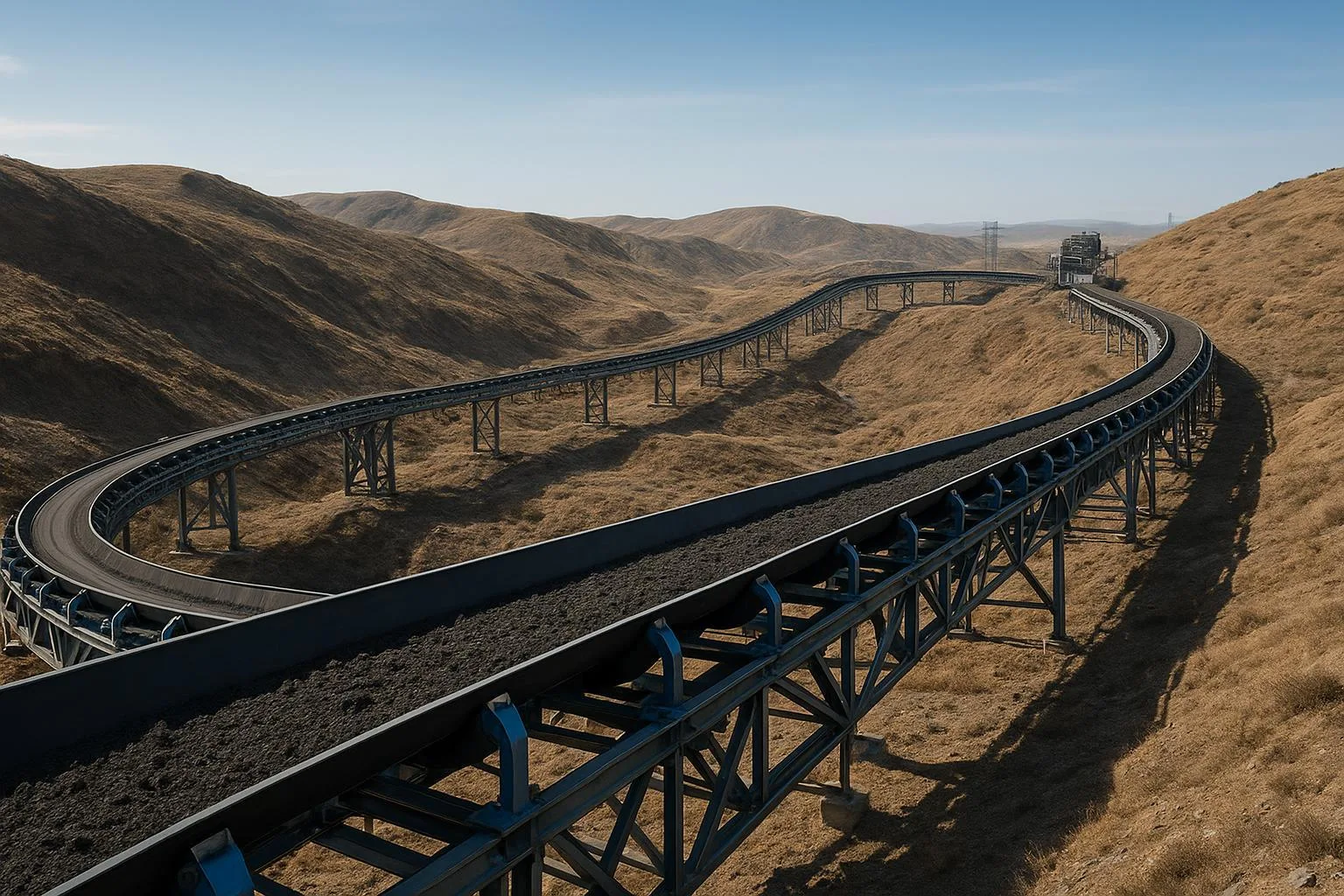
Mining Conveyor Belt Maintenance Checklist
A well-run conveyor is quiet, centered, and clean. In mining, that only happens when maintenance is disciplined, auditable, and safety-led. This Mining Conveyor Belt Maintenance Checklist distills field experience and recognized practices (CEMA/ANSI-CEMA, OEM guidance, and OSHA/MSHA/MIOSHA-style safety expectations) into clear, repeatable tasks you can drop into your PM program and CMMS.
Before any intrusive work: stop, isolate, lock and tag all energy sources per your LOTO procedure, and verify zero energy. Functional tests of emergency stops (E‑stops) and pull cords should be performed on a documented schedule defined by your OEM and risk assessment—never rely on assumptions.
Key takeaways
-
Use a layered, time-based schedule (daily/weekly/monthly/quarterly–annual) with function-specific checks for belt, splices, idlers/rollers, pulleys/lagging, cleaners, chutes/skirts, drives/electrical, structure, and safety devices.
-
Make every checklist item auditable: action verb + observable condition + tool (e.g., IR thermometer, straightedge/laser, tension gauge) + record in CMMS.
-
Integrate safety at every step: guards in place, tested E‑stops and pull cords, and strict LOTO before intrusive work; see this overview of conveyor safety regulations and inspection practices.
-
Track trends, not just snapshots: drift, carryback, bearing temperature, and motor current should be compared over time to prevent failures.
-
Favor root-cause fixes: correct alignment, tension, sealing, and loading conditions before replacing parts that will fail again.
Core concepts and technical foundations
-
Belt components and interfaces: The belt interacts with idlers/rollers, pulleys (head/tail/snub/take‑up), cleaners, and transfer chutes. Failures often originate at interfaces (nip points, splices, skirting, lagging bonds).
-
Safety devices and guarding: Guards must prevent access to moving parts; E‑stops and pull cords must de‑energize systems immediately, require manual reset, and prevent auto‑restart. MIOSHA’s “Conveyors – Hidden Hazards” explains common controls and walkway/guarding expectations in accessible terms (see the official MIOSHA guidance in the publication Conveyors – Hidden Hazards, PDF).
-
Standards awareness: Treat CEMA/ANSI-CEMA as design/operations references; follow OEM manuals for specific tolerances and service intervals. Site SOPs and local regulations (OSHA/MSHA or equivalent) govern legal compliance.
-
Maintenance cadence: Industry sources converge on tiered PM: daily operator checks, weekly/monthly technician inspections, and periodic service tasks. For example formats and focal points, compare the field-ready outlines from the West River daily and periodic conveyor checklist and the FMH conveyor preventive maintenance checklist.
The Mining Conveyor Belt Maintenance Checklist (by interval)
Below, each interval groups actions by function. Adapt frequencies to duty, environment, and OEM guidance.
Daily — Operator walkdown
Safety & preparation
-
Verify guards are present and secure; report missing/damaged guards immediately.
-
Test visible E‑stops/pull cords at shift change as per site program; confirm immediate stop, manual reset required, and no auto‑restart. Document test.
Belt & tracking
-
Observe belt tracking along accessible runs; if drifting, note location/direction and open a work order.
-
Scan belt surface and edges for cuts, gouges, blisters, and frayed edges; log defects with photos.
Splices (visual)
- Watch splices as they pass: look for lifted edges, cracks, or noise through cleaners; report any protruding mechanical fasteners.
Idlers & rollers
- Listen for squeal/rumble; flag any seized/frozen rollers. Remove obvious material build-up if safe.
Pulleys & lagging (gross)
- Observe head/tail areas for slippage signs (burnt smell, polished belt) and carryback accumulation.
Cleaners & carryback control
- Check primary cleaner contact at the head pulley; if residue increases downstream, request retension.
Chutes & skirts
- Confirm transfer points aren’t spilling excessively; report leaking skirts.
Drives & electrical (visual)
- Note unusual noise, odor, or visible arcing; report immediately.
Structure & housekeeping
- Keep walkways clear; remove spillage from under-return side where practical and safe.
Documentation
- Record all observations in CMMS with pass/fail and notes; attach photos for defects.
Weekly — Technician preventive round
Safety & preparation
- Apply LOTO before hands-on checks. Verify stored energy is released.
Belt & tracking
- Measure belt position vs. centerline over a short straight run; document drift trend and suspected cause (idler alignment, build-up, loading skew).
Splices
-
Vulcanized: inspect for cracks and separation; check straightness with a straightedge.
-
Mechanical: check fastener tightness and flushness; confirm cleaner clearance over the splice.
Idlers & rollers
- Spin-check accessible idlers for free rotation; listen for bearings. Spot-check bearing/roller shell temperature with an IR thermometer and log any hot readings relative to ambient.
Pulleys & lagging
- Inspect for uneven wear, glazing, or missing lagging sections; check for entrapment at tail and snub pulleys.
Cleaners & carryback control
- Inspect blade wear and tension indicators; retension or replace as required. Confirm secondary cleaner/frame alignment if installed.
Chutes & skirts
- Check skirt rubber condition and pressure; adjust to seal without overloading belt cover. Inspect chute liners for wear.
Drives & electrical
- Check gearbox oil level/condition per OEM sight glass or dipstick. Observe for leaks and unusual vibration/noise.
Structure & fasteners
- Torque-check a sample of guard and frame fasteners; tighten or replace as needed.
Documentation
- Update CMMS, including measurements, actions taken, and new work orders.
Monthly — Detailed inspection
Safety & preparation
- LOTO and verify zero energy. Coordinate with operations for extended access.
Belt & damage taxonomy review
- Walk full length where accessible; categorize defects (edge damage, top-cover cracking, impact damage, cleaner damage) to guide repair priority, using the Martin Engineering overview of belt damage types as a reference framework.
Splices
-
Vulcanized: examine splice line for straightness/squareness and surface cracks; document any separation.
-
Mechanical: verify fastener torque where applicable; replace worn/missing hardware; dress/skive high spots that interfere with cleaners.
Idlers & rollers
- Replace any seized/idling roughly; log bearing condition trends; verify idler frame squareness.
Pulleys & lagging
- Assess head and drive pulley lagging adhesion at edges; look for signs of debonding or water ingress under tiles.
Cleaners & carryback control
- Measure carryback accumulation downstream (visual scale) and compare to prior months; adjust cleaner type/tension as needed.
Chutes, skirts, and dust control
- Verify sealing along full length; examine dust suppression or collection equipment operation and maintenance status.
Drives, motors, couplings
- Trend motor current/temperature; inspect couplings for wear/misalignment; follow OEM guidance for reducer service intervals (example schedules referenced by West River are informative but OEM directions govern).
Structure & corrosion
- Inspect structural members and supports for corrosion, cracking, and misalignment; plan coating or repair.
Documentation & spares
- Confirm critical spares status (cleaner blades, idlers, fasteners, splice kits); update CMMS with findings and WOs.
Quarterly to Annual — Supervisor/audit program
Safety systems
- Conduct formal function tests of all E‑stops and pull cords per site safety program: verify immediate stop, manual reset, and no auto‑restart; document device-by-device results and corrective actions. Many regulators and safety guides endorse periodic documented testing; align cadence with OEM and risk assessment (see OSHA/MSHA practice notes and state/territory safety guides).
Alignment & tensioning
- Audit take‑up travel remaining and any obstructions; confirm tensioning mechanism operates smoothly and maintains belt tension.
Pulleys & lagging
- Perform a wear and condition audit of lagging, including crown integrity; schedule replacement before slippage risks rise.
Training & SOPs
- Verify operator training on walkdowns, escalation triggers, and LOTO; refresh where gaps exist.
Drives & reducers
- Service gear reducers per OEM (e.g., post break‑in oil change, then hours‑based intervals). Record vibration readings if your site program includes them.
Structure & compliance
- Complete corrosion survey and guard audit; verify labels/signage visibility, access control, and walkway condition consistent with guidance like MIOSHA’s hazards overview.
Documentation & CMMS
- Review trends (tracking, carryback, hot bearings, motor current), close completed WOs, and update PM frequencies based on risk.
Comparison tables
Table 1 — Splicing methods: maintenance implications (inspection focus and service effort)
| Aspect | Mechanical Splice | Vulcanized Splice |
|---|---|---|
| Install speed | Fast; minimal downtime | Slower; requires heat/pressure (hot) or adhesives (cold) |
| Durability | Shorter-term; periodic tightening/replacement | Longer-term; near-original strength |
| Inspection focus | Fastener wear/looseness; protrusion/flushness; cleaner clearance | Visual cracks/separation; straightness/squareness |
| Cleaner interaction | Risk of interference if not dressed/skived flush | Generally smoother interaction |
| Typical use | Emergency/temporary or where quick turnaround is needed | Permanent repairs/long-term reliability |
For background on splice options and their implications, see this practical overview of conveyor belt splicing methods.
Table 2 — Belt cleaners: primary vs. secondary
| Aspect | Primary Cleaner | Secondary Cleaner |
|---|---|---|
| Location | At head pulley discharge (around 3 o’clock) | After discharge where belt is flattest |
| Blade material | Commonly urethane | Often tungsten carbide |
| Maintenance | More frequent inspection/tensioning | Periodic retensioning and inspection |
| Purpose | Remove bulk material at discharge | Remove residual fines/carryback |
For placement and maintenance concepts, compare the field guidance in Martin Engineering’s knowledge pages on cleaner selection and maintenance.
Practical applications and use cases
-
After heavy rain, recurring drift: Moisture can change loading patterns and carryback, nudging the belt off‑center. Confirm return idlers are clean, check take‑up tension, verify splice squareness, and recheck skirt pressure. If drift reappears in the same zone, suspect frame misalignment or an off‑center loading condition.
-
Carryback spike with cleaner wear: A sudden rise in spillage beneath the return side often coincides with worn or under‑tensioned primary blades. Inspect blade wear/tension, verify secondary cleaner contact, and adjust. If mechanical splices are present, check that fastener height is not interfering with cleaner blades.
-
Neutral micro‑example (components and maintenance burden): In abrasive mining duty, specifying robust idlers with sealed-for-life bearings and balanced steel rolls, plus ceramic-lagged head pulleys and a properly rated belt carcass, can reduce reactive maintenance by resisting common failure modes. Suppliers like BisonConvey engineer belts, idlers, and pulleys for harsh conditions; in practice, that means components that support stable tracking and cleaner interaction when installed and maintained per OEM instructions.
Selection and implementation guidelines
-
Tailor intervals by risk: Increase frequency for wet, abrasive, or high‑load applications, and for conveyors with critical uptime.
-
Tools to formalize inspections: IR thermometer for bearings/rollers; straightedge or laser for splice straightness and frame alignment; vibration pen for quick trend checks; torque wrench for fasteners; feeler/tension gauges for cleaners.
-
CMMS templates: Use component-level tasks and fields for date/inspector, pass/fail, measurements, severity code, photos, and follow‑up work orders. An audit-ready pattern is outlined in this example of a conveyor belt preventive maintenance checklist format.
-
Safety program integration: Document E‑stop/pull-cord function tests with device ID, location, result, reset verification, and corrective action. Ensure no auto‑restart logic after reset.
Common problems and quick troubleshooting
-
Mistracking: Verify idler condition and alignment first; clean build-up; check splice squareness and take‑up tension; confirm loading is centered. If drift is localized, inspect structure squareness in that span.
-
Slippage at head pulley: Check lagging wear/contamination; confirm take‑up tension and belt load; verify crown condition. If thermal hotspots or burnt odor are present, investigate immediately.
-
Splice separation or fastener loss: Reduce tension to safe level, inspect and repair per OEM method; verify root cause (tensioning, alignment, impact loading) before restart.
-
Carryback and spillage: Restore cleaner blade edge and tension; verify secondary cleaner placement; adjust skirt sealing and check chute liners/flow; eliminate return-side buildup.
-
Hot idler bearings: Replace suspect idlers; confirm lubrication approach (if applicable) and sealing; verify belt load/alignment to avoid side loading.
For practical checklists and focal points used across the industry, compare the West River maintenance outline and the FMH PM checklist format. For defect taxonomy and inspection emphasis, see Martin Engineering’s guidance on conveyor belt damage types. For hazard recognition and guarding concepts, MIOSHA’s official PDF on conveyor hazards remains a useful primer.
Best practices and maintenance tips
-
Safety-first always: Guarding, documented E‑stop/pull-cord tests, and strict LOTO before intrusive work. Many programs adopt shift-based visual checks plus quarterly and annual formal tests per OEM/risk assessment.
-
Clean as you go: Housekeeping reduces fire and slip hazards and lets you spot leaks and drifts faster.
-
Record evidence: Photos of splices, lagging edges, and carryback patterns speed up root-cause analysis.
-
Trend, then act: Track drift distance, bearing temperatures, and carryback over time to predict failures.
-
Fix causes, not just symptoms: Realign frames, correct loading geometry, restore proper tension, and set cleaners correctly before replacing parts.
-
Train the team: Operators who know what “normal” looks and sounds like catch problems early.
Conclusion and actionable takeaways
-
Adopt the layered checklist above, mapped to your site risk and OEM manuals.
-
Make tasks auditable with clear pass/fail criteria, simple tools, and CMMS records.
-
Keep safety controls front and center: verified guards, tested E‑stops and pull cords, and rigorous LOTO.
-
Prioritize root-cause corrections (alignment, tension, sealing) to stretch component life and uptime.
Next steps: If you’re reviewing component specifications for harsh-duty service, you can discuss belt, idler, pulley, and cleaner options with BisonConvey to align design choices with your maintenance strategy and site conditions.
Notes and sources (selected):
-
Safety hazards and guarding concepts are summarized in MIOSHA’s official publication “Conveyors – Hidden Hazards” (PDF, State of Michigan).
-
Practical daily/weekly/monthly task patterns appear in the West River daily and periodic checklist and the FMH preventive maintenance checklist.
-
Belt damage taxonomy and inspection tips: Martin Engineering’s overview of belt damage types.
-
Splicing methods and maintenance implications: John Maye Company — Conveyor belt splicing methods.
-
CMMS documentation structure: osapiens — Conveyor belt preventive maintenance checklist format.