Application of Technical Textiles in Conveyor Belts
Conveyor uptime lives or dies on the carcass—the load‑bearing core below the rubber covers. In heavy industries, technical textiles (EP/NN fabrics, aramid, steel cords, and specialty layers) determine tensile capacity, elongation, impact absorption, and splice integrity. This guide explains the Application of Technical Textiles in Conveyor Belts from an engineering perspective: how materials behave, where each shines, what standards govern them, and how to specify and maintain them for reliable service.
Key takeaways
-
The carcass (fabric or steel cord) sets the belt’s tensile rating, elongation behavior, splicing method, and pulley/transition constraints.
-
EP (polyester warp/nylon weft) offers low elongation and good troughing; NN (nylon/nylon) absorbs impact but needs more take‑up; aramid provides high strength-to-weight with very low creep; steel cord rules long, high‑tension runs.
-
Match covers (abrasion, heat, flame, antistatic) to duty and standards; the carcass does not “fix” heat or flame limits by itself.
-
Use manufacturer tables for pulley diameters and splicing instructions; quality control at the joint often decides the service life.
-
Troubleshoot systematically: track tension, alignment, loading conditions, and idler/pulley health before blaming the belt material.
Core concepts — Application of Technical Textiles in Conveyor Belts
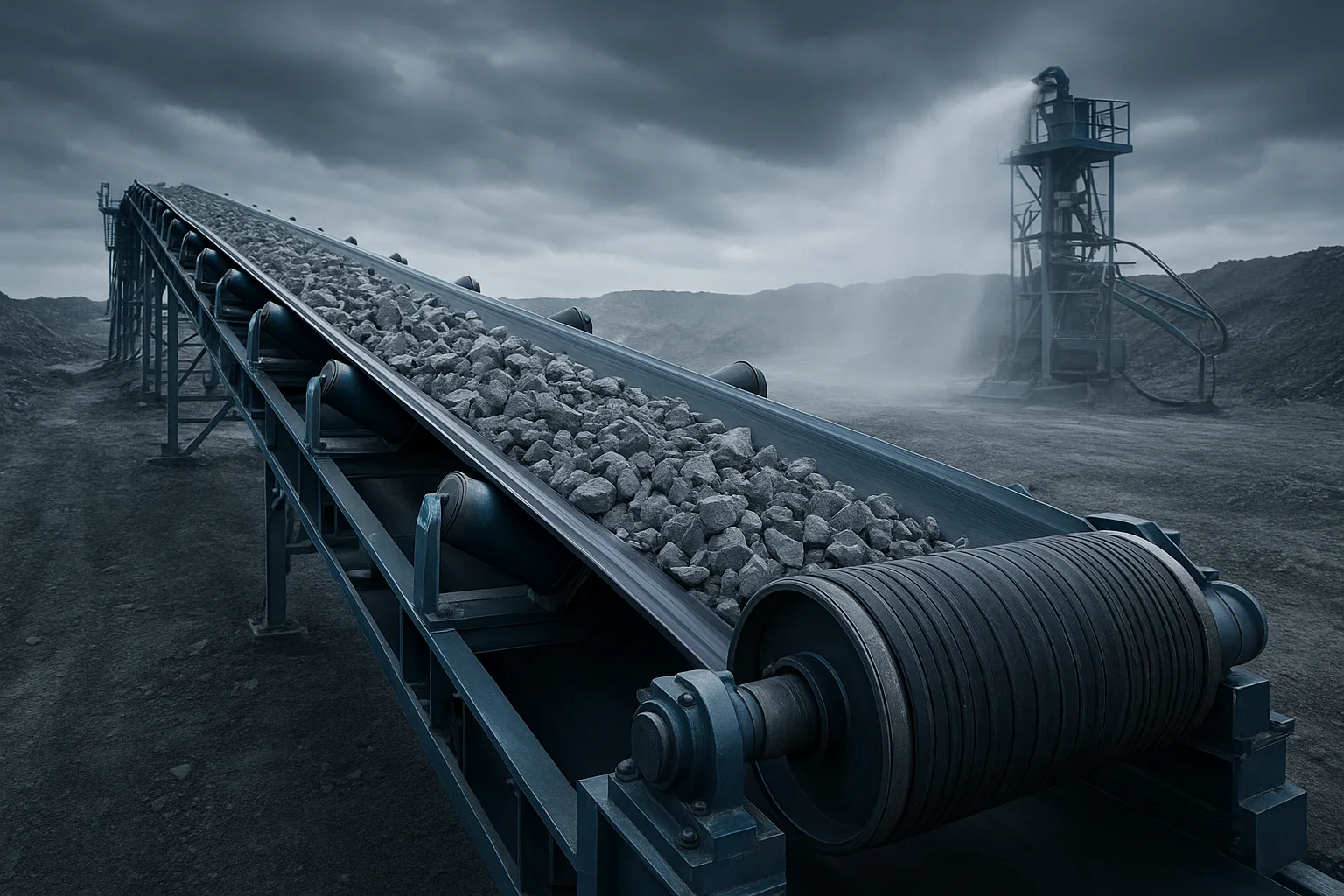
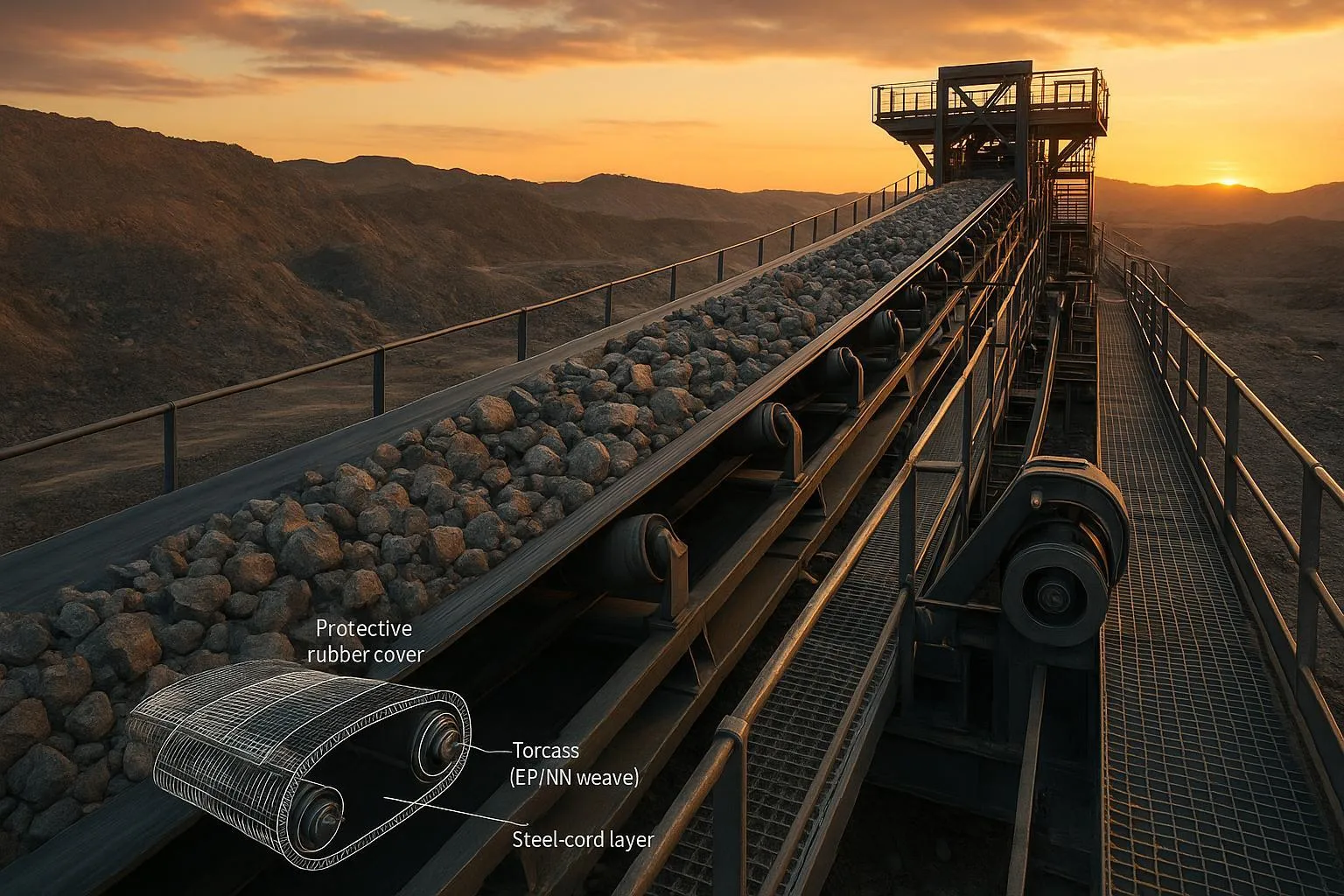
A conveyor belt’s structure has two main parts: protective rubber (or PVC) covers and a load‑bearing carcass. The carcass can be multiple plies of woven fabric (textile belts) or longitudinal steel cables (steel‑cord belts). Warp yarns run along the belt length and carry tension; weft yarns run across the width and influence impact resistance and troughing. Stiffer carcasses need longer transition distances to form a stable trough without edge overstrain, while more elastic carcasses demand more take‑up travel to control stretch. A concise overview of carcass roles and how they influence tracking, tensioning, and transitions is outlined by Martin Engineering’s Foundations knowledge base in its conveyor belt carcass primer (publisher resource, ongoing updates): see the detailed explanation in the Foundations article on the conveyor belt carcass.
- Reference: Martin Engineering’s engineering primer on the conveyor belt carcass discusses carcass types, warp/weft roles, and system effects. See the in‑depth context in the Foundations knowledge base article, Types Of Conveyor Belt Carcasses (publisher resource).
Carcass architecture in brief
-
Plied textile belts: multiple fabric plies (e.g., EP 400/3 = 3 plies with total nominal tensile 400 N/mm) with skim rubber between plies for adhesion and flex.
-
Straight‑warp/breaker constructions: specialized fabrics to improve impact and rip resistance in critical zones.
-
Steel‑cord belts: longitudinal cables embedded in rubber for very high tensile ratings and very low elastic stretch; splicing and QA are specialized.
Material mechanics and behavior (at a glance)
Below is a high‑level comparison to guide initial screening. Always confirm with supplier datasheets and test standards.
| Carcass type | Typical tensile behavior | Elongation/creep behavior | Impact/troughing | Heat/flame/antistatic pairing | Splicing implications | Typical use cases |
|---|---|---|---|---|---|---|
| EP (polyester warp / nylon weft) | Strong warp, stable modulus | Lower elongation than NN; moderate take‑up | Good troughing; balanced impact | Pairs with abrasion, heat, flame, antistatic covers | Hot‑vulcanized finger/step; follow maker’s spec | General duty mining, aggregates, cement, ports |
| NN (nylon/nylon) | Elastic, forgiving | Higher elongation; larger take‑up needed | High impact absorption | Same cover pairing options | Similar splicing; manage stretch during QA | Primary impact zones, short conveyors |
| Aramid fabric | High strength‑to‑weight | Very low creep; low elastic stretch | Good, but protect against sharp transverse cuts | Often used with heat‑resistant/antistatic covers | Careful splice design; drum lagging compatibility | Energy‑sensitive, medium‑long runs where impact is moderate |
| Basalt fabric (emerging) | Thermally robust fibers | Limited mainstream adoption data | To be validated per supplier | Must meet flame/antistatic via full belt build | Case‑by‑case with supplier | Niche applications where fire behavior dominates (verify standards) |
| Steel cord | Highest tensile ratings | Very low elastic stretch | Lower flex in short transitions; excellent for overland | With abrasion/flame/antistatic covers as required | Specialized splices per standards; strict QA | Overland, high‑tension conveyors, long haul |
- Fabric/behavior references: Metso’s overview of fabric conveyor belts describes elongation ranges, flexibility, and typical applications, including abrasion-, heat-, and flame‑resistant cover pairings. See the product and engineering context in Metso’s fabric conveyor belts page (OEM resource).
Typical applications and material mapping
Selecting the right reinforcement is about matching mechanics to duty, not just “stronger is better.” A few practical scenarios show how the Application of Technical Textiles in Conveyor Belts plays out.
Quarry primary crusher discharge (high impact, short length)
-
Problem profile: Large lump, sharp loading, high drop height.
-
Practical choice: EP or NN with robust weft and generous top cover; consider breaker/straight‑warp options in the loading zone.
-
Notes: NN absorbs impact well but needs more take‑up. EP lowers stretch and eases tracking. Use abrasion‑resistant covers and impact idlers.
Cement clinker line (continuous 180–220 °C at loading)
-
Problem profile: Elevated temperatures and thermal cycling.
-
Practical choice: Textile carcass with heat‑resistant covers validated by ageing tests; avoid mechanical fasteners; specify hot‑vulcanized finger splices and check lagging compatibility.
Overland conveyor > 3 km (high tension, energy focus)
-
Problem profile: Very long run, high tensile requirement, low allowable stretch.
-
Practical choice: Steel cord as baseline; in some cases, aramid‑reinforced textile belts offer energy/weight advantages if impact is controlled. Include rip detection and breaker plies where risk exists.
Ports and logistics terminals (abrasion, flame risk, dust)
-
Problem profile: Varied bulk commodities, potential explosive atmospheres.
-
Practical choice: Low‑elongation fabric belts with abrasion‑resistant covers; add flame‑resistant and antistatic properties as required by site classification.
Steel/metallurgy plant (abrasion + heat + potential flame)
-
Problem profile: Mixed duties from coke to hot sinter transfers.
-
Practical choice: Duty‑matched fabric or steel‑cord belts with appropriate heat/flame/antistatic covers.
Example (neutral, non‑promotional): In a limestone quarry upgrade, a supplier such as BisonConvey can help validate an EP400/3, 4+2 mm AR cover belt for a primary impact zone, coordinate impact‑idler spacing, and confirm transition distances against the manufacturer’s tables. The value lies in harmonizing carcass selection with idlers and pulleys, not in a single material choice.
Selection and implementation guidelines
Choosing the right belt is an engineering exercise. Here’s a pragmatic path that respects standards and on‑site realities.
Calculations and rules‑of‑thumb (use as orientation, then confirm)
-
Tensile and elongation orientation: Full‑thickness tensile and elongation are measured per ISO 283; use the concept of elongation at reference force to understand how a belt will stretch under typical working loads. Operate at a conservative fraction of rated tensile and verify with the supplier’s design tables and your drive/take‑up calculations.
-
Take‑up travel: NN generally requires more take‑up than EP; aramid and steel cord have very low creep. Ensure adequate travel to maintain tension across seasonal temperature swings and splice bedding‑in.
-
Transition distance: Stiffer/heavier carcasses need longer transitions to form a stable trough without edge overstrain; check geometry and idler offsets carefully.
-
Covers: Heat, flame, and antistatic performance come from the cover compound and full belt construction; select grades to the risk profile and compliance needs.
For a deeper trade‑off discussion on tension, elongation, splicing, and maintenance, see our internal analysis in the contextual resource on EP versus steel cord selection: compare serviceability and elongation behavior in this EP vs steel cord conveyor belts comparison.
Pulley diameter, take‑up, and transitions — why manufacturer tables matter
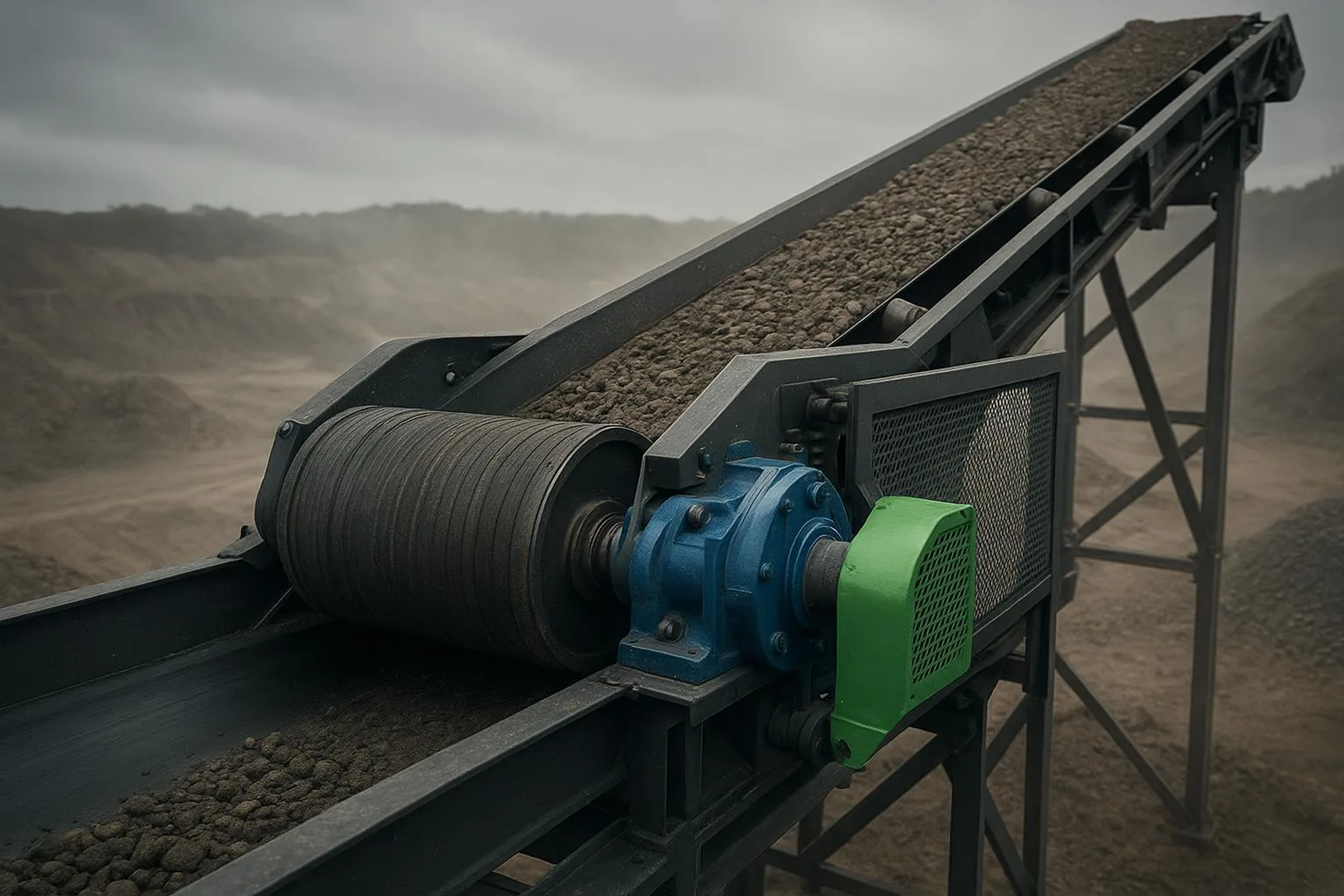
Minimum pulley diameter depends on carcass type and strength, total belt thickness, cover thickness, and splice geometry. Small pulleys increase flexing strain and raise the risk of cover cracking or ply separation. OEM guidances emphasize using the belt‑specific tables rather than generic numbers; that’s the safe way to avoid premature damage at pulleys and transitions.
Splicing methods and QA
-
Textile belts: Hot‑vulcanized finger splices are commonly preferred for high‑integrity service, especially on heat‑resistant belts; process control (temperature, pressure, time) and material compatibility are critical.
-
Steel‑cord belts: Splice design and QA are governed by dedicated standards; alignment, rubber penetration, and curing control are central to joint strength.
-
Field practice: Maintain a splice QA checklist—material verification, surface preparation, environmental control, cure monitoring, geometry inspection, and post‑cure testing (where practical).
Common problems and troubleshooting matrix
Use symptoms to guide inspections before replacing belts. Here’s a compact matrix you can keep handy.
| Symptom | Likely causes | Inspection steps | Corrective actions |
|---|---|---|---|
| Persistent mistracking | Uneven loading, frame misalignment, transition too short | Check chute flow, string‑line structure, review transition geometry | Re‑align structure, improve loading center, increase transition distance if needed |
| Slippage at drive | Low tension, wet/contaminated lagging, insufficient wrap | Measure take‑up force, inspect lagging, verify wrap angle | Increase tension, clean/replace lagging, add snub pulley |
| Premature cover wear/carryback | Inadequate cleaners, abrasive duty, mis‑set skirting | Inspect cleaner setup, blade wear, skirt pressure; sample material | Upgrade primary/secondary cleaners, set skirting correctly, use harder abrasion cover |
| Ply separation/edge fray | Moisture ingress, small pulleys, poor splice cure | Inspect edges/splices, check pulley diameters vs tables | Improve sealing, increase pulley size where required, re‑splice with QC |
| Excessive elongation | Under‑rated carcass, insufficient take‑up, temperature swings | Compare elongation to ISO 283 reference, review take‑up travel | Upsize carcass rating, add take‑up travel, stabilize temperature effects |
Troubleshooting practices and root‑cause framing align with industry guides like FEECO’s engineering notes on conveyor belt issues; see their overview on common problems and prevention for additional context (publisher, engineering article).
Best practices and maintenance checklist
-
Inspect loading zones weekly for impact idler condition, skirt alignment, and seal wear.
-
Keep cleaners tuned: set, tension, and replace blades based on wear indicators; add a v‑plow ahead of the tail pulley.
-
Monitor splice geometry and surfaces during commissioning and after the first 100–200 hours; log photos and dimensions.
-
Control moisture and dust at transfer points to reduce abrasion and infiltration between plies.
-
Review take‑up position vs seasonal temperature and production changes; adjust proactively.
-
Store spare belts correctly (dry, supported, away from UV) to prevent camber and compression damage.
Standards and testing you should know
Standards don’t design your conveyor, but they define how belts are built and verified. When you reference compliance, cite the correct document and edition.
-
Textile belts for general surface use: See the scope and specification described in the 2026 edition of ISO 14890 (official catalog/abstract).
-
Underground textile belts: EN ISO 22721:2023 defines product requirements and references many test methods; it also notes items to be agreed between purchaser and manufacturer.
-
Full‑thickness tensile and elongation: ISO 283 describes how to determine tensile strength and elongation (including elongation at a reference force), which helps you anticipate take‑up needs.
-
Abrasion resistance of covers: Industry explainers summarize ISO 4649 test method and common cover classes used as orientation in belting.
-
Flammability reaction (lab test): ISO 340 small‑flame test is often cited for above‑ground classification; it’s not a substitute for system‑level fire safety requirements.
-
Antistatic properties: ISO 284 defines the method and thresholds for electrical resistance to limit static build‑up.
-
Steel‑cord belts and splices: The ISO 15236 series covers steel‑cord belt requirements; Part 4 addresses vulcanized joints (splices) including design and QA considerations.
References for further reading and verification:
-
Carcass fundamentals and system effects are summarized in the engineering explainer from Martin Engineering’s Foundations knowledge base (publisher resource): see the article on the conveyor belt carcass — https://foundations.martin-eng.com/knowledge/the-conveyor-belt-carcass
-
Fabric belts overview, elongation behavior, and application notes are described in Metso’s fabric conveyor belts overview (OEM resource) — https://www.metso.com/products-and-services/parts/conveyor-parts/conveyor-belts/fabric-conveyor-belts/
-
ISO 14890:2026 catalog/scope (textile belts for surface use) — https://www.intertekinform.com/en-gb/standards/i-s-en-iso-14890-2026-884110_saig_nsai_nsai_3925825/
-
EN ISO 22721:2023 portal (underground textile belts) — https://standards.iteh.ai/catalog/standards/cen/d22c569f-def2-4c63-9037-ab93caf81f25/en-iso-22721-2023
-
ISO 283 method sample/overview (tensile and elongation) — https://cdn.standards.iteh.ai/samples/61035/715021c8743245618c5fbfd97f0d3c62/ISO-283-2015.pdf
-
Dunlop explainer on ISO 4649 abrasion testing and cover classes — https://www.dunlopcb.com/abrasion-standards-and-test-methods/
-
Dunlop explainer on ISO 340 small‑flame testing (context for flame grades) — https://www.dunlopcb.com/fire-resistant-standards-and-test-methods/
-
ISO 284 catalog/description (antistatic testing) — https://www.iso.org/obp/ui/es/
-
ISO 15236‑4 catalog page (steel‑cord belt splices) — https://www.iso.org/standard/92495.html
-
FEECO engineering article on common belt issues and prevention — https://feeco.com/top-industrial-belt-conveyor-issues-with-causes-and-prevention/