Top Conveyor Belt Manufacturers in the USA — 2026
Choosing the right belting partner can make or break uptime. In heavy-duty environments—mining, cement, ports, steel—belt life, compound selection, and support quality directly affect availability and total cost per ton.
This guide ranks manufacturers serving U.S. buyers based on published engineering evidence and service capability. Scope note: entries include companies with U.S. manufacturing, U.S. fabrication, or substantial U.S. operations. Where U.S. production is unclear, we say so.
Key takeaways
-
Shortlist by fit, not fame: match belt type (EP/NN, steel-cord, modular, wire mesh) to duty, temperature, and hygiene needs.
-
Standards matter: selection and sizing should align with CEMA practices; for overland and high-tension systems, use DIN 22101 methods and verify materials against ISO tests (abrasion, heat aging).
-
Expect custom quotes: most U.S. conveyor belt suppliers price by spec; lead times vary widely with carcass, cover, and fabrication.
-
For integrated systems, some suppliers offer matched belts, idlers, and pulleys to simplify commissioning and reduce interface risks.
If you prefer integrated components, suppliers such as BisonConvey provide belts plus idlers and pulleys with engineering guidance; consider this when planning a multi-line rollout.
Key concepts: belt types and standards
Think of a conveyor belt as two major parts: the carcass (strength member) and the covers (working surfaces). Matching both to the application is where lifespan is won or lost.
-
EP/NN fabric belts: Multi-ply polyester/nylon (EP) or nylon/nylon (NN). Good for most bulk handling, with many cover compounds (abrasion-, oil-, heat-resistant).
-
Steel-cord belts: High-tension, long-distance, or steep-angle duty with low elongation and excellent splice efficiency.
-
Modular plastic belts: Hygienic, easy-to-clean, widely used in food and packaging; customizable layouts.
-
Wire mesh/metal belts: High-temperature, drainage, or direct-heat processes (baking, glass, fryers); excellent airflow.
Standards and references you’ll see in this guide:
-
CEMA engineering practices for belt selection and tensioning; see the standards hub at the Conveyor Equipment Manufacturers Association for authoritative references: CEMA standards overview.
-
DIN 22101 methods for pulley sizing and power/tension calculations; the committee page indicates a 2026-05 draft in progress: DIN 22101 committee listing.
-
ISO material tests commonly cited in datasheets: ISO 14890 (belt specifications), ISO 9856 (elastic elongation), ISO 4649 (abrasion loss), ISO 4195 (heat aging). Manufacturers typically reference these in compounds and carcass technical data.
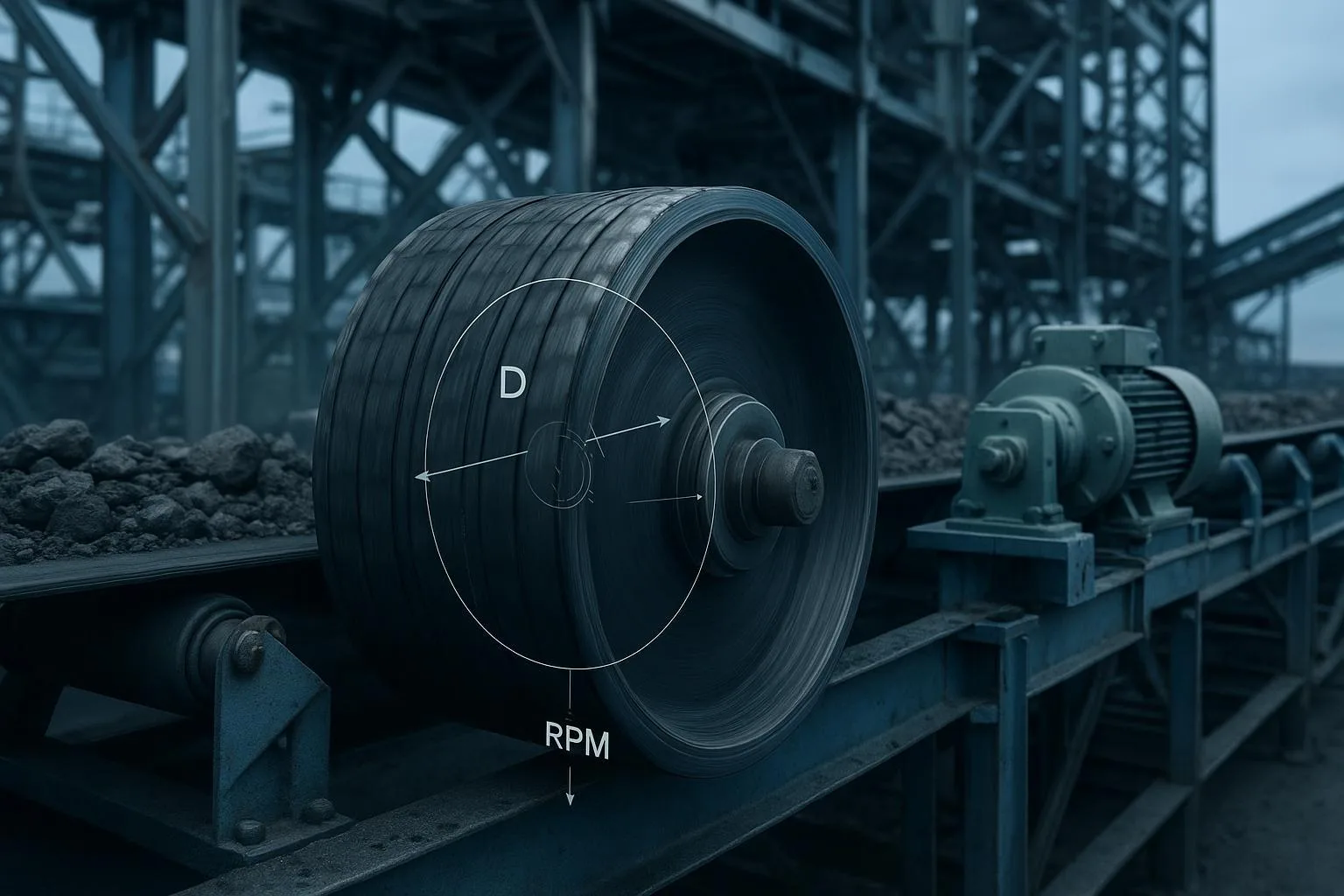
For quick pulley checks aligned with DIN methodology, many engineers use a calculator during preliminary design—see BisonConvey’s pulley diameter calculator.
Methodology: how we chose (with weights)
We evaluated candidates against seven weighted dimensions (sum = 100):
-
Heavy-duty durability and performance (abrasion, impact, heat) — 22
-
Material/compound breadth and temperature/chemical ratings — 15
-
Engineering support and standards alignment (CEMA/DIN/ISO) — 18
-
Lead time, stocking, and service network — 12
-
Customization and fabrication capability — 12
-
Quality assurance and traceability — 11
-
Total cost of ownership (price-to-lifespan value) — 10
Evidence sources included manufacturer spec pages, product family overviews, and reputable programs or standards hubs. Where U.S. manufacturing could not be verified from primary pages, we marked it as such. Rankings reflect information available as of May 2026.
At-a-glance comparison table
| Company | HQ (State) | Specialization | Key belt types | Industries | Certifications | Service footprint | Starting price/note | Website |
|---|---|---|---|---|---|---|---|---|
| Fenner Dunlop Americas | PA (plants GA/OH/VA) | Heavy-duty mining/aggregate | Fabric X Series, specialty FR | Mining, aggregates, grain | MSHA FR; ISO 9001 (site claim) | U.S. manufacturing + AZ DC | Custom-quoted | fennerdunlopamericas.com |
| Continental (ContiTech) | NA ops | Broad portfolio; global installs | Fabric; specialty; steel-cord (global) | Mining, logistics, industry | Various (not all listed) | NA operations; U.S. mfg not confirmed | Custom-quoted | continental-industry.com |
| Intralox | LA | Modular/hygienic | Modular plastic, ThermoDrive | Food, logistics | Hygienic programs | U.S. HQ; OH roles; global plants | Custom-quoted | intralox.com |
| Cambridge (Regal Rexnord) | MD | Metal belts | Balanced weave, flat wire | Food, glass, industrial | Varies by SKU | MD plant operations indicated | Custom-quoted | regalrexnord.com |
| Wire Belt Co. of America | NH | Stainless wire mesh | Flat-Flex, Compact-Grid | Food, pharma, industrial | ISO 14001; USDA/FDA by belt | U.S. manufacturing | Custom-quoted | wirebelt.com |
| Ammeraal Beltech (AMMEGA) | GA/PA ops | Homogeneous/modular | Soliflex; modular/timing | Food, logistics | Varies | U.S. production investments | Custom-quoted | ammeraalbeltech.com |
| Habasit America | GA HQ; CT ops | Fabric/homogeneous | Timing, Cleanline/Cleandrive | Food, logistics | Varies | U.S. HQ + fabrication | Custom-quoted | habasit.com |
| Forbo Siegling | U.S. presence | Light-duty/modular | Transilon, Prolink, Fullsan | Logistics, food | Amp Miser TÜV | U.S. presence; global fab | Custom-quoted | forbo.com |
| Nitta Corp. of America | GA | DC/material handling | PolySprint, SEB, PU | Logistics, DCs | Varies | U.S. production/fab | Custom-quoted | nitta.com |
| Ashworth Bros., Inc. | U.S. ops | Spiral metal/plastic | Spiral/turn-curve | Food | Not verified | U.S. operations; mfg not confirmed | Custom-quoted | ashworth.com |
| BisonConvey | Global export | Heavy-duty EP/NN & steel-cord + idlers/pulleys | EP/NN, steel-cord | Mining, ports, steel, cement | CEMA/DIN/ISO alignment (site) | U.S.-serving export | Quote-based | bisonconvey.com |
Want a tailored shortlist for your duty and lead-time constraints? Download our buyer’s checklist or reach out for an engineer-to-engineer review.
Top Conveyor Belt Manufacturers in the USA: The 2026 ranking
- Fenner Dunlop Americas — Montgomery, PA (plants GA/OH/VA)
-
Positioning: Heavy-duty fabric and specialty belts with North American manufacturing and a strong mining/aggregate footprint.
-
Core belt types: Multi-ply fabric (UsFlex, Nova-X, Ultra X), specialty fire-resistant lines.
-
Industries: Mining, aggregates, grain, cement.
-
Certifications/standards: MSHA fire-resistant product lines; ISO 9001 (site claim); aligns with CEMA practices.
-
Service & lead time: Multiple U.S. plants and a Phoenix, AZ distribution center; custom make-to-order typical for high-spec belts.
-
Pros: Strong impact/puncture resistance families; broad heavy-duty portfolio and regional manufacturing.
-
Cons: Premium pricing and potential 4–6+ week MTO for specialized constructions.
-
Best for: High-impact, long-span, or harsh-abrasion duties.
-
Not for: Hygienic food lines or lightweight automation.
-
Pricing note: Custom-quoted.
-
Evidence: See Fenner’s product families and operations context on their official site: Fenner Dunlop products overview.
- Intralox — New Orleans, LA
-
Positioning: U.S.-headquartered modular plastic belting leader with deep hygienic design programs.
-
Core belt types: Modular plastic belt series; ThermoDrive homogeneous belts; HDE options.
-
Industries: Food processing, packaging, parcel/logistics.
-
Certifications/standards: Hygienic training and design programs; verify FDA/3-A per belt.
-
Service & lead time: U.S. HQ with domestic roles; global manufacturing footprint; rapid programs vary by SKU.
-
Pros: Hygiene-first designs and training ecosystem; strong uptime results in sanitary lines.
-
Cons: Proprietary ecosystem can increase cost vs. commodity belting.
-
Best for: Sanitary, high-throughput food/packaging where cleanability rules.
-
Not for: Overland bulk handling or hot/abrasive ores.
-
Pricing note: Custom-quoted.
-
Evidence: Intralox’s FoodSafe overview and product innovation updates: Intralox FoodSafe.
- Cambridge (Regal Rexnord) — Cambridge, MD
-
Positioning: U.S.-based metal conveyor belts for spiral and high-temp duty; now part of Regal Rexnord.
-
Core belt types: Balanced weave, flat wire, turn-curve belts.
-
Industries: Food (bakeries, protein), glass, industrial heat-treat.
-
Certifications/standards: Verify per SKU; materials and welds aligned to application specs.
-
Service & lead time: Cambridge, MD operations indicated via active manufacturing roles; custom builds typical.
-
Pros: Robust metal belt portfolio; spiral and high-temp expertise.
-
Cons: Product info fragmented across corporate sites post-acquisition.
-
Best for: Spiral freezers, ovens, and high-heat handling.
-
Not for: Long overland bulk conveyors.
-
Pricing note: Custom-quoted.
-
Evidence: Regal Rexnord postings indicating Cambridge manufacturing operations: Regal Rexnord careers — welder, Cambridge MD.
- Wire Belt Company of America — Bedford/Londonderry, NH
-
Positioning: U.S. manufacturer of stainless steel wire mesh belts for hygienic and industrial conveying.
-
Core belt types: Flat-Flex, Compact-Grid, Flex-Turn, Ladder-Flex.
-
Industries: Food, pharma, industrial.
-
Certifications/standards: ISO 14001:2015 environmental certification; USDA/FDA suitability varies by family.
-
Service & lead time: U.S. manufacturing; stock and quick-ship options for select SKUs.
-
Pros: Long heritage in metal belting; strong hygienic designs and accessories.
-
Cons: Not aimed at heavy bulk or long-distance tensioned systems.
-
Best for: Hygienic processes needing airflow/drainage and metal durability.
-
Not for: High-tension overland conveyors.
-
Pricing note: Custom-quoted.
-
Evidence: ISO certificate and product overview on the official site: Wire Belt ISO 14001 certificate.
- Ammeraal Beltech (AMMEGA) — Buford, GA; Reading, PA
-
Positioning: Global belting group with documented U.S. production for Soliflex and expanded U.S. investments.
-
Core belt types: Soliflex homogeneous belts; modular/timing ranges.
-
Industries: Food and beverage, logistics, packaging.
-
Certifications/standards: Verify FDA/USDA/ISO per belt family; U.S. news pages emphasize production footprint, not certifications.
-
Service & lead time: U.S. manufacturing investments aimed at faster delivery; contact for stock/MTO specifics.
-
Pros: U.S. production for key hygienic belt lines; broad portfolio.
-
Cons: Certification details not always explicit on news pages; confirm per SKU.
-
Best for: North American hygienic and light-duty lines needing short lead times.
-
Not for: Overland, high-tension bulk.
-
Pricing note: Custom-quoted.
-
Evidence: U.S. Soliflex production announcement: Ammeraal Beltech — Soliflex produced in the U.S..
- Habasit America — Suwanee, GA (HQ); Middletown, CT
-
Positioning: Fabric and homogeneous belts with strong U.S. service/fabrication footprint.
-
Core belt types: Timing belts; Cleanline/Cleandrive families; fabric conveyor ranges.
-
Industries: Food, intralogistics, automation.
-
Certifications/standards: Verify per family; many global products with U.S. finishing.
-
Service & lead time: Consolidated fabrication and engineering in GA; Middletown, CT extrusion remains active.
-
Pros: Broad portfolio and local support; efficient U.S. service centers.
-
Cons: Full U.S. manufacturing by belt family not always clear.
-
Best for: OEMs and plants needing responsive U.S. service and fabrication.
-
Not for: Extreme heavy-duty overland.
-
Pricing note: Custom-quoted.
-
Evidence: Timing fabrication consolidation note: Habasit — U.S. HQ fabrication update.
- Forbo Movement Systems (Siegling) — U.S. presence
-
Positioning: Light-duty fabric and modular belts with strong global service model; U.S. presence.
-
Core belt types: Transilon and Transtex fabric lines; Prolink modular; Fullsan homogeneous.
-
Industries: Logistics, airports, food.
-
Certifications/standards: Amp Miser energy-saving belts with TÜV Rheinland recognition.
-
Service & lead time: Global fabrication/service network; U.S.-specific centers implied, verify locally.
-
Pros: Wide portfolio and energy-saving options.
-
Cons: U.S. manufacturing not explicitly listed on referenced pages.
-
Best for: Parcel/logistics and light-duty food applications seeking efficient operation.
-
Not for: Heavy-duty bulk materials.
-
Pricing note: Custom-quoted.
-
Evidence: Prolink and service overview: Forbo belt engineering and services.
- Nitta Corporation of America — Suwanee, GA
-
Positioning: U.S. production of select power transmission belts and U.S. fabrication for conveyor lines serving DC/material handling.
-
Core belt types: PolySprint, SEB, Zeroseam; PU-covered options; flat PT constructions.
-
Industries: Distribution centers, e-commerce, parcel.
-
Certifications/standards: Verify per product; focus on high-speed MDR and sortation.
-
Service & lead time: U.S. production/fabrication and stocking in GA.
-
Pros: DC-focused portfolio; high-speed performance surfaces.
-
Cons: Limited heavy-duty bulk applicability.
-
Best for: High-throughput DCs and MDR systems.
-
Not for: Mining, cement, or overland conveyors.
-
Pricing note: Custom-quoted.
-
Evidence: Corporate product summaries and DC specialty notes: Nitta — specialty belts for DCs.
- Continental (ContiTech) — North America operations
-
Positioning: Global belting portfolio and long-distance system expertise with North American presence.
-
Core belt types: Fabric, specialty compounds (e.g., non-stick), steel-cord (global production base).
-
Industries: Mining, logistics, industrial processing.
-
Certifications/standards: Varies by plant/product; confirm per order.
-
Service & lead time: North American operations; U.S. manufacturing not clearly stated on referenced pages.
-
Pros: Deep global engineering resources; advanced compound stories.
-
Cons: U.S. manufacturing visibility is limited on public NA pages.
-
Best for: Global programs seeking broad portfolio and R&D.
-
Not for: Buyers needing explicit “Made in USA” disclosures.
-
Pricing note: Custom-quoted.
-
Evidence: Global installations and footprint context: Continental conveying story.
- Ashworth Bros., Inc. — U.S. operations
-
Positioning: Legacy U.S. brand known for spiral and both metal and plastic belts.
-
Core belt types: Spiral/turn-curve metal and plastic families.
-
Industries: Food processing and spiral applications.
-
Certifications/standards: Verify per family.
-
Service & lead time: U.S. operations; specific plant/manufacturing pages not confirmed in this research.
-
Pros: Deep spiral application expertise.
-
Cons: Public manufacturing/certification details require follow-up.
-
Best for: Spiral conveyors in frozen and baked goods.
-
Not for: Overland bulk handling.
-
Pricing note: Custom-quoted.
-
Evidence: Corporate content on metal vs. plastic focus: Ashworth knowledge article.
- BisonConvey — U.S.-serving, global export
-
Positioning: Manufacturer of heavy-duty EP/NN and steel-cord belts plus matched idlers and pulleys for bulk-handling.
-
Core belt types: EP/NN fabric; steel-cord; with companion idlers and pulleys.
-
Industries: Mining, ports and terminals, steel plants, cement, power, chemicals, agriculture.
-
Certifications/standards: Engineering guidance informed by CEMA and DIN/ISO practices.
-
Service & lead time: Quote-based supply; export capability with multi-site deployments.
-
Pros: Integrated belts + idlers + pulleys simplify specification and commissioning; DIN-informed calculator supports sizing.
-
Cons: Limited third-party case studies published publicly in this research round.
-
Best for: Heavy-duty bulk handling where long service life and matched components matter.
-
Not for: Hygienic food-grade modular lines.
-
Pricing note: Quote-based; see cost factors guide.
-
Evidence: Product scope and cost factors: BisonConvey products overview.
Buying guide: how to select a U.S. conveyor belt supplier
Start with the application envelope, not the logo. Define:
-
Duty and load case: impact energy, lump size, drop height, abrasiveness.
-
Temperature/chemicals: continuous temp, spikes, oils/solvents, pH.
-
Tension and geometry: centers, lift, take-up, pulleys per DIN 22101, transition distances.
-
Hygiene/regulatory: FDA/USDA/3-A needs; clean-in-place constraints.
-
Service model: stocking, field service, splicing method, and warranty.
Scenario tips
-
Overland or steep-angle with high tensions? Steel-cord with heat/abrasion-resistant covers, verify elongation and splice efficiency; check ISO 9856/14890 and cover compounds.
-
Abrasive, moderate tension? EP/NN with high-abrasion cover (ISO 4649 low volume loss) and impact protection.
-
Hygienic/food? Modular or homogeneous belts with sanitation programs; confirm material approvals per belt family.
-
High heat or direct-oven? Metal/wire mesh or high-temp fabrics; review ISO 4195 heat-aging data.
Pricing and lead-time notes
-
Indicative only (subject to spec, region, and market):
-
Standard EP fabric belts: from roughly $3–6/ft for common widths/thicknesses.
-
Steel-cord heavy-duty belts: from roughly $20+/ft depending on cord diameter and cover grade.
-
Modular plastic belts: wide range; per‑module pricing and assembly labor dominate.
-
-
Lead time drivers: carcass type, cover compound, splice prep, fabrication complexity, and current plant load. Stock SKUs can ship quickly; custom MTO may take weeks.
Want a deeper cost breakdown by spec and duty? See the engineering-focused explainer: conveyor belt pricing cost factors.
Common problems and quick troubleshooting
-
Belt mistracking: Check idler alignment, troughing angle symmetry, material buildup on pulleys, and loading centering. Add training idlers sparingly—fix root alignment first.
-
Premature cover wear: Verify compound fit to abrasion/heat/oil; inspect chute liners and drop heights; increase skirt sealing quality.
-
Splice failures: Confirm splice type matches carcass (vulcanized vs. mechanical), cure cycles, and preparation; review transition distances and take-up travel.
-
Heat/chemical attack: Select proper compound; confirm temperature cycles and chemical compatibility charts; consider shielded zones or cooling intervals.
Best practices to extend belt life
-
Get tension right: Calculate per CEMA/DIN; avoid chronic over‑tensioning that accelerates carcass fatigue.
-
Mind your pulleys: Size per DIN 22101; check lagging condition; verify minimum pulley diameters by carcass class.
-
Keep idlers healthy: Proper spacing, sealed bearings, and alignment audits reduce rolling resistance and edge wear.
-
Choose the right splice: Vulcanized splices for high-tension steel‑cord and many EP/NN applications; mechanical fasteners for quick maintenance where allowed.
-
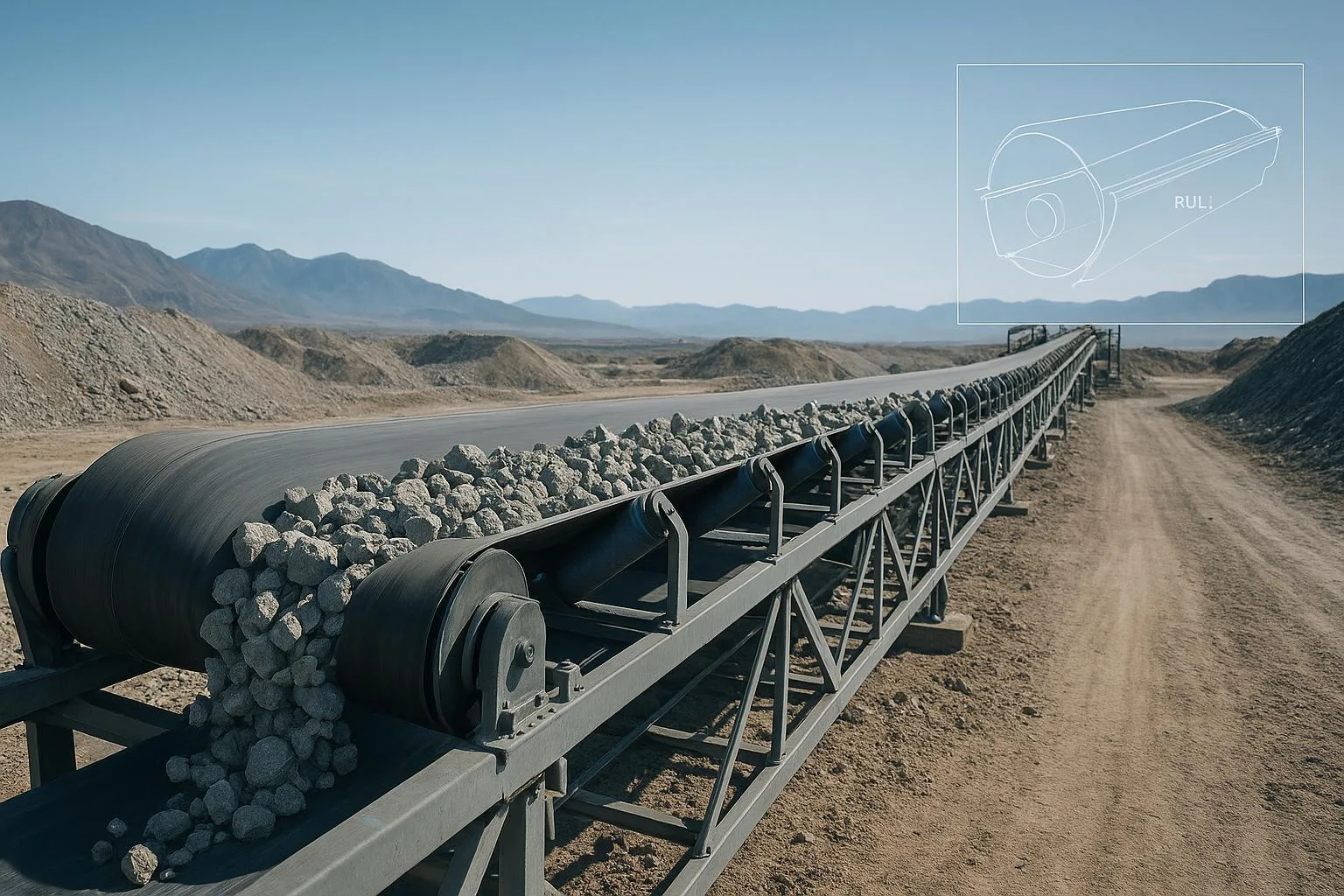
Inspect on cadence: Routine thermal and visual checks; record wear and thickness loss to predict changeouts.
-
Use tools: A quick calculator during design/retrofit catches avoidable sizing issues.
FAQ
Which conveyor belt manufacturers have U.S. production?
- Several on this list indicate U.S. manufacturing or production investments, including Fenner Dunlop (multiple U.S. sites), Wire Belt Company of America (NH), and Ammeraal Beltech’s Soliflex line (U.S. production). Others operate U.S. service/fabrication with global manufacturing.
Who specializes in heavy-duty mining belts?
- Fenner Dunlop emphasizes heavy-duty fabric lines for mining and aggregates. For integrated heavy-duty belts and matched components, BisonConvey is well-suited for bulk-handling environments.
What certifications matter (ISO 9001, MSHA, FDA)?
- For heavy-duty: MSHA flame resistance (where required) and ISO 9001–anchored QA at the site level. For food: FDA/USDA and often 3‑A or equivalent; confirm per belt family. Energy or environmental programs (e.g., TÜV-verified efficiency) can add value in light-duty.
How do I compare lead times and service coverage?
- Ask about stock programs, typical MTO weeks by belt family, regional warehousing, and field service/splicing availability. Lead times hinge on carcass, compound, and fabrication workload; verify commitments in writing.
Sources and citations
-
Standards and engineering methods: See the authoritative CEMA standards hub and the DIN 22101 committee listing.
-
Manufacturer programs and evidence:
Next steps
If you’re refining specs for heavy-duty bulk handling or planning multi-site rollouts, share your duty profile and drawings. For integrated belts, idlers, and pulleys with standards-informed guidance, contact BisonConvey for a custom engineering review.