Coal mining conveyor belts fail in more ways than any other bulk-material application — fire risk underground, moisture-driven cover degradation in wash plants, extreme abrasion in run-of-mine handling, and MSHA / EN 14973 compliance that can shut a section down within hours of a non-conforming belt being installed. This guide walks the three coal-industry duty zones (surface, underground, prep plant), the belt construction that fits each, the fire-safety standards that govern underground selection, and the sourcing checklist that separates a good RFQ from an ambiguous one.
Coal mine conveyor duty zones — surface, underground, prep plant
Coal moves through three functionally distinct conveyor environments. Belt selection changes across all four axes — carcass, cover grade, fire rating, splice type — depending on which zone the belt is serving.
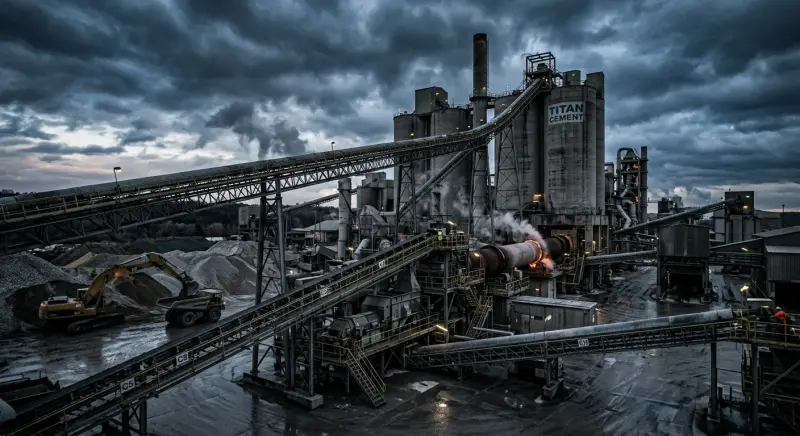
Zone A — Surface / opencast operations. Draglines, shovels, and truck-and-shovel fleets feed run-of-mine (ROM) coal onto surface transport. This is where overland conveyors shine: multi-kilometre steel-cord belts replace haul truck fleets, cutting fuel cost, emissions, and operator headcount. Duty is generally ambient temperature, moderate abrasion (coal itself isn't hard, but included partings — shale, sandstone, pyrite — are), and no fire compliance requirement (ambient outdoor). Belt widths 1200-2400 mm, speeds 3.5-5 m/s, tensions to 250 kN/m.
Zone B — Underground extraction and haulage. Longwall face conveyors (armoured face conveyor, AFC), gate conveyors, main trunk / trunk drift belts. This is the highest-stakes zone: every belt in a working underground coal mine must meet the country's fire-resistance and anti-static standard (MSHA Part 14 in the USA, EN 14973 in the EU, AS 1332 in Australia, RANR in South Africa). Non-compliant belts are illegal to install in gassy or high-methane mines. This is where solid-woven PVC/PVG carcass belts dominate — the single-piece woven-fabric construction impregnated with fire-retardant PVC provides the whole-belt fire barrier no plied belt can match. Rated 680S through 2500S per DIN 22129 / ISO 15236.
Zone C — Preparation plant (washery / breakage / product stockyard). ROM coal enters, gets sized (crushers, screens), washed (dense media cyclones, jigs, spirals), dewatered (centrifuges, filters), and stockpiled by product. Belt duty here is wet, sometimes chemically aggressive (flotation reagents), and continuously abrasive. Cover grade selection is the decisive parameter: oil-resistant covers for flotation zones, wear-optimized covers for post-crushing transport, and standard covers for stockyard reclaim. Speed is typically lower (2-3 m/s), tensions moderate.
Ignoring the zone distinction is a common design mistake. A perfectly-specified overland belt (Zone A) will fail on day one if installed in a Zone B section conveyor — because it lacks fire rating. Conversely, a Zone B solid-woven belt has excessive fire resistance and inadequate abrasion life for a Zone A overland application.
Belt selection matrix by coal application
Match belt construction to duty. This table condenses established coal-industry practice.
| Zone / Duty | Recommended belt | Cover grade (DIN 22102) | Cover thickness (top/bottom) | Speed | Fire compliance |
|---|---|---|---|---|---|
| Zone A — Long overland (>2 km) | Steel cord belt ST 1000–2500 | Y or W | 8–10 / 4 mm | 3.5–5 m/s | Not required (outdoor) |
| Zone A — Short surface (<2 km) | Fabric belt EP 500–800 4-ply | W (abrasion) | 6–8 / 3 mm | 2.5–3.5 m/s | Not required |
| Zone B — Underground longwall / gate | Solid-woven PVC/PVG 800S–1600S | Fire-retardant PVC | 4 / 4 mm (integral) | 2–3 m/s | MSHA 30 CFR §14 / EN 14973 |
| Zone B — Underground trunk (deep, high-tension) | Solid-woven PVG 1250S–2500S, or steel-cord ST 2000+ FRAS | FRAS-EPDM or PVG integral | 6 / 4 mm | 3.5–5 m/s | MSHA / EN 14973 mandatory |
| Zone C — Prep plant washery | Fabric belt EP 400–630 with oil-resistant cover | Grade G (oil resistant) | 5 / 3 mm | 2–3 m/s | Not required |
| Zone C — Product stockpile reclaim | Fabric belt EP 400 3-ply | Y | 5 / 3 mm | 2–3 m/s | Not required |
| Zone C — Sinter / hot ash return line | Heat-resistant belt T2 | HR-EPDM | 6 / 3 mm | 1.5–2 m/s | Ambient / non-methane |
The solid-woven PVC/PVG belt construction warrants special attention for Zone B. Unlike plied belts where each ply is separately impregnated and calendered, solid-woven belts have a single-piece woven carcass (typically polyester warp, nylon or cotton weft) integrally impregnated with PVC or PVG rubber. The single-piece construction eliminates the ply-separation failure mode that becomes a fire pathway in a plied fire-resistant belt. Approval and certification per MSHA Part 14 (USA), EN 14973 (Europe), or AS 1332 (Australia) is achieved through burner tests, oxygen index measurements, static drainage testing, and splice-integrity testing — all of which the solid-woven construction passes more reliably than plied FR belts.
For the underlying design math — belt tension, motor sizing, and belt strength selection per DIN 22101 — use our free calculators. The breaking strength requirement determines your minimum belt rating; underground trunk conveyors with 250-1500 kN/m working tensions typically map to ST 2000-4000 solid-woven or FRAS steel-cord constructions.
Fire safety compliance — the make-or-break spec
For Zone B (underground) coal-mine belts, fire safety compliance is not optional and cannot be waived by procurement. Three major regulatory frameworks apply depending on jurisdiction:
MSHA 30 CFR §14 (USA). All conveyor belts used in underground US coal mines must be approved under MSHA Part 14, which is a rigorous flammability + toxicity test regime. Test methods include:
- Small-scale flammability (30 CFR §14.20)
- Large-scale gallery flame test (§14.21)
- Belt-to-belt burn propagation
- Approval-holder certification tracked in the MSHA approved-products database Purchasing a belt for US underground use requires the supplier to name its MSHA approval number in the RFQ response.
EN 14973 (Europe). European standard for conveyor belts for use in underground installations — categorizes belts as Category A (highest fire resistance, for the deepest coal mines) or Category B. The equivalent flame test, static-charge test, and toxicity index apply. Certification typically shown as "EN 14973 Cat A" or "Cat B" on the belt supplier's technical data sheet.
AS 1332 (Australia). Australian coal industry standard for fire-resistant, antistatic conveyor belting. Two grades: fire resistance category (FRAS) and standard antistatic. Australian mines demand AS 1332 or equivalent evidence.
Also relevant: ISO 340:2022 (flame retardance test method, the underlying test both MSHA and EN reference), ISO 284 (electrical resistance / antistatic test).
A single non-approved belt discovered underground can trigger a mine-level shutdown. Fire compliance therefore drives:
- Splice selection (only approved fire-resistant splice materials / methods)
- Cover repair procedures (only approved patch materials)
- Belt cleaner selection (must not generate spark or heat above rated levels)
- Idler shell requirements (in some jurisdictions)
Underground belt sourcing must include the supplier's certification documents in the RFQ package — not just a claim on the datasheet.
Design considerations specific to coal
Beyond zone selection and fire compliance, four design factors specifically affect coal mining conveyors more than other bulk-material applications.
1. Moisture and water. Coal is often washed, sluiced, and drained through the prep plant, and underground mines have water inflow (roof drips, pump discharge, drilling fluid). Wet coal on the return belt drives:
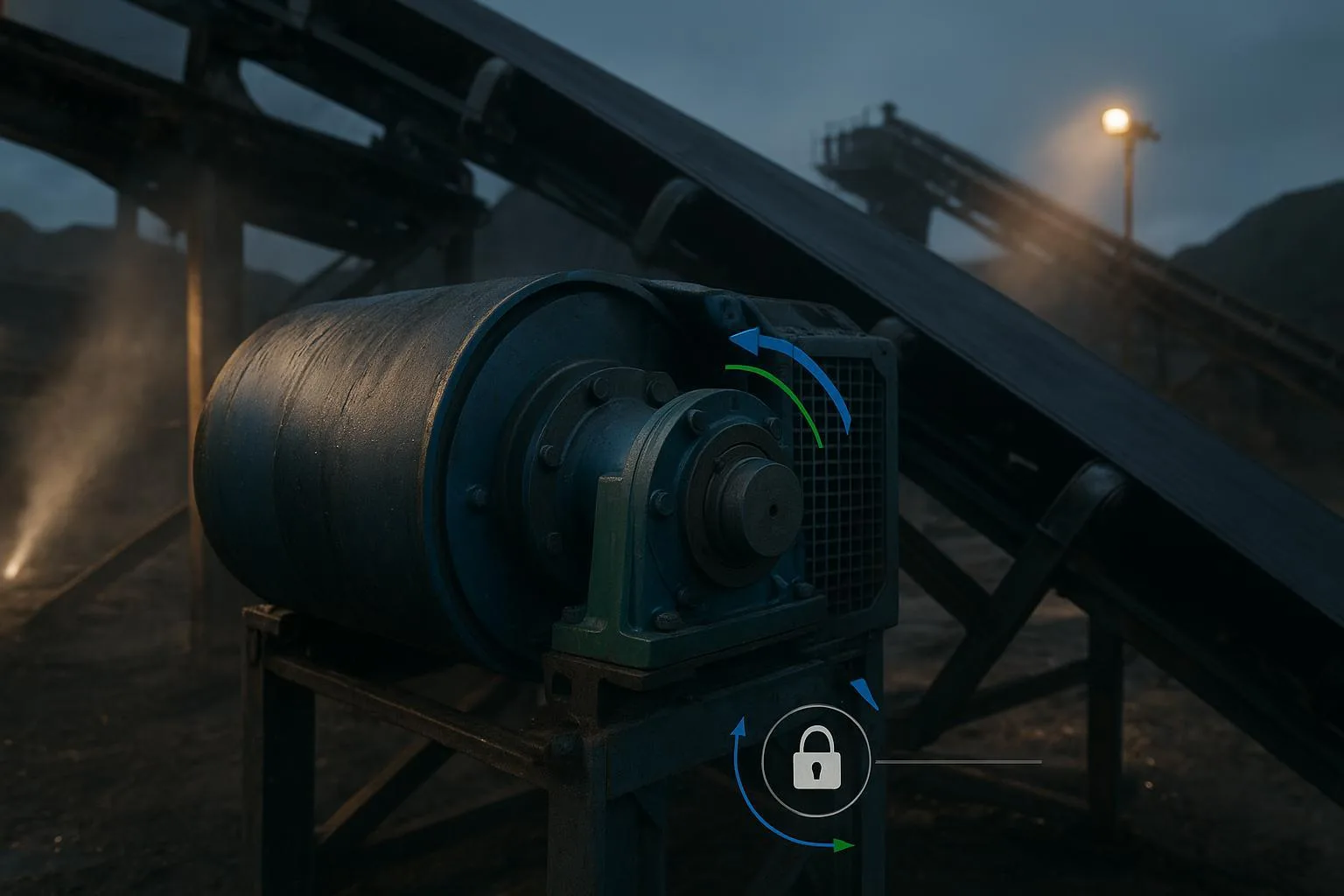
- Bare-steel drive pulley friction coefficient drops from μ = 0.30 to 0.10 wet — always specify rubber-lagged or ceramic-tile-lagged drive pulleys for coal duty
- Increased safety factor — SF 10-12 for fabric belts in wet coal, higher than the DIN 22101 minimum of 8
- Corrosion protection on all metal components (idler shells, frame, splice fasteners)
2. Dust and static discharge. Coal dust is combustible in specific concentration ranges (Lower Explosive Limit ~30-60 g/m³ for bituminous coal dust in air). Belt-generated static discharge in dust-laden enclosed environments has caused documented fires. Compliance measures include:
- Antistatic belt covers per ISO 284 (surface resistance ≤ 3×10⁸ Ω)
- Grounded belt-cleaning systems
- Wet-suppression at transfer points to keep local dust concentration below LEL
3. Sulphur content and cover chemistry. Coal from high-sulphur seams generates weakly acidic runoff when wet. Standard SBR / SBR-NR blend covers hold up well but service life is shorter (3-5 years vs 6-8 years for low-sulphur coal). Consider oil-and-chemical-resistant covers (grade G per DIN 22102 or nitrile blends) for prolonged exposure to washery reagents.
4. Impact loading at transfer points. Coal is often dropped from height at silo discharge, chute transfer, and stockpile stacker points. Belt cover erosion at these zones is accelerated by 5-10× vs the belt run. Specify impact idlers at every transfer, and consider thicker top covers (8-10 mm vs standard 5-6 mm) locally at loading zones. Our CEMA idler class selector helps map belt width + speed + lump size to the appropriate impact idler class.
For deeper engineering context on tension sizing under variable coal loads, see effective tension Te and our companion belt capacity calculator.
Sourcing checklist for coal mining belts
The following spec elements determine whether you receive comparable quotations or a mix of apples and oranges when issuing an RFQ.
Per-conveyor block:
- Conveyor tag / functional zone (Surface Overland / Underground Gate / Prep Plant Washery / etc.)
- Mine type: opencast · underground longwall · underground room-and-pillar · prep plant only
- Belt width, length, lift, and centre-to-centre distance
- Design capacity (t/h) and coal type (anthracite, bituminous, sub-bituminous, lignite)
- Belt speed
- Ambient conditions (indoor / outdoor, wet / dry, ambient temperature)
- Drive pulley diameter and required lagging type
- Wrap angle (usually 210° for coal drives with snub)
- Splice method (hot vulcanized preferred for fire-resistant belts)
Belt specification block (per conveyor):
- Carcass type: solid-woven PVC/PVG | fabric EP/NN plied | steel-cord ST-rated
- Tensile class (e.g., "PVG 1600S" or "EP 500/4" or "ST 2000")
- Cover grade per DIN 22102 or ISO 10247 (X / W / Y / G)
- Cover thickness (top / bottom, mm)
- Fire compliance rating (required for underground): MSHA Part 14 approval # · EN 14973 Cat A or Cat B · AS 1332 grade · flame test ISO 340 pass
- Static drainage requirement (ISO 284, ≤3×10⁸ Ω for coal underground)
- Sulphur / acid exposure resistance if prep plant application
Commercial and quality block:
- Factory certification (ISO 9001 mandatory, ISO 14001 preferred, OHSAS 18001 preferred)
- Warranty terms (typical 12 months from commissioning or 24 months from delivery)
- Splice service — supplier's on-site splicing team availability, or list of pre-approved 3rd-party splice contractors
- Reference sites — request three coal mine installations of similar scale using the supplier's belts (with contact permission for verification)
- Delivery lead time and country of manufacture
- Handling / storage recommendations (belt rolls should not be exposed to temperature extremes)
For overland surface coal conveyors, our companion article on selecting conveyor belts for mining applications covers the broader mining-industry selection framework beyond coal specifically.
Conclusion
Coal mining conveyor belt selection is fundamentally a zone problem: Zone A surface conveyors optimize for span and abrasion, Zone B underground belts optimize for fire compliance and static drainage, Zone C prep plant belts optimize for wet-chemical resistance. Getting the zone right — and matching the belt construction, cover grade, and certification requirements to that zone — is the difference between a 5-year belt life and a 12-month failure or shutdown.
For your specific coal mine project — whether that's an overland conveyor replacement, an underground longwall face conveyor spec, or a prep plant refurbishment — BisonConvey engineering will match the exact belt / drive / idler configuration to your operating conditions. Send a request through our free spec review and one of our conveyor engineers will provide a project-specific recommendation with certifications, references, and delivery timeline.