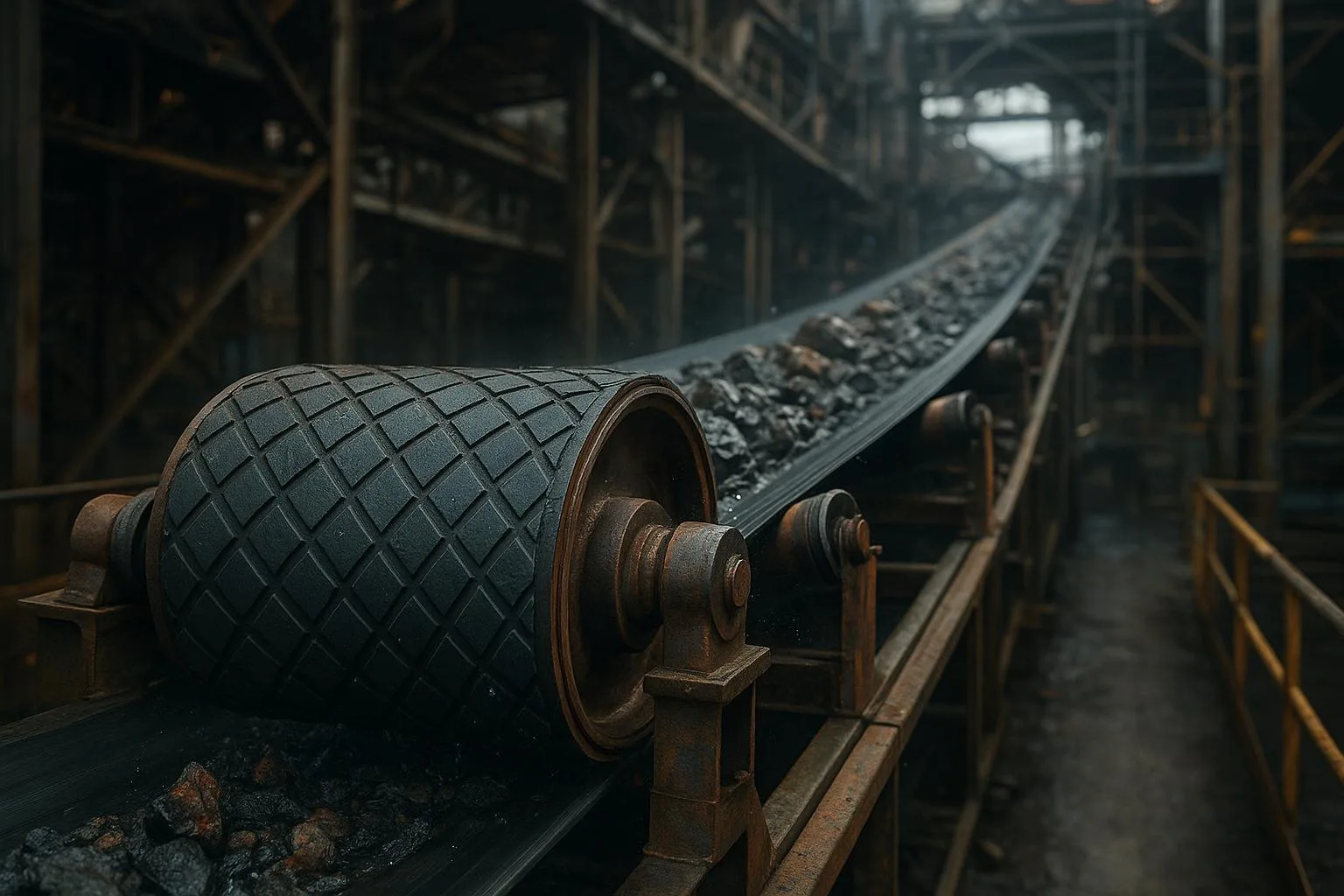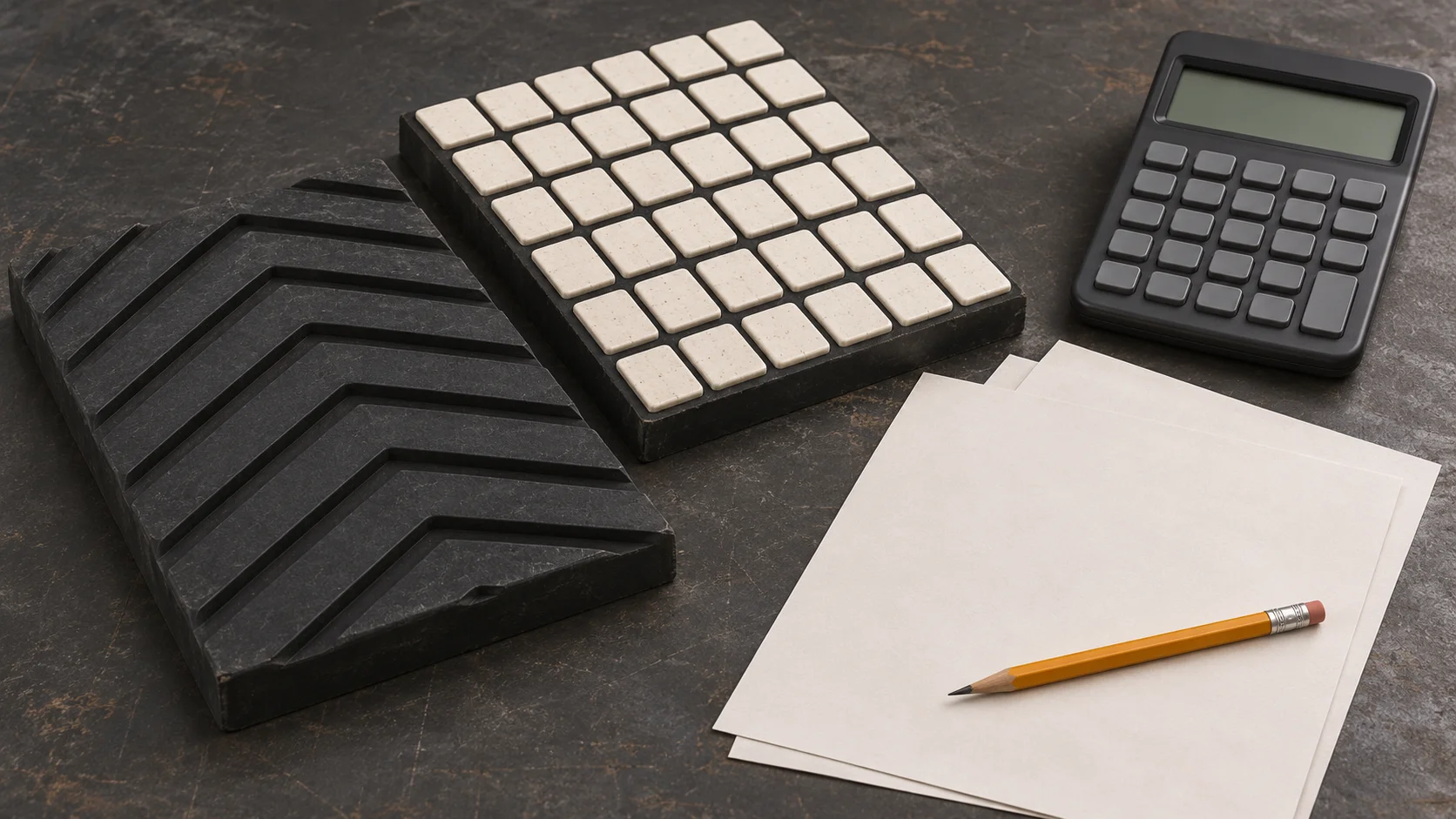
A ceramic vs rubber pulley lagging comparison becomes a cost decision after both proposed surfaces have been reviewed for the drive duty. Compare the fitted price, the expected number of later re-lagging jobs and the economic consequence of the interruptions. The ceramic premium is justified when credible avoided costs exceed that premium over the same planning period.
Start with the pulley position, belt, wet or contaminated conditions and operating history. The pulley lagging selection guide covers the broader material choices. This article shows how to assess the cost argument once the project has technically acceptable alternatives.
Qualify the two surfaces before comparing costs
Rubber lagging and ceramic-in-rubber lagging each cover a range of constructions. Profile, compound, ceramic coverage, backing and application method affect what the supplier is proposing. Ask the supplier to review the actual belt contact conditions and identify the limits of the offered configuration.
Metso's Traclag page describes a diamond-profile rubber option for drive and non-drive applications, including wet and dry service considerations. That gives buyers a reason to evaluate a specified rubber product against the duty, even where water is present. Metso Traclag product documentation
Metso's Cerlag documentation describes ceramic tiles in rubber and distinguishes surfaces used for drive and non-drive roles. It identifies grip and wear as application considerations. Request confirmation for the proposed belt running cover, pulley and operating conditions before using a ceramic offer in the cost comparison. Metso Cerlag product documentation
| Purchasing situation | Rubber proposal | Ceramic proposal |
|---|---|---|
| Existing facing meets the required duty | Use its documented condition and maintenance history as a baseline | Require evidence that the proposed change addresses a material cost or reliability issue |
| Wear or loss of traction is under review | Check the proposed compound, profile and supported duty | Check the proposed tile configuration, backing and supported duty |
| Site installation or workshop application is required | Confirm the fitting system, included work and acceptance | Confirm the fitting system, included work and acceptance |
| Budget approval depends on fewer outages | Record the expected work and its evidence | Record the expected avoided work and its evidence |
Technical review should also address the cause of the existing problem. A record of slip alone leaves questions about tension, contact geometry, contamination and equipment condition. Have the responsible team assess those conditions alongside the offered facing. Neither cost model should treat a material change as an automatic correction to every drive problem.
Establish the installed pulley lagging cost
Obtain comparable fitted quotations. A price for a ceramic sheet and a price for a fully re-lagged rubber pulley cover different amounts of work. Use the same pulley drawing, shell condition basis, location and required inspection when requesting both offers.
Include the facing and compatible application materials, removal of the old covering where required, agreed shell inspection, preparation, application, inspection and freight. Identify whether pulley removal and refitting, bearings, lifting support and site access are included or provided separately. The supplier quotation comparison guide explains the scope and drawing checks in more detail.
Keep the facing material separate from the attachment method in the bid sheet. Ask whether the offer uses hot vulcanization, cold bonding or another specified system. Flexco's technical guide describes several application methods and associated systems. Ask the bidder to state which method and documentation apply to its price. Flexco pulley lagging technical guide
For a retained drum, agree what happens if inspection reveals damage or a condition outside the quotation assumptions. Record the scope, price and schedule approval needed for additional work. If one bidder includes more inspection or refurbishment, obtain a scope reconciliation before calling the difference a material premium.
Compare ceramic vs rubber pulley lagging over five years
The following figures are fictional teaching assumptions. They are neither supplier prices nor measured service-life results. Assume both alternatives have passed the same engineering review for one drive pulley and have equivalent agreed installation and inspection scope.
The example uses constant base-date USD over five years. Each later complete re-lag is assumed to cost the same as the initial fitted job for that alternative. The first screening calculation excludes production losses, assigns zero net terminal value to both options and uses undiscounted costs. The replacement counts below are separate planning scenarios.
| Assumed input | Rubber option | Ceramic option |
|---|---|---|
| Initial complete fitted job | $6,000 | $10,000 |
| Each later complete re-lag | $6,000 | $10,000 |
| Initial premium for ceramic | — | $4,000 |
Count the initial job once. Add only the later jobs occurring within the common five-year period:
Rubber cost  = $6,000  + later rubber jobs  × $6,000
Ceramic cost = $10,000 + later ceramic jobs × $10,000
| Independent five-year scenario | Rubber cost | Ceramic cost | Ceramic cost minus rubber cost |
|---|---|---|---|
| Neither needs a later re-lag | $6,000 | $10,000 | +$4,000 |
| Rubber needs one later re-lag, ceramic none | $12,000 | $10,000 | −$2,000 |
| Both need one later re-lag | $12,000 | $20,000 | +$8,000 |
The second scenario supports the ceramic premium under its assumptions. In the third, both options incur another complete job and the higher ceramic event cost also recurs. The decision therefore depends on the supported event schedule as well as the first quotation.
Use dates and a reason for each proposed event. An inspection-based replacement criterion, a planned shutdown and an unplanned failure are different planning inputs. The table's five-year window does not establish that either material will operate for five years or reach a particular replacement interval.
To complete the total cost of ownership comparison, finance can evaluate the dated cash flows, price changes and remaining value at the end of the study. A surface installed shortly before year five may retain useful service. Review its net terminal value and disposal obligations on the same basis as the other option. The general present-value method in NIST Handbook 135 can inform that calculation, with financial assumptions chosen for the project. NIST Life Cycle Costing Manual, 2025
Find the downtime saving needed to close the gap
Translate the remaining cost difference into a question for operations. In the first scenario, ceramic still needs $4,000 of supported benefit. Suppose finance assigns an assumed $500 per hour to the additional interruption after considering recovery through stockpiles, alternate routes and later production. Ceramic would need to avoid eight such hours over the study period to close that gap:
Required avoided interruption = $4,000 / $500 per hour = 8 hours
If both options need one later re-lag, the remaining difference is $8,000 and the same assumed rate gives a threshold of 16 avoided hours. Those are break-even questions for the site to investigate. They are not forecasts of what a ceramic facing will save.
Use the economic consequence of the extra interruption. The site's gross hourly sales value may differ from the contribution that remains unrecovered after the event. Finance should define that value and any extra restart or recovery expenses. Planned maintenance may share an outage with other work, which can reduce the interruption attributable specifically to lagging.
Check the cost categories for overlap. If the re-lag price includes contractor labour, enter that labour once. If the maintenance plan already includes the affected production consequence elsewhere, reconcile it before adding a separate downtime allowance. Run a case with no downtime advantage when the evidence is insufficient to support one.
Download the blank pulley lagging cost comparison (CSV). Enter the fitted cost, expected re-lag events, incremental interruption hours and unrecovered loss per hour for the same planning period. Use the break-even result to decide what maintenance evidence to request. For a drive replacement, bring both proposals and the operating conditions to the drive pulley quotation worksheet.
Build the event assumptions from maintenance records
Start with the work orders behind the existing lagging history. Record installation and removal dates, operating hours where available, load and wet-service conditions, the observed damage and the reason the site intervened. Identify wear, loss of ceramic tiles or separation of the facing from its backing or shell when those conditions are recorded. Confirm whether the job replaced worn facing, corrected a bond problem, addressed shell condition or accompanied a wider drive modification.
Those distinctions influence the comparison. If a facing was removed during an unrelated pulley repair, its calendar age does not describe a wear-out life. If a different application system is proposed, the bidder and installation contractor should explain how the offered scope responds to the recorded condition. Retain comparable operating exposure when evaluating another site's reference.
| Assumption in the bid model | Supporting record to request |
|---|---|
| Current re-lagging frequency | Dated work orders and reasons for intervention under the relevant duty |
| Longer proposed interval | Applicable reference conditions, inspection criteria and stated limits |
| Fewer slip-related interruptions | Event records and the technical review of the proposed system change |
| Shorter installation interruption | Agreed work scope and a contractor schedule for the site's access conditions |
| Lower belt or pulley repair cost | Identified failure history and evidence connecting the proposed change to that cost |
Ask bidders to distinguish documented experience from a planning estimate. A general wear-resistance statement can support further technical discussion. A specific replacement count in the purchasing model needs a basis tied to the proposed product and application.
For the drive pulley review, include the belt construction, contact conditions, speed, drive arrangement and available load information. Have engineering assess any proposed change to facing thickness, finished diameter or operating settings. Field work should follow the site's approved procedures and be performed by qualified personnel.
Decide which proposal deserves the next step
A rubber proposal remains a strong purchasing candidate when its configuration is technically acceptable, the current maintenance burden meets the plant's requirements and the evidence does not establish enough benefit to recover a ceramic premium. The comparison should retain that result even if another product is marketed for more demanding service.
A ceramic proposal deserves further review when it is technically acceptable and the site can substantiate sufficient avoided work or interruption. Ask what happens to the result if the next re-lag occurs earlier than assumed, if both options share the same shutdown, or if the downtime consequence is lower. A choice that depends on one optimistic event estimate needs that estimate resolved before approval.
Keep a brief decision record containing the two accepted scopes, fitted prices, dated event assumptions and the source of each proposed benefit. For the fictional example, an avoided complete rubber re-lag supports ceramic in one scenario, while equal replacement counts favour rubber. That conditional result is the reason to request better evidence.
For a rubber-lagged pulley proposal, or a ceramic facing option for the same drive, send the drawing and request comparable pulley quotations. Include the duty, observed failure history, required fitting scope and documents needed for acceptance. BisonConvey coordinates supplier quotation review with partner factories, with the proposed construction and supply responsibilities confirmed for the individual order.