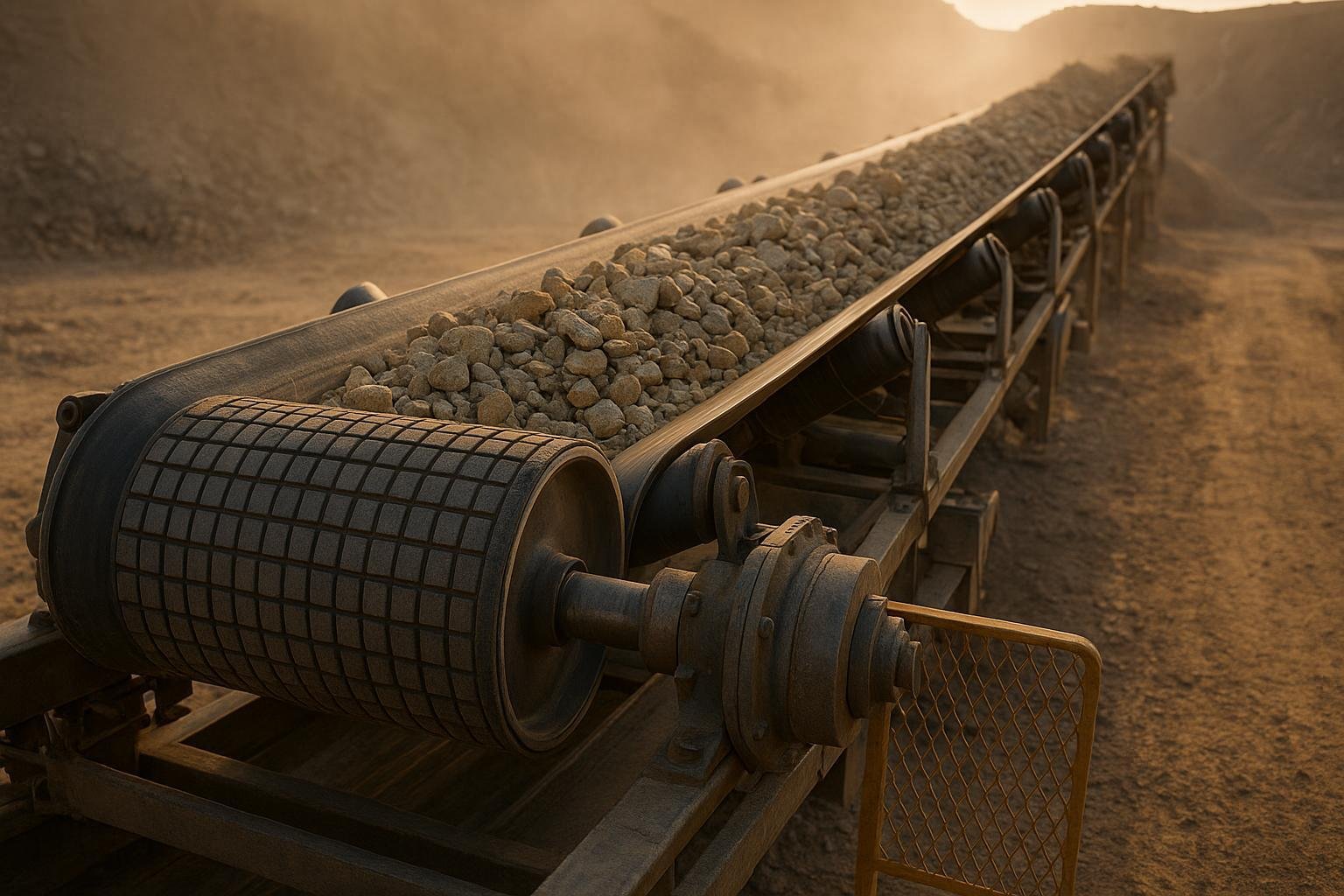
If your RFQ leaves room for guesswork, you’ll get prices that can’t be compared and change orders later. Here’s the deal: an accurate conveyor belt quotation depends on giving suppliers the exact technical and commercial data they need—using common standards—so their proposals line up apples-to-apples. This guide shows you precisely what to include, with copyable checklists, a comparability matrix, and a short validation protocol.
Define the scope before you request pricing for a conveyor belt quotation
Decide what you’re actually buying and keep the scope identical across bidders. Are you requesting belt only, belt + idlers, belt + idlers + pulleys, or a complete package with accessories (skirt rubber, cleaners, trackers)? Scope parity prevents “hidden” differences that skew price. If you include idlers or pulleys, align their duty with the belt construction and loading per CEMA practice and request supplier confirmation. CEMA’s publications describe the frameworks used to size and classify idlers and design belts, giving you shared language with vendors; see the official listings for CEMA 502 and the Belt Book 7th Edition on CEMA’s site for scope and chapter coverage.
According to CEMA’s publication listings for Standard No. 502 and the 7th Edition Belt Book, these references define idler classes/dimensions and core belt design concepts used industry‑wide. Link them by name in your RFQ but don’t paste proprietary tables; instead, require vendors to cite them in their datasheets. You can review these scopes on CEMA’s official pages: the publications index and the Belt Book errata/preview pages.
Gather the material and duty data engineers actually use
Suppliers size compounds, strength, idler class, and power from material and duty data. Capture at minimum:
- Material name and characteristics
- Bulk density (t/m³ or lb/ft³)
- Max lump size and percent fines
- Abrasiveness (ties to cover grade)
- Moisture and stickiness
- Temperature range at load point and along the run
- Corrosiveness (oils, acids, alkalis, salt fog)
- Drop height/impact severity
- Required throughput (tph) and duty cycle (h/day, days/week)
For cover selection, specify abrasion standard and grade, with test method. EN ISO 14890 sets textile-belt requirements and uses H/D/L cover designations, and DIN 22102 uses X/W/Y. Fenner Dunlop’s technical note explains how these map and that abrasion is measured as volume loss in mm³ using ISO 4649/DIN 53516 (lower is better). Provide the standard and the target grade in your RFQ, along with top/bottom cover thicknesses. See the manufacturer’s technical explanation of abrasion grades for a practical overview.
Nail the conveyor geometry and operating conditions
System geometry and operating conditions drive tension, power, and component classes. Include:
- Belt width (mm)
- Belt speed (m/s) or capacity target (tph)
- Center distance (m)
- Vertical lift H (m), if any
- Take-up type (gravity, screw, hydraulic) and travel
- Trough angle (e.g., 20°, 35°, 45°)
- Loading pattern (steady, surge, batch), cleaners, and containment
- Ambient conditions (dust, wet, chemicals, temperature)
Explain why you need it: Effective tension (Te) and power depend on friction, lift, material/belt mass, and accessories. A widely used engineering explainer consistent with CEMA practice walks through the Te formulation and the power equation HP = Te × V / 33,000; sharing full geometry and duty lets suppliers select belt strength and drives correctly. See the Rulmeca engineering note for a public, CEMA‑aligned discussion of belt tensions.
Specify the belt like a pro (standards included)
Be explicit about construction, strength, covers, safety requirements, and splice assumptions.
- Construction: EP/NN textile belts fall under ISO 14890 scope; steel cord belts follow the ISO 15236 series (preferred types and mechanical requirements).
- Strength notation: EP 500/3 (textile) or ST 1600 (steel cord). State the required safety factor methodology and intended splice (mechanical vs. hot vulcanized).
- Cover compound and thickness: Specify grade by standard—EN ISO 14890 (H, D, L) or DIN 22102 (X, W, Y)—and include the abrasion test method (ISO 4649/DIN 53516) and desired performance target if you have one. Always include top/bottom cover thickness (mm).
- Antistatic/flame needs: If you operate in hazardous or underground environments, include ISO 284 (electrical conductivity/antistatic) and ISO 340 (flammability) as requirements and request test evidence in the quote package.
- Minimum pulley diameters: Ask each vendor to confirm the minimum pulley diameters compatible with the proposed belt and splice. Values vary by construction and rating and are typically provided on the manufacturer’s datasheet. One public elevator‑belt example shows minimum diameters for certain EP ratings; use this only as illustration and rely on product‑specific data for your conveyor.
To ground supplier responses in shared references, cite the relevant ISO catalogue entries by name in your RFQ (e.g., “Textile belt per ISO 14890; steel cord per ISO 15236‑1/‑2; antistatic per ISO 284; flammability per ISO 340”). The ISO ICS 53.040.20 page lists these components and standards families.
Match idlers and pulleys to the duty
Idlers: Target a CEMA idler class (B–G as applicable), trough angle, roller diameter and face length, bearing/seal type, frame style, spacing, and any special rolls (impact, training). CEMA Standard No. 502 defines the dimensional/classification framework that suppliers will reference; request conformity on drawings.
Pulleys: Identify locations (drive, tail, bend, take‑up, snub), face width, diameters, wrap angles, lagging type/thickness (rubber or ceramic; diamond/plain), hub/bushing system, shaft and bearing requirements, and balance/runout tolerances. Ask for drawings with tolerances and lagging specs.
Commercial terms that make quotes comparable
Even perfect technical data won’t fix commercial ambiguity. Include quantities by item, delivery schedule and lead‑time windows, packaging/marking needs, payment terms, and QA documentation requirements (Certificates of Conformance, Material/Test Reports, belt datasheets citing the standards and test methods named above, and a copy of the supplier’s ISO 9001 certificate). Always specify the Incoterms 2020 rule with the named place/port (for example, “CIF Port of Antwerp, Incoterms 2020”); the International Chamber of Commerce emphasizes that naming the place is essential to clarify cost and risk transfer. For rule selection and wording guidance, consult the ICC’s official Incoterms overviews and checklists.
Practical example — a complete spec block that vendors can price
This neutral example shows how a single, well-structured RFQ block removes ambiguity. You can use suppliers’ public spec sheets or tools from manufacturers such as БизонКонви to structure your RFQ fields—no endorsements implied.
- Scope: Belt + idlers + pulleys
- Material and duty: Crushed limestone, bulk density 1.6 t/m³; max lump 100 mm with 30% fines; moderately abrasive; moisture 2–4%; material temperature 30–50°C; drop height 1.5 m; required 600 tph; duty 16 h/day, 6 days/week.
- Geometry/operation: Belt width 1000 mm; speed target 2.5 m/s; center distance 180 m; vertical lift H 12 m; gravity take‑up, travel 1.2% of center distance; trough angle 35°; primary/secondary cleaners; ambient temp −5 to 40°C; moderate dust.
- Belt spec: EP 630/4; safety factor per plant standard; hot‑vulcanized splice; covers: DIN 22102 X (or ISO 14890 H) abrasion grade tested by ISO 4649; top cover 6 mm, bottom 3 mm; antistatic per ISO 284 not required; flammability per ISO 340 not required; vendor to confirm minimum pulley diameters.
- Idlers: Target CEMA Class C; 35° trough; 152 mm roller diameter; sealed-for-life bearings; offset frame; spacing 1.2 m; impact idlers at loading zone; one training idler per 30 m.
- Pulleys: Drive, tail, bend, snub; face width 1150 mm; diameters proposed by vendor with confirmation of compatibility; drive lagging ceramic, 12 mm, diamond pattern; hubs XT‑style or equivalent; dynamic balance ISO G 16 or better; runout ≤0.5 mm TIR on face (vendor to confirm achievable tolerance).
- Commercial: Qty 1 belt, 600 idlers, pulleys as listed; delivery requested 8–10 weeks ARO; seaworthy packaging; “FOB Qingdao, Incoterms 2020”; 30/70 payment; include CoC, belt datasheet citing ISO 14890 and ISO 4649 value, and idler/pulley drawings with tolerances; warranty 12 months after commissioning.
Copyable RFQ checklist (belt + idlers + pulleys)
SCOPE
- [ ] Belt only
- [ ] Belt + idlers
- [ ] Belt + idlers + pulleys
- [ ] Accessories included: __________________________

MATERIAL & DUTY
- Material: ____________________  Bulk density: ______ t/m³ (____ lb/ft³)
- Max lump: ______ mm (____ in)   Fines: ______ %
- Abrasiveness: low / med / high  Moisture: ______ %  Stickiness: low / med / high
- Material temp: ______ °C (____ °F)  Corrosives present: yes / no (specify)
- Drop height: ______ m (____ ft)   Impact severity: low / med / high
- Throughput: ______ tph (____ stph)  Duty: ____ h/day, ____ days/week

CONVEYOR GEOMETRY & OPERATION
- Belt width: ______ mm (____ in)  Speed: ______ m/s (____ ft/min) OR Capacity: ______ tph
- Center distance: ______ m (____ ft)  Vertical lift H: ______ m (____ ft)
- Take-up: gravity / screw / hydraulic; Travel: ______ mm (____ in)
- Trough angle: 20° / 35° / 45°   Cleaners: primary / secondary / none
- Environment: dry / wet / chemical exposure / temp range: ____ to ____ °C

BELT SPECIFICATION
- Construction: EP / NN / Steel cord (ISO 15236)
- Strength: EP ____/__ (plies: __) OR ST ____
- Safety factor approach: __________________________
- Splice: mechanical / hot vulcanized
- Cover grade standard: EN ISO 14890 (H/D/L) or DIN 22102 (X/W/Y)
- Abrasion test method: ISO 4649 ( DIN 53516 ); Target value (mm³): ______
- Cover thickness: Top ____ mm  Bottom ____ mm
- Antistatic (ISO 284): required / not required
- Flammability (ISO 340): required / not required
- Minimum pulley diameters: vendor to confirm on datasheet

IDLERS (CEMA 502 framework)
- Target CEMA class: B / C / D / E / F / G
- Trough angle: 20° / 35° / 45°  Return: flat / V-return
- Roller diameter: ____ mm  Face length: ____ mm
- Bearings/seals: ____________________
- Frame: inline / offset   Spacing: ____ m
- Specials: impact at loading / training every ____ m / materials/coatings: ______

PULLEYS
- Locations: drive / tail / bend / take-up / snub
- Face width: ____ mm   Diameters: vendor to propose/confirm
- Wrap angles: drive ____°; others ____°
- Lagging: rubber / ceramic; pattern: diamond / plain; thickness: ____ mm
- Hub/bushing: ____________________
- Shaft/bearings: ____________________
- Balance/runout tolerances: ____________________

COMMERCIAL
- Quantities: ____________________
- Delivery window: ____________________  Packaging/marking: ____________________
- Incoterms 2020 rule + named place/port: ____________________
- Payment terms: ____________________
- QA & documentation: CoC / MTRs / test reports / ISO 9001 copy / belt datasheet citing standards
- Warranty & after-sales/spares: ____________________

ATTACHMENTS REQUESTED WITH QUOTE
- Idler and pulley drawings with dimensions/tolerances
- Belt datasheet citing ISO 14890 or ISO 15236 and test methods (ISO 4649; ISO 284/340 if applicable)
- Material/Test Reports (as applicable)
Compare quotes with a simple matrix
Use a compact scoring sheet to normalize technical parity, delivery, QA evidence, and TCO. Copy this table and add suppliers as columns.
| Criterion | Weight | Supplier A | Supplier B | Supplier C |
|---|---|---|---|---|
| Scope parity (belt/idlers/pulleys/accessories) | 20% | |||
| Belt spec match (construction, strength, covers, safety) | 20% | |||
| Idlers/pulleys compliance (CEMA 502 framework, drawings) | 15% | |||
| QA documentation completeness (CoC, MTRs, ISO 9001) | 10% | |||
| Delivery window/lead time | 10% | |||
| Warranty/after‑sales | 5% | |||
| Energy/rolling resistance notes (if provided) | 5% | |||
| Price (normalized to scope) | 15% |
Add notes for any exceptions (e.g., alternative cover grade or idler spacing) so reviewers can judge impact on lifecycle cost.
Validation protocol and common pitfalls to avoid
Before award, verify:
- Drawings for idlers/pulleys: Confirm dimensions, lagging thickness, hub/bushing type, balance/runout tolerances, trough angle, and spacing match your RFQ.
- Belt datasheet: Confirm construction and rating (EP/NN vs. ST), cover grade standard and abrasion value with test method (ISO 4649), and any ISO 284/340 compliance. Cross‑check minimum pulley diameters for the proposed splice.
- QA documents: Certificates of Conformance and Material/Test Reports with traceability; a copy of the supplier’s ISO 9001 certificate.
- Commercial clarity: Incoterms 2020 rule with named place/port, packaging, and delivery windows.
Frequent misses (and how to prevent them): missing cover thickness/grade; no duty cycle/throughput; unset idler class/trough angle; vague pulley lagging; hazard compliance not stated when needed; Incoterms not named with place; metric/imperial mix‑ups. State each of these explicitly in your RFQ using the checklist above.
Mini glossary for fast alignment
- EP/NN: Textile belt constructions; EP = polyester warp/nylon weft.
- ST: Steel cord belt notation per ISO 15236 series.
- Cover grades: DIN 22102 X/W/Y and EN ISO 14890 H/D/L; abrasion measured as volume loss in mm³ per ISO 4649/DIN 53516 (lower is better).
- Idler class: CEMA framework (B–G) for load rating/dimensions; defined in CEMA 502.
- Incoterms 2020: ICC trade terms defining cost and risk transfer; always include the named place/port.
References (authoritative overviews and standards pages):
- CEMA publications index including Standard No. 502 and the Belt Conveyors for Bulk Materials, 7th Edition — see the official listings for scope and coverage: CEMA publications category и CEMA publications index
- Engineering explainer aligned with CEMA practice for belt tensions and power: Rulmeca note on calculating conveyor belt tensions
- ISO catalogue (ICS 53.040.20) listing conveyor components and belt standards, including ISO 15236 (steel cord) and ISO 14890 (textile belts), and cross‑references to ISO 284 and ISO 340: ISO ICS 53.040.20 catalogue
- Manufacturer technical note explaining abrasion grades and test methods (EN ISO 14890 H/D/L; DIN 22102 X/W/Y; ISO 4649/DIN 53516 test): Fenner Dunlop abrasion standards and test methods
- ICC overviews and guidance for Incoterms 2020 wording and rule selection: ICC official Incoterms rules overview