If you had to choose a belt today, would you pay more for heavy-duty protection or keep costs down with a standard belt—and still sleep well at night? Here’s a clear, standards‑anchored way to decide.
What “standard” vs “heavy-duty” really means
Both terms describe how a belt is built and what it can endure, not the shape or width of the conveyor.
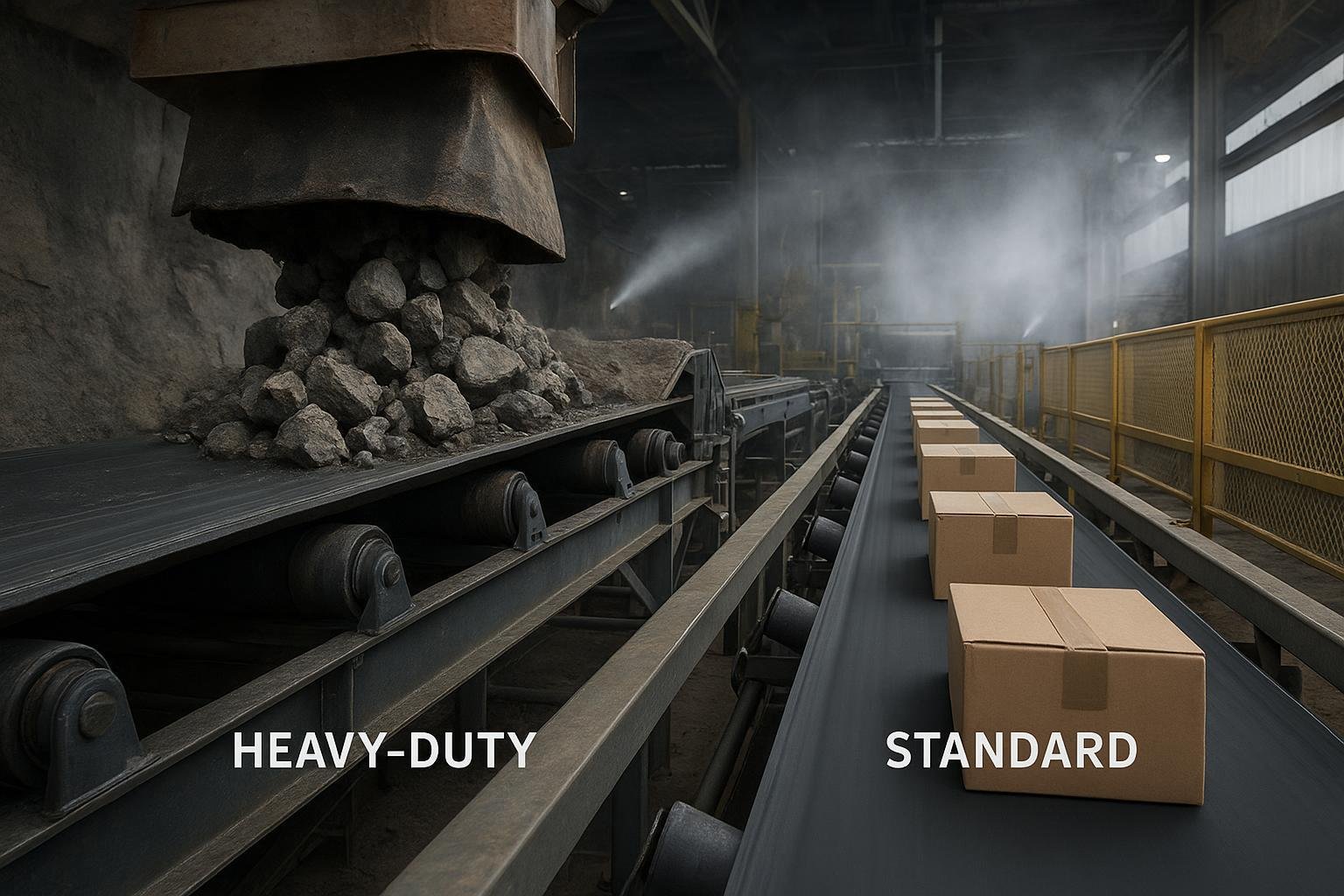
- Standard (general‑purpose) belts typically use textile carcasses (EP/NN) with fewer plies and thinner rubber covers. They’re designed for moderate loads, shorter runs, and cleaner or packaged materials—think light manufacturing, packaging, warehousing, or plant utility lines.
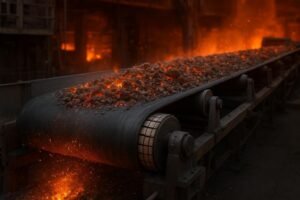
- Heavy‑duty belts add reinforcement (multi‑ply EP with higher strength classes or steel‑cord carcasses) and thicker, tougher covers. They’re engineered for abrasion, cuts/gouges, and high impact in mining, aggregates, cement, steel, port terminals, and similar bulk‑handling environments.
Cover compounds and grades are defined by international standards frameworks you can cite on your spec sheet:
- ISO 14890 (2013) specifies textile‑carcass general‑use belts and cover requirements by grade (L, D, H) with abrasion, strength, and adhesion criteria, per the official standard page in ISO’s catalog: see the ISO entry for Conveyor belts — Specification for rubber‑ or plastics‑covered belts of textile construction for general use (2013) at the International Organization for Standardization’s site.
- DIN 22102 groups cover grades (Y, W, X) commonly referenced in Europe for abrasion and cut/impact performance; see the DIN/DKE catalog entry hosted by Beuth for the current edition.
- In North America, ARPM/RMA grades I and II are widely used for abrasion resistance definitions and guidance; the publisher provides the current references in the ARPM publications catalog, including the Conveyor Belt Handbook (2014).
References:
- International Organization for Standardization — ISO 14890:2013 standard page: Conveyor belts — Specification for rubber- or plastics-covered conveyor belts of textile construction for general use (2013): https://www.iso.org/standard/48270.html
- Beuth (DIN publishing) — DIN 22102 standard catalog entry (current listing page, English): https://www.beuth.de/en/standard/din-22102/235390959
- Association for Rubber Products Manufacturers (ARPM) — Publications catalog including Conveyor Belt Handbook (2014): https://www.arpminc.com/publications/
Note: Always verify the latest edition and applicability of each standard to your geography and industry before finalizing specifications.
Heavy-duty vs standard: side‑by‑side at a glance
Two belts can look identical on the frame. The differences live inside the carcass and in the rubber compound. Use this table to orient your choice.
| Dimension | Standard (General‑Purpose) | Heavy‑Duty |
|---|---|---|
| Typical construction | EP/NN textile carcass, fewer plies; general‑purpose cover compound | Reinforced EP multi‑ply or steel‑cord (ST) carcass; abrasion/cut/impact‑resistant compounds |
| Strength range (indicative) | EP ~200–630 N/mm (approx. 115–360 PIW) common; suited to light/medium loads | EP ~800–2000+ N/mm; steel‑cord ST ~1000–4000+ N/mm (approx. 570–2280+ PIW) for high tension/long runs |
| Elongation & tension stability | Higher elongation; more frequent take‑up adjustments on long runs | Low elongation, excellent tension stability; preferred for long‑distance/high‑lift |
| Cover grades (examples) | ISO L; DIN Y; ARPM Grade II (general abrasion) | ISO D/H; DIN W/X; ARPM Grade I (higher abrasion/cut/impact) |
| Typical cover thickness | Thinner covers to save weight and cost | Thicker top/bottom covers to absorb wear and impact |
| Splice methods | Mechanical fasteners, hot/cold vulcanized splices on textile carcasses | Hot vulcanized splices preferred; steel‑cord splicing requires skilled procedures |
| Minimum pulley diameters | Smaller diameters acceptable for textile belts | Larger diameters required as strength and stiffness rise (esp. steel‑cord) |
| Energy/rolling resistance | Lower belt mass; can be efficient on short/light systems | Heavier belts; low‑rolling‑resistance compounds can offset mass on long runs |
| Типичные применения | Packaging, warehouse sortation, light assembly, plant utility conveyors | Mining, quarry primary/secondary crushing, clinker/ore/coal transfer, port stockyard |
| Key constraints | Lower wear/impact margins; shorter life in harsh loading; potential stretch | Higher purchase cost; larger pulleys; more specialized splicing/maintenance |
When to step up: practical thresholds and triggers
Use these cues from your material, geometry, and operating context to know when a standard belt is no longer the safest or most economical choice.
- Abrasiveness and gouging risk: Angular, high‑silica rock, clinker, sinter, or scrap with sharp edges quickly chews through general‑purpose covers. If you observe rapid top‑cover wear, deep cuts, or frequent patching near transfer points, move to a heavy‑duty grade (e.g., DIN W/X, ISO D/H, ARPM Grade I). Standards frameworks above define test methods and performance targets.
- Impact zones and lump size: Primary loading points dropping large lumps or high drop heights benefit from thicker covers, impact idlers, and tougher carcasses. Think of the belt as a shock absorber—when the “cushion” is too thin, the carcass fails.
- Tension, length, and lift: Long runs, steep lifts, or high belt speeds increase working tension and tracking sensitivity. Steel‑cord heavy‑duty belts provide low elongation and stable tension over distance, reducing re‑tensioning and drift.
- Inclines and retention: Material rollback on steeper slopes can overwhelm flat general‑purpose belts. Chevron or sidewall belts—often built on heavy‑duty foundations—improve retention and throughput on inclines.
- Exposure conditions: Heat, oil, chemicals, or flame retardancy requirements can force a compound choice irrespective of “duty.” In these cases, select the correct specialty compound first, then size carcass strength and covers for the load.
Tip: Always translate the required working tension to a belt rating with an appropriate safety factor, and ensure pulley diameters and take‑up travel match the chosen carcass and splice method. If you’re comparing PIW and N/mm ratings across vendors, confirm the basis and test method; specifications can’t be mixed casually.
Scenario picks (no single winner—choose by risk and duty)
Abrasive bulk with impact loading
Choose heavy‑duty. Use abrasion/cut‑resistant compounds and thicker covers at loading zones. Pair with impact idlers and proper skirt sealing to protect the carcass. You’ll typically see fewer unplanned stoppages due to gouges and splice trauma.
Long‑distance or high‑tension conveyors
Choose heavy‑duty, often steel‑cord. Low elongation stabilizes tracking and reduces adjustments. Splicing requires experienced crews and adherence to manufacturer procedures, but lifecycle reliability on long runs usually pays back.
Steep inclines and retention needs
Lean heavy‑duty with chevron or sidewall profiles when slopes or rollback risks climb. Profile geometry and deeper cleats improve carrying capacity; ensure you size pulleys and cleaners for the profile.
Light to medium‑duty plant conveyors
Choose standard. Textile EP/NN belts with general‑purpose covers reduce cost, are easier to handle, and support quick mechanical splices where appropriate. Over‑specifying here adds weight and energy use without tangible benefit.
Specialty environments (heat, oil, flame, chemicals)
Start with the compound requirement, then pick duty. Heat‑resistant, oil‑resistant, or flame‑retardant covers exist in both standard and heavy‑duty families. Confirm compliance to the relevant standard in your industry and temperature/medium range.
How to choose: a field‑ready checklist
- Define the material: size distribution, abrasiveness, moisture, temperature, oil/chemicals, and expected impact energy at each transfer.
- Map the conveyor geometry: length, lift, speed, trough angle, pulleys (diameter/lagging), and take‑up travel.
- Determine required belt rating and safety factor: align with your tension calculations and confirm with the vendor’s rating system; keep units consistent within one framework.
- Select cover grade and thickness: use ISO/DIN/ARPM grade guidance; increase top cover at severe loading points.
- Decide the splice strategy: mechanical vs hot/cold vulcanized; ensure the team and tools match the carcass type (textile vs steel‑cord) and site conditions.
- Check system components: impact/cradle zones, skirt sealing, cleaners, and idler alignment—belts fail early when the system isn’t supportive.
- Validate maintainability and TCO: balance purchase price with expected life, energy, downtime risk, and repair complexity. Sometimes “heavier” is cheaper over the year.
FAQs
Q1: Does a higher cover grade automatically mean “heavy‑duty”?
A: No. Cover grade describes the rubber’s wear/impact properties (e.g., ISO/DIN/ARPM categories). “Heavy‑duty” also reflects carcass strength and construction. You can have a heat‑resistant or oil‑resistant compound on either a standard textile or a heavy‑duty carcass.
Q2: I see PIW and N/mm on different datasheets—how do I compare?
A: They’re different rating systems for belt strength. Pick one system per project and ask vendors to provide the same basis and test method. Mixing units or comparing “apples and oranges” ratings leads to under‑ or over‑specification.
Q3: Are mechanical fasteners okay on heavy‑duty belts?
A: Mechanical splices can work for textile belts in many duties, but steel‑cord belts and high‑tension applications generally rely on hot‑vulcanized splices for strength and longevity. Follow the belt maker’s splice design and procedures for reliable results.
Also consider
Disclosure: BisonConvey is our product. If you need a standards‑aligned quote for either class—textile EP/NN belts (standard and heavy‑duty) or steel‑cord belts—BisonConvey provides application‑driven selection based on belt width, rated strength, cover grade, and quantity. See product categories and request engineering support at https://bisonconvey.com.