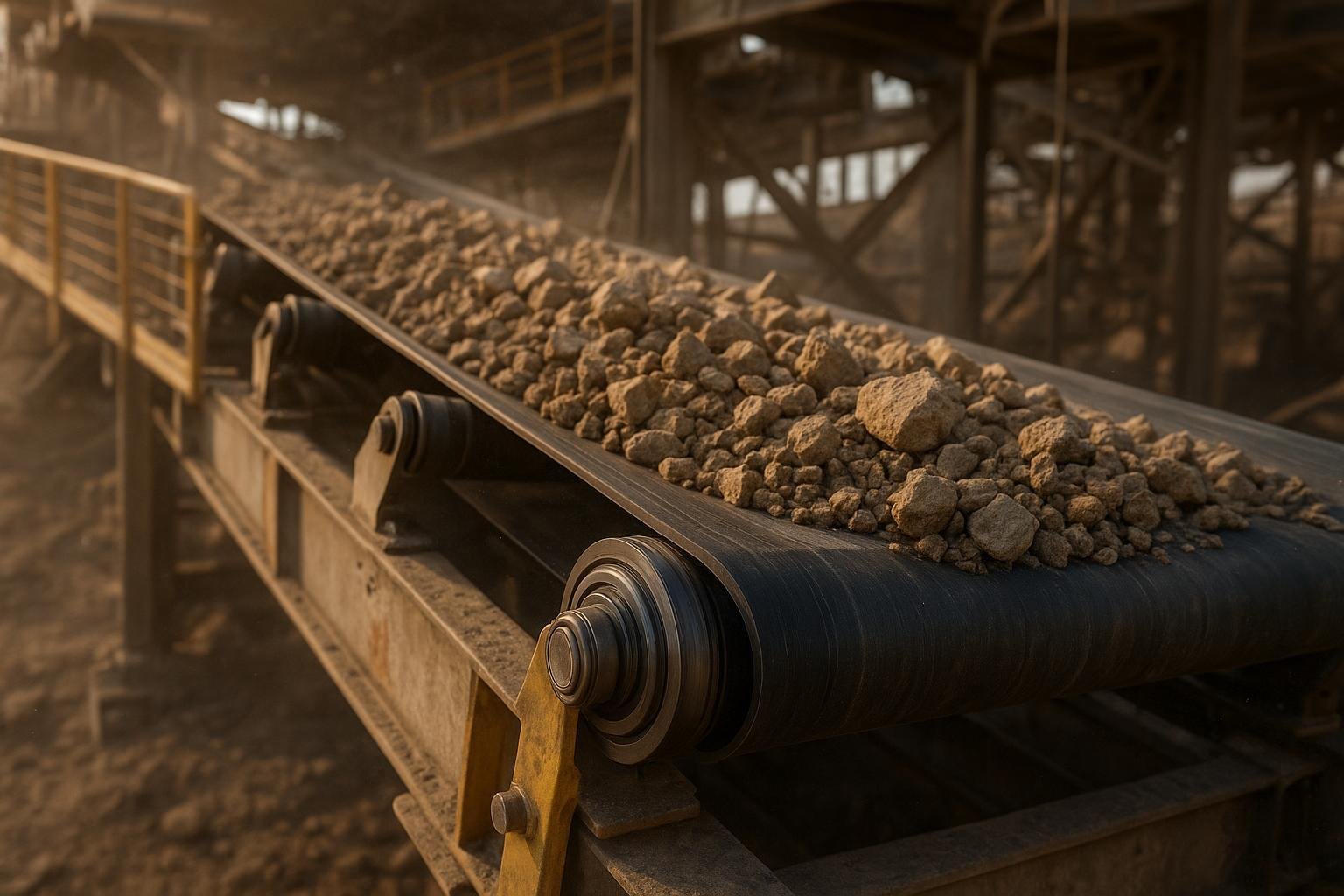
If you spend more time changing idlers than improving throughput, you’re paying a hidden maintenance tax. The short version: high-quality conveyor rollers reduce maintenance costs by extending service life, preventing contamination, cutting vibration, lowering energy draw, and making change-outs faster and safer. Below, I’ll unpack the mechanisms, point to credible sources, and share a conservative TCO example you can adapt.
How high-quality conveyor rollers reduce maintenance costs
Quality shows up first where failures start: at the seals and bearings. Sealed bearing architectures paired with robust external sealing dramatically limit dust and water ingress, which is the root cause of many seized or hot idlers. Case materials from SKF document three‑barrier arrangements with taconite‑style seals that achieved over 99% reductions in contamination and 2–4x service life extensions in harsh duty, along with large reductions in grease consumption. See the manufacturer’s discussion in the SKF Evolution coverage of sealed bearings and taconite sealing for mechanisms and field outcomes.
Precision matters, too. Tight runout, concentricity, and balance reduce vibration that loosens fasteners, chews belts, and accelerates fatigue in brackets. While there isn’t a universal idler vibration standard, the framework in ISO 20816 for vibration evaluation of rotating machines and balance quality guidance in ISO 21940 offer practical reference points for plant trend monitoring.
Materials and surfaces are your next lever. Stainless tubes, UHMWPE shells, and polyurethane or ceramic contact surfaces stand up better to abrasion, impact, washdown, and corrosive media, which means fewer change-outs and less belt damage from roughened roller shells. Heavy-duty multi‑labyrinth sealing and proven idler designs from sector OEMs like Rulmeca illustrate these construction details in practice; their product notes on multi‑labyrinth sealing are a good technical reference. See Rulmeca’s overview of idlers and sealing approaches.
Finally, energy. On many conveyors, the indentation rolling resistance of the belt over idlers dominates running resistance. Studies indicate it can account for roughly 60% of total running resistance on long systems. Low‑rolling‑resistance covers and optimized idler sets can cut total energy by the mid‑teens to around thirty percent on qualifying conveyors, which lowers heat and mechanical stress that often cascade into maintenance. For a useful primer and ranges, review ConveyorBeltGuide’s energy saving belts summary and an OEM perspective in Fenner Dunlop’s PowerSaver LRR notes.
Here’s the deal: when you prevent ingress, keep things balanced, and reduce drag, you avoid the failure precursors that drive emergency work orders and overtime.
Common failure modes and what to inspect
Most idler problems trace back to a few patterns. Focus your rounds on the telltales below and document what you find.
-
Bearing contamination and lube breakdown Look for non‑rotation, growling noise, grease purge, or a temperature rise versus adjacent rolls. Use an IR thermometer during scheduled stops and tag suspect locations. When ingress is frequent, step up to sealed bearings with external labyrinth or taconite‑style barriers.
-
Geometry and belt interaction Misalignment, incorrect trough angles, and over‑tight spacing can spike contact stresses and abrade the bottom cover. Technical work from Conveyor Dynamics links geometry and stress to bottom cover failures; periodic geometry checks and impact protection in load zones reduce this risk.
-
Structural loosening and corrosion Vibration loosens hardware over time, especially where water and fines collect. Torque audits and corrosion control prevent secondary failures and safety hazards near rotating parts.
Field practice tip: Walk‑the‑belt inspections catch most early warnings. Martin Engineering’s guidance emphasizes visual checks for idlers that are not turning, overheating, or fouled with buildup, with cleaning and replacements scheduled under lockout. See their practical overview in Martin Engineering’s inspection guidance. For guarding and emergency stop placement near accessible carry and return idlers, align your procedures with CEMA’s Safety Best Practices.
Why no universal numeric thresholds here? Unlike large coupled machines, idlers don’t have widely published vibration or temperature limits. Establish site baselines over a few weeks, then set your own trigger levels using trend changes, not single absolutes.
Quantified lifecycle and TCO example
Conservative scenario showing how high-quality conveyor rollers reduce maintenance costs for a medium plant’s return idlers:
- Baseline: 200 standard return idlers replaced yearly
- Unit price: $45 each
- Labor: 0.5 hours per roller at $60/hour
- Run profile: constant two‑shift operation
- Upgrade: sealed, heavy‑duty labyrinth idlers with better balance and materials
- Expected life increase: 3x (supported directionally by sealed bearing and ingress data from SKF in contaminated service)
Annualized parts and labor
| Item | Baseline | Upgraded |
|---|---|---|
| Idlers replaced per year | 200 | ~67 |
| Parts cost | $9,000 | ~$3,015 |
| Labor hours | 100 | ~33.5 |
| Labor cost | $6,000 | ~$2,010 |
| Direct subtotal | $15,000 | ~$5,025 |
Direct annual savings ≈ $9,975 before energy.
Energy angle: If lower rolling resistance and cleaner-running idlers trim even 8% of conveyor power on shorter runs, the savings add up. Example: a 30 kW conveyor running 4,000 hours/year at $0.12/kWh uses 120,000 kWh/year. An 8% cut saves 9,600 kWh, or $1,152/year. Total conservative annual savings ≈ $11,100. This illustrates in practical terms how high-quality conveyor rollers reduce maintenance costs when you tally parts, labor, and energy together.
Payback sketch: If premium idlers cost $25 more each and you purchase 200 for changeover, the added capital is $5,000. With ~$11,100/year savings, simple payback is well under one year. Your numbers will differ, but the levers—fewer replacements, fewer labor hours, lower energy—are consistent.
Procurement checklist for buyers
Before you issue the RFQ, decide what you will and won’t accept. Ask vendors to document:
- Sealing architecture and validation of ingress resistance, including a description of labyrinth stages and any contacting lips
- Bearing type and whether sealed for life, plus grease specification and expected service interval or L10 life at stated load and speed
- Maximum total indicated runout and balance method or reference grade, along with weld quality and shaft tolerance controls
- Materials and surface protections suitable for your environment, including stainless, UHMWPE shells, or polyurethane or ceramic contact surfaces
- Temperature and chemical compatibility range, including washdown media
- Test or quality certificates and warranty terms, plus availability of spare kits and safe change‑out guides
- Compatibility with your frames and guarding approach, including any track‑mount provisions that reduce exposure time during replacements
Practical workflows for reliability teams
Inspection cadence: Combine daily visual scans with weekly targeted checks for carrying idlers and brackets in high-load or dusty areas. Log hot or slow‑spinning rolls and replace during planned stops. Use the same route and note positions so trends are obvious.
Spares strategy: Standardize by width and duty class to shrink SKUs. Keep more stock for loading zones and curves where failures concentrate. If ingress is chronic, switch classes globally rather than firefighting unit by unit.
Change-out safety and MTTR: Pre-stage tools, slings, and guards. Favor lighter components where feasible to cut handling risk and speed swaps. A few minutes saved per swap, repeated dozens of times per month, changes your labor curve.
Micro-example from BisonConvey
At a limestone quarry with pervasive dust and intermittent spray from a wash plant, return idlers in the transition zone were failing from contamination every few months. The team upgraded that zone to sealed deep‑groove bearings paired with a multi‑labyrinth exterior seal and a polyurethane shell to resist buildup. After the change, trend logs showed a sharp drop in hot idler tags and fewer grease‑related cleanups because there was no periodic relube on those positions. Change‑out time improved as well: the lighter assemblies were easier to handle within the guarding envelope, cutting exposure during lockout.
This type of configuration is typical of what manufacturers such as BisonConvey supply for severe‑duty segments. If you need to evaluate whether a sealed‑for‑life, labyrinth‑protected idler is appropriate for your environment, review product options and request application guidance from BisonConvey. The goal isn’t brand for brand’s sake; it’s matching sealing, materials, and balance to your duty so maintenance demand drops predictably.
Standards and next steps
If you need to justify an upgrade, point decision‑makers to three pillars of evidence:
- Sealing and bearing integrity: The mechanisms and field cases in SKF’s Evolution article on sealing solutions explain why contamination control extends service life and reduces grease use in dusty conveyors.
- Energy and rolling resistance: Guidance from ConveyorBeltGuide on energy saving belts and OEM notes such as Fenner Dunlop’s LRR overview give realistic ranges to plug into TCO models.
- Geometry and belt interaction: See Conveyor Dynamics’ engineering discussion of bottom cover wear mechanisms in Belt Bottom Cover Failure from Idlers and Pulleys for how idler configuration affects belt life.
Next step for your plant: baseline idler conditions over two to four weeks, build a quick TCO worksheet with your parts, labor, and energy numbers, and pilot premium rollers in one high‑failure zone. If the data supports a broader rollout, expand deliberately and keep measuring.