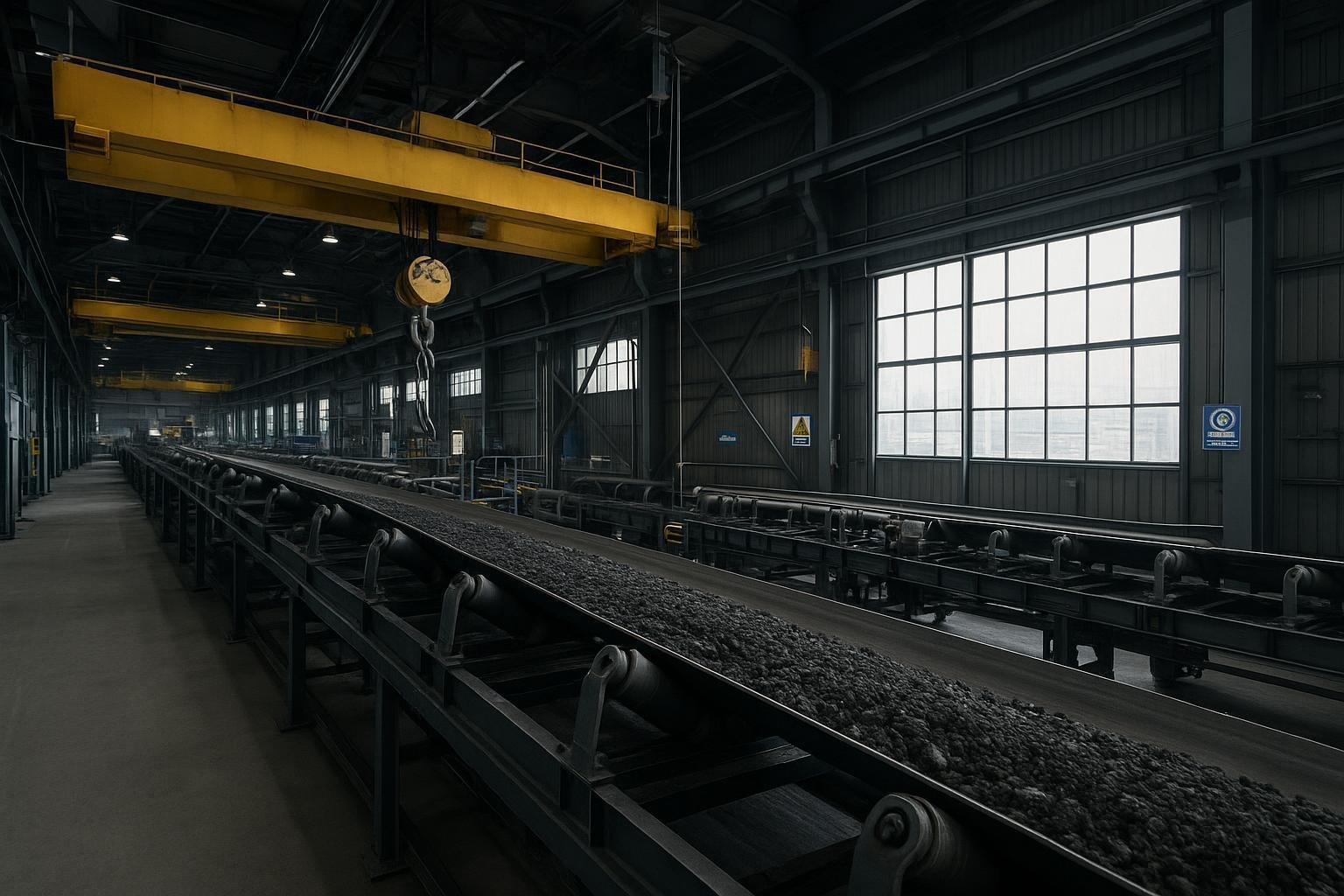
If you work in procurement or reliability for plants that move tons of material every hour, you’ve probably seen “factory direct” splashed across brochures and emails. But what does it actually mean—and how can you prove it before you commit to belts, idlers, or pulleys that your uptime depends on?
A factory direct supplier is a manufacturer that sells products to buyers without intermediaries and can demonstrate in‑house production capability—facilities, equipment, qualified personnel, and a functioning, auditable quality management system (QMS). In industrial contexts, that QMS often aligns to ISO 9001 with independent certification and ongoing surveillance audits; ISO explains how certification and verification work in its own guidance on quality management and certification.
What Is a Factory Direct Supplier?
In practice, a factory direct supplier is the organization that physically manufactures the product and sells to you without a trading company, repackager, or unrelated distributor in between. They can open their shop floor for audits, provide equipment and capacity lists, and share traceable batch records. While marketing language varies, the verification anchors do not: ask for QMS evidence and the documents that tie finished goods to controlled processes. ISO characterizes ISO 9001 as the standard for QMS requirements to consistently meet customer and regulatory needs; see ISO’s overview of quality management for context.
“Factory direct” isn’t one business model. Real manufacturers can operate as:
- OEM: they build to your specification.
- ODM: they offer existing designs you can customize and brand.
- OBM: they produce under their own brand while still selling directly B2B.
What unites them is direct control of production and the ability to evidence that control.
Factory Direct vs. OEM, ODM, and OBM
Engineered conveyor components often span these models:
- OEM (original equipment manufacturer): You provide the belt construction (e.g., steel cord tensile class, cover grade), or idler geometry and bearing spec, and the factory builds to it. This route typically implies higher MOQs and longer lead times due to engineering, tooling, and validation. Practical contrasts are outlined in the Wevolver technical guide on OEM vs. ODM and an Unleashed explainer.
- ODM (original design manufacturer): The factory provides platform designs—say, standard EP/NN fabric belts or idlers with defined tube and bearing families—that you can rebrand with light customization. MOQs and lead times are usually lower because tooling and documentation exist.
- OBM (original brand manufacturer): The plant designs and sells under its own mark. OBM status by itself doesn’t guarantee direct sales, but when the OBM sells to you from its factory organization with audit access, it still qualifies as factory direct.
Trading companies and distributors differ: they don’t own production. They may add value in stocking and logistics, but they can’t grant you process‑level visibility. Sourcing QA discussions like this InTouch Quality comparison of trading companies vs. manufacturers highlight the practical differences procurement teams encounter.
How to Verify a Factory Direct Manufacturer
Here’s a concise verification flow you can adapt to your supplier qualification process:
- Corporate and scope checks
- Request the legal business license/registration that states manufacturing scope and factory address(es). Cross‑check these addresses against any certificates and on‑site signage.
- ISO 9001 certification (if claimed)
- Ask for the current certificate and annex listing covered sites, scope text, issue/expiry dates, certification body (CB), and the accreditation symbol. ISO clarifies that ISO itself doesn’t certify; independent CBs do, and buyers should confirm status directly with the CB as described in ISO’s certification guidance. Under IAF rules, certifications typically follow a three‑year cycle with annual surveillance; see IAF MD5 principles on audit time and surveillance.
- Factory audit and capability evidence
- Arrange an initial audit (internal team or third party). UL’s scheme overview describes common factory production control and surveillance concepts used to ensure continued conformity—useful when scoping your audit plan; see UL’s overview of schemes and certification bodies.
- Collect an equipment list (e.g., calenders, vulcanizing presses, dynamic balancers), capacity ranges, sample inspection records, and traceability examples.
- Capacity and reference documentation
- Request a short capabilities statement, recent Certificates of Analysis (COAs), and sample test reports. Procurement guides such as Thomasnet’s notes on supplier vetting reinforce the value of capability and reliability evidence.
- Trade and export documentation alignment
- Align early on the document suite—commercial invoice, packing list, bill of lading/air waybill, certificate of origin, insurance, and any special documents (e.g., dangerous goods declarations). The U.S. Commercial Service summarizes the typical documents and roles in its guide to common export documents.
Red flags: expired or unverifiable certificates, missing accreditation marks, mismatched addresses between documents, resistance to audits, or inability to show batch‑level traceability.
Factory Direct Supplier RFQ to Delivery: A Practical Workflow
Think of the factory direct route like commissioning a custom assembly rather than pulling a generic spare from a shelf. The upside is control; the trade‑off is that you must specify and verify more.
RFQ package checklist (adapt to your components):
- Belts: type (steel cord vs. EP/NN), width and tensile class, cover grade and thickness, splicing method, environmental exposures (abrasion, heat, oil, chemicals), roll lengths, standards references if applicable.
- Idlers/rollers: diameter/length, shaft/tube material, bearing type and sealing, balance grade, corrosion/dust protection.
- Pulleys: face width and diameter, lagging type, bearing housing, balance grade, shaft details.
What to expect next:
- Feasibility and quotation: Engineering confirms manufacturability, proposes MOQs and lead time based on tooling and load. Quote packages typically include price breakpoints, lead times, payment terms (e.g., deposit + balance), and inspection plans. Practical expectations for vetting and supplier selection appear in Thomasnet’s supplier selection guidance.
- Samples/pilot: For OEM builds, expect drawing approval and a pilot sample or first‑article run with defined acceptance criteria and AQLs.
- Production and QC: Batch/lot traceability, in‑process controls per the QMS, and final inspection records shared at shipment.
- Pre‑shipment and logistics: Conduct internal or third‑party inspection; finalize invoice, packing list, B/L or AWB, COO, insurance. The U.S. Commercial Service outlines these roles and documents in its shipping and documentation overview.
Warranty norms: Industrial components often carry 12–24‑month warranties tied to correct installation, operating conditions, and maintenance. Ensure warranty terms reference batch/lot IDs so claims tie back to the QMS.
Pros and Trade‑offs
| Criterion | Factory Direct Manufacturer | Trading Company/Distributor |
|---|---|---|
| Quality control & traceability | Direct access to QMS, audits, and batch records; faster engineering feedback. Anchored in ISO 9001 practices. | Indirect control; added reseller standards may apply, but limited production transparency. |
| Customization & engineering | OEM/ODM collaboration with deeper design input. | Usually limited customization; prioritizes stocking and logistics. |
| Cost structure | Potentially lower total cost without intermediary margins; requires due diligence. | Extra margin added; may offset with aggregation or stock availability. |
| MOQs & lead times | Often higher MOQs/longer lead times for OEM; ODM can be faster. | Lower MOQs via stocked items; quickest when inventory exists. |
| Risk & effort | You own vetting (certificates, audits, capacity checks). | Lower vetting burden but less control; risk of spec drift. |
A Short, Neutral Example (Conveyors)
Here’s a generalized flow you might see when engaging a real conveyor‑component factory.
- RFQ: You submit a spec for a steel‑cord belt (width, ST rating, cover compound) plus annual volume. You request the QMS certificate, equipment/capacity list, and sample COAs.
- Feasibility: Factory engineering confirms manufacturability, proposes MOQ based on calender press width and splice method, and quotes lead time driven by tooling queue and curing cycle.
- Validation: You approve drawings and a pilot sample cut from the first production run.
- Production and shipment: The plant shares in‑process records and final inspection reports; a third‑party pre‑shipment inspection checks labeling and packing. Export documents and the bill of lading are issued as agreed.
If you need a real‑world touchpoint, a manufacturer like BisonConvey can support a spec review and quote following this same general process. That’s not a recommendation—just an example of how a factory would structure the engagement.
When a Distributor or Trading Company Still Makes Sense
There are valid cases to avoid factory direct:
- Very small test orders where MOQs from a factory would tie up cash or create excess inventory.
- Multi‑SKU aggregation across brands for maintenance stockrooms where a single purchase order and local delivery matter more than deep customization.
- Emergency replacements where a stocked part on a distributor’s shelf beats a made‑to‑order lead time.
If you choose an intermediary, ask them to disclose the actual producer and provide traceability details and inspection records where possible.
Here’s the deal: “factory direct supplier” isn’t a promise—it’s a claim you can verify. Ask for the right documents, plan an audit, and structure your RFQ so the manufacturer can quote precisely. Then decide whether control and customization outweigh the convenience of a stocked intermediary. If you’re ready for a spec review or a quote, contact a qualified manufacturer directly and share a complete package up front.