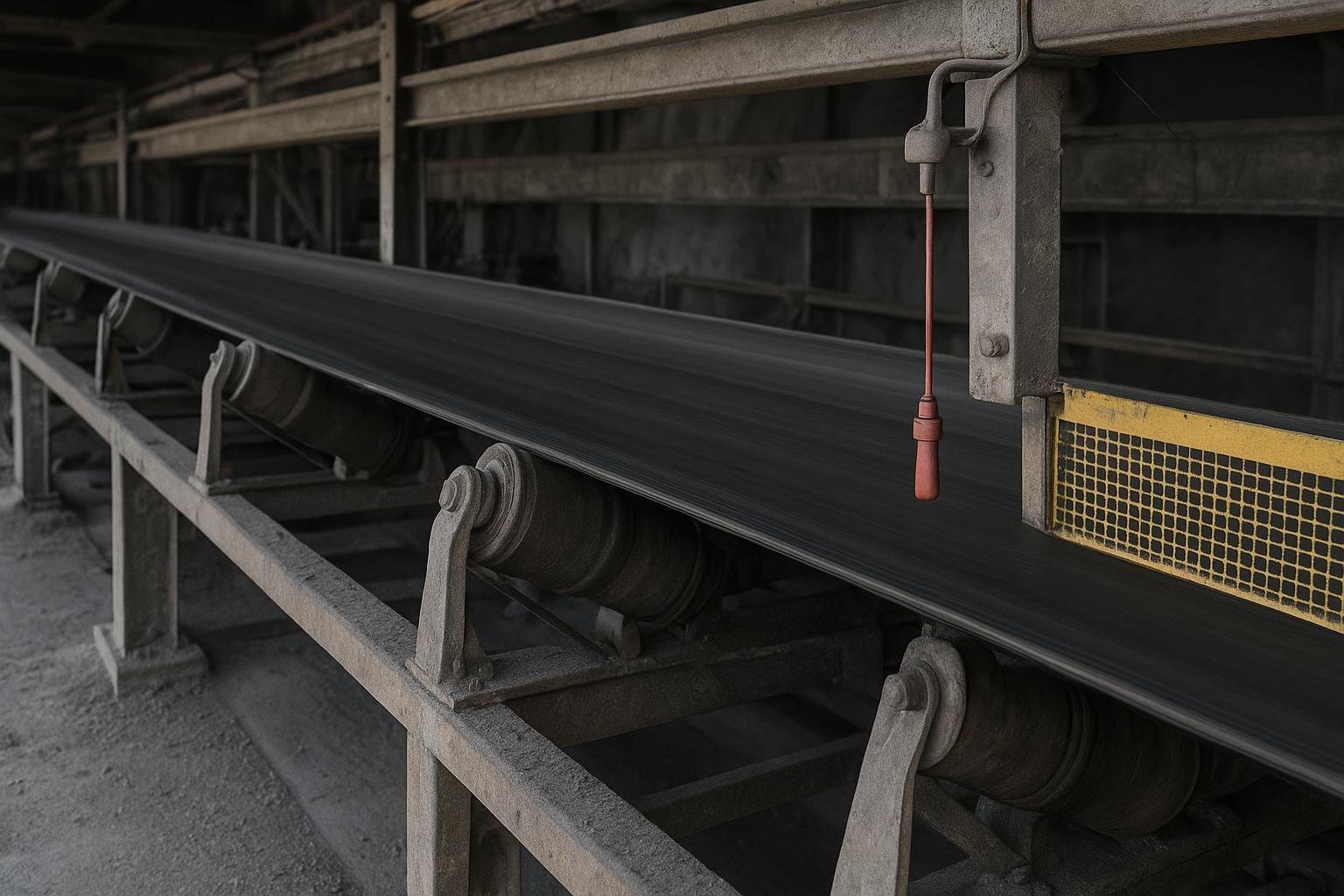
Unplanned downtime from a seized idler can snowball into belt damage, tracking chaos, and fire risk. The good news? A disciplined conveyor roller inspection routine catches most issues early—if it’s done safely, consistently, and with the right cues. This guide lays out a field-proven workflow, separating running observations from hands-on checks after lockout, and shows what to record so you can act before failures cascade.
Safety first: when conveyor roller inspection requires full LOTO
Before any hands-on work around idlers or beyond guarding, apply a complete lockout/tagout (LOTO) per your site procedure and OSHA’s Control of Hazardous Energy. According to OSHA’s official standard text, 29 CFR 1910.147, authorized workers must isolate all energy sources, apply locks and tags, release stored energy, and verify zero energy with a try‑start test before beginning. OSHA’s LOTO eTool clarifies the narrow “minor servicing” exception: brief, routine tasks integral to production with effective alternative protections may be allowed while running—but anything that exposes personnel to danger zones or bypasses guarding requires full LOTO.
For mine sites, MSHA reinforces the line: hands-on cleaning, adjusting, or inspecting rotating rollers while the belt moves has caused serious injuries; belts must be stopped and secured first. See MSHA’s rotating conveyor rollers safety alert por el contexto.
Practical note: treat running checks strictly as visual/auditory from a safe distance. If you need to touch, reach, measure, or remove build‑up, stop and LOTO. It’s the difference between a routine walkdown and a recordable incident.
Tools, PPE, and prep you’ll actually use
- Required PPE and site permits; LOTO kit with locks/tags; signage
- IR thermometer or thermal camera; mechanic’s stethoscope; optional vibration meter or smartphone sensor with plant approval
- Strobe light for visual runout; straightedge/string line/laser for idler alignment; feeler gauges/dial indicator if specified by OEM
- Torque wrench and sockets for mounting hardware; scraper/cleaning tools; durable tags/paint markers
- Standardized inspection form or idler inspection checklist with location grid and photo/IR attachment fields
Rationale: you’re aiming to detect early bearing distress (heat, noise, roughness), misalignment, material build‑up, and structural issues, then document clearly enough that the night shift knows exactly which roll to swap and why.
Quick reference: inspection intervals by duty
Intervals should be risk‑based. Start here, then tune by failure history, tonnage, speed, and environment.
| Duty/environment | Running walkdown | LOTO hands‑on (high‑risk zones) | Spot measurements (IR/vibe) | Structured survey |
|---|---|---|---|---|
| 24/7 heavy, abrasive/dusty (mining, clinker) | Each shift | Weekly | Monthly | Quarterly |
| Wet/corrosive or washdown (ports, fertilizer, grain) | Daily | Biweekly | Monthly | Semiannual |
| General plant service (moderate duty) | Daily | Monthly | Quarterly | Annual |
According to the ASGCO (2026) preventive program for bulk handling facilities, regular checks for seized or vibrating idlers reduce mid‑run changeouts; see their preventive maintenance schedule for cadence ideas. Use it as a starting point, then refine based on your logs.
Running observations (no contact): conveyor roller inspection from a safe distance
These steps assume normal operations with guarding in place. Don’t enter danger zones or reach past guards. If in doubt, stop and LOTO.
- Walk the belt from designated safe paths. Scan for any idler that isn’t turning, is wobbling, or shows visible eccentricity. A strobe can help make runout obvious. Note belt tracking: is the belt climbing one side or polishing an edge?
- Listen for abnormal sounds. Grinding, squeal, or rhythmic thumping often point to bearing contamination, shell dents, or build‑up. A mechanic’s stethoscope may help when used at a safe distance on accessible structure—not on moving idlers.
- Check for hotspots by comparison. Use an IR thermometer or camera to compare suspected idlers to adjacent “healthy” peers under similar load. Investigate differentials on the order of 10–15 °C above neighbors rather than absolute numbers; trend over time. Martin Engineering’s field practices emphasize this “walk and document” approach; see their Foundations maintenance inspection guidance.
- Look for carryback and build‑up, especially on return idlers. Build‑up creates imbalance and heat. If you see it forming, plan a shutdown to clean and to verify belt cleaners are doing their job.
- Verify housekeeping and access. Are E‑stops and pull‑cords visible and reachable? Any missing or damaged guards? Note anything that would slow an emergency response.
Why this order? You’re moving from obvious, high‑signal observations (non‑turning, wobble, noise) to comparative diagnostics (temperature) and housekeeping that prevents recurrence.
According to Douglas Manufacturing’s instructions for CEMA‑class idlers, idlers should roll freely and contact the belt properly; trainers should be installed only after fundamental alignment is correct. Their SOMM Idler manual is a useful reference during running checks: Douglas SOMM Idler (PDF).
Shutdown, LOTO‑verified conveyor roller inspection: the hands‑on checks that matter
After you’ve isolated, locked, tagged, released stored energy, and verified zero energy per OSHA—and restored a safe, guarded work envelope—work through these checks. Document each finding to location.
- Spin test and feel. Rotate each roll by hand. It should turn freely without notchiness, grinding, or side‑to‑side scraping. Any roughness or seized motion is a replace‑now condition per OEM guidance such as PPI’s idler instructions: PPI Belt Conveyor Idler Instructions.
- Check axial and radial play. Lightly push‑pull along the shaft (axial) and try to rock the shell (radial). Excessive looseness suggests bearing wear or housing damage. Numeric limits vary—record the symptom and confirm pass/fail against your OEM or CEMA‑aligned spec.
- Inspect seals and contamination paths. Look for cracked or hardened seals, grease leakage trails, or cut labyrinths. Any pathway for fines or water accelerates failure.
- Examine shell wear and damage. Score marks, flats, or corrosion thinning are red flags; impact zones warrant closer review. On impact idlers, inspect rubber discs/impact bars for cracking, delamination, or compression set.
- Verify idler alignment and squaring. Use a string line, straightedge, or laser to confirm the idler frame is square to the belt centerline and at the correct elevation relative to neighbors. Uneven belt edge wear often points back to misalignment. Industry alignment practices and CEMA committee materials reinforce getting structure true before relying on trainers; see the ANSI/CEMA context here: ANSI/CEMA 402 review resource.
- Confirm mounting hardware and frame integrity. Check for cracked stands or stringers, elongated holes, and loose or missing fasteners. Torque to spec where required.
- Clean, tag, and close out. Remove material build‑up with approved tools, tag failed units with durable markers, and raise the work order immediately. Restore all guards and covers before re‑energizing and testing.
Tip: Think comparative and trending, not absolutes. If you don’t have a numeric tolerance, capture a clear symptom (“rough spin, hot to touch versus neighbors, axial play felt”) and attach a photo or IR image.
Measurement methods that add certainty (and when to use OEM/CEMA numbers)
Temperature trending. Compare an idler’s housing temperature to adjacent peers under similar conditions. Investigate differentials roughly ≥10–15 °C above neighbors and trend over time. Douglas’ safety discussions encourage thermal checks as part of preventive practice; see their perspective on preventive safety measures here: Douglas on preventive safety and thermal checks.
Noise and vibration. Idlers aren’t covered by ISO’s powered‑machine severity zones, but the comparative mindset from ISO 10816/20816 still helps: establish a baseline and set alerts on meaningful increases in RMS velocity/noise correlated with roughness or imbalance. For context on vibration severity frameworks, see ISO’s 20816 overview page. Use a mechanic’s stethoscope for qualitative screening and a simple handheld meter where your procedure allows.
Runout and eccentricity. A strobe during running observations can make bent shells or eccentric rotation stand out; confirm during shutdown by rotation checks and, if your OEM procedure allows, a dial indicator on the shell. Acceptable runout varies widely by diameter, class, and manufacturer—use OEM or CEMA numbers for pass/fail.
Alignment and squaring. Square idlers to the belt centerline with a string line or laser and verify consistent height across adjacent sets. Trainers should supplement, not mask, structural misalignment. For practical “walk the belt” cues about tracking and training fundamentals, see Martin Engineering’s training and tracking guidance.
Idler‑type specifics and what commonly fails
Troughing idlers. Confirm all three rolls—wing and center—rotate freely and support load evenly. Asymmetrical wear or a wing roll running hot often points to misalignment or distorted frames near loading points. Excessive impact at the chute can bend stringers or crack brackets.
Return idlers. Look for carryback build‑up and the effectiveness of belt cleaners upstream. V‑return or self‑aligning return idlers should pivot freely and be placed per OEM guidance (e.g., not too close to pulleys). Any seized return roll can quickly gouge a belt.
Impact idlers and beds. Inspect rubber discs and impact bars for cracks, delamination, or permanent set; verify fasteners and support beams. Replace compromised elements promptly to protect the belt and adjacent troughing idlers.
Training/self‑aligning idlers. These are aids—not cures. If the structure and loading aren’t square, trainers will chase symptoms. Confirm free movement and correct orientation; avoid placing trainers in transition zones.
Common failure modes to log and act on include bearing contamination/seal failure (noise, heat, grease trails), material build‑up driving imbalance and overheating, shell abrasion/corrosion in wet service, and frame deformation. A succinct OEM reference for replace‑now cues is PPI’s IOM linked earlier; it emphasizes prompt replacement of seized or rough‑running rolls.
Example: a neutral, real‑world conveyor roller inspection in washdown service
Scenario. A return idler under a ship‑loader conveyor in a salt‑spray, frequent washdown area starts leaving a narrow, polished stripe on the belt’s return side. During a running walkdown, you note a faint squeal and a slight wobble; the thermal camera shows ~12 °C higher than adjacent return rolls.
Response. You schedule a short stop, apply full LOTO, remove guards, and perform hands‑on checks. The roll spins rough, axial play is felt, and the outer seal lip is cracked with salt residue visible. You replace the roll and document the finding, adding a monthly spot‑check task for this zone.
Materials choice note. In wet/corrosive environments, stainless shafts/housings or UHMWPE‑sleeved rollers can reduce corrosion pathways. Many manufacturers, such as BisonConvey, supply stainless or polymer‑sleeved return rollers; that choice doesn’t change your inspection steps, but it may change the dominant failure mode you watch for (seal integrity over shell corrosion).
Documentation, tagging, and using the data to prevent repeats
If it isn’t written down, it didn’t happen—and you can’t trend what you don’t record. Use a standardized idler inspection checklist with a simple location grid (by frame station and side), timestamp, load condition, and fields for photos/IR images. Tag bad actors with durable markers so the right unit is swapped on the next stop. Close the loop by issuing work orders with the exact location, symptoms, and any measurements.
Every quarter, review the log to find patterns: repeated overheating near the same chute? That’s a belt cleaning or loading‑angle discussion. Belt edge polishing upstream of a pulley? Re‑check structure squaring and idler alignment before adding another trainer. This is the reliability rhythm: find it, fix it, prove it didn’t come back.
Next steps: standardize your conveyor roller inspection program
Adopt the running‑versus‑shutdown workflow here and anchor it to OSHA LOTO and your site rules. Convert the interval table into your maintenance plan and adjust by risk, adding spot measurements (IR, noise) in problem zones. Finally, create a one‑page idler inspection checklist and a simple photo‑tagging convention so anyone can document consistently—and build a feedback loop with your OEM partners and peers to compare forms, torque specs, and pass/fail criteria aligned with your idler classes and service conditions.
References and further reading
- OSHA (standard text): The Control of Hazardous Energy — 29 CFR 1910.147
- OSHA (guidance): Lockout/Tagout eTool — scope, application, and steps
- MSHA (alert): Rotating conveyor rollers safety alert
- OEM/Ops: Douglas SOMM Idler — safety, operation, and maintenance manual (PDF)
- OEM/Ops: PPI — Belt Conveyor Idler Instructions (PDF)
- Preventive program: ASGCO — Preventive maintenance schedule for bulk handling conveyors (2026)
- Practices: Martin Engineering Foundations — belt conveyor maintenance inspection
- Vibration context: ISO 20816 overview — Mechanical vibration of machines