Cleated Conveyor Belt Selection Guide
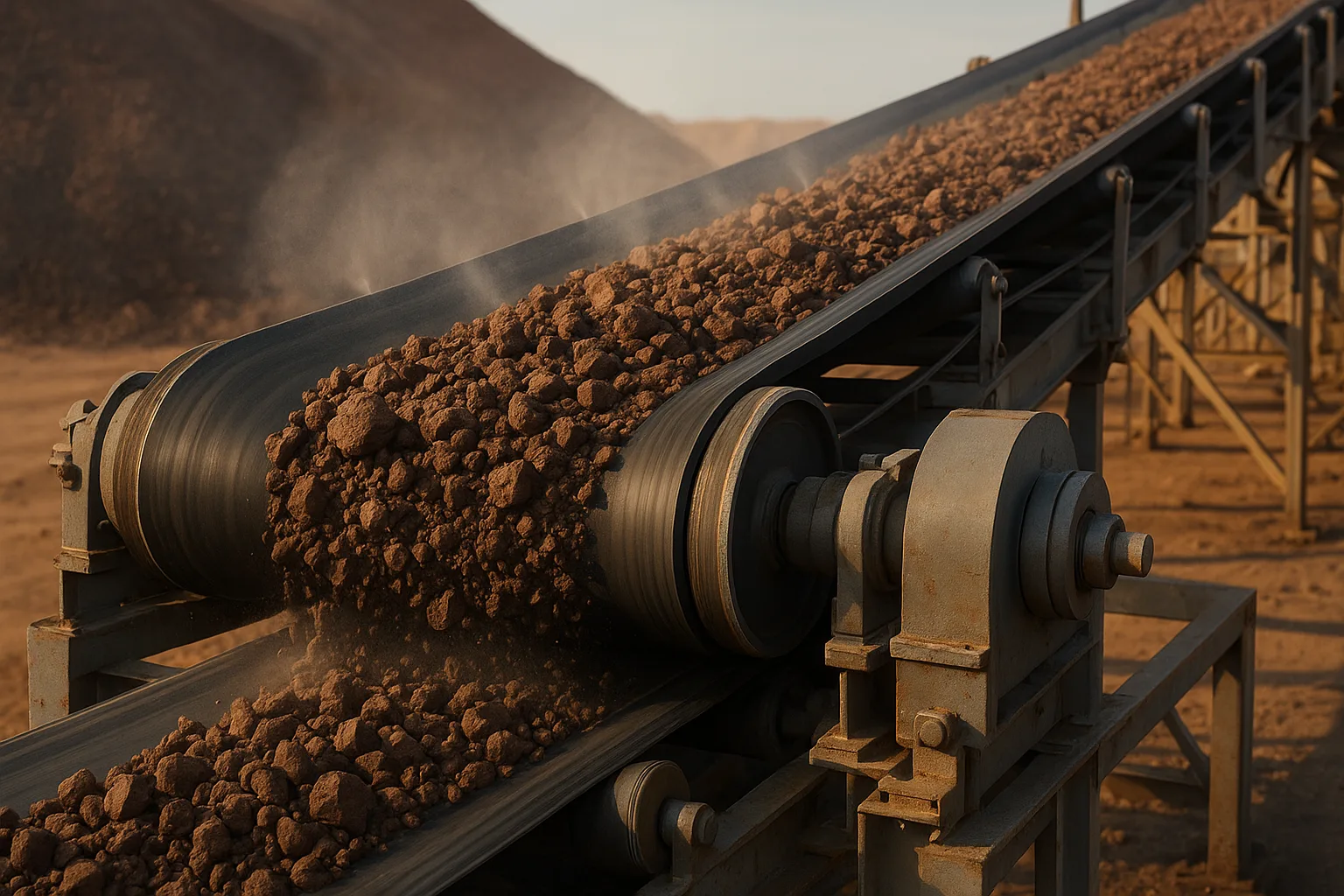
When you push a conventional smooth belt past a modest incline, gravity starts winning: product rolls back, troughs overflow, and spillage climbs. Cleated belts add mechanical retention so you can keep capacity without chasing runaway material. This guide explains how to decide between smooth, chevron, and sidewall constructions—and how to size cleats, pitch, pulleys, and covers with standards-aware guardrails.
Key takeaways
-
Start with physics, not catalog photos: compare your design angle to the material’s dynamic/surcharge angle and stay 5–15° below it. Move from smooth → chevron → sidewall only when needed.
-
Chevron (V/Y) profiles typically extend feasible incline into the ~30–40° range; corrugated sidewall with T-cleats can run to vertical by forming pockets. Keep cleaning and pulley geometry in mind.
-
Match cleat height to lump size and incline: as a rule, cleat height ≈ 1/2–2/3 of typical lump size for general bulk; ≥0.75× of the largest lump for sidewall pockets.
-
Pulley diameter must satisfy both the base belt construction (ISO 3684 method) and the cleat/sidewall geometry. Choose the larger requirement to avoid cover cracking and cleat fatigue.
-
Specify cover grades and safety properties by standard: ISO 14890 (textile belts), DIN 22102 (abrasion), EN ISO 340 (flame), EN ISO 284 (conductivity), ISO 4195 (heat/ageing) where applicable.
Core concepts and technical primer
Incline envelopes and why they matter
Smooth fabric belts often run reliably to roughly 18–25° depending on the material and friction conditions, with more conservative limits in CEMA-aligned practice for certain materials. Practitioner guides summarize that cleated/chevron belts can extend workable angles to roughly 30–45°, and corrugated sidewall systems with T-cleats create pockets that enable steep or vertical conveying. See the context and ranges discussed by the HH Design Mfg engineering blog in 2024 and by Cisco-Eagle’s application notes; both summarize CEMA-informed practice while emphasizing safety margins. For a quick feasibility check, you can use an incline rule-of-thumb: design angle ≤ (static repose − 5–15°), or equivalently keep the design near 0.8× the static repose on conservative jobs.
- Reference context: HH Design Mfg’s summary of incline design and margins (2024) in their engineering blog; Cisco-Eagle’s incline application guide (industry overview); BisonConvey’s incline feasibility tool for quick checks.
Cleat types and terminology
-
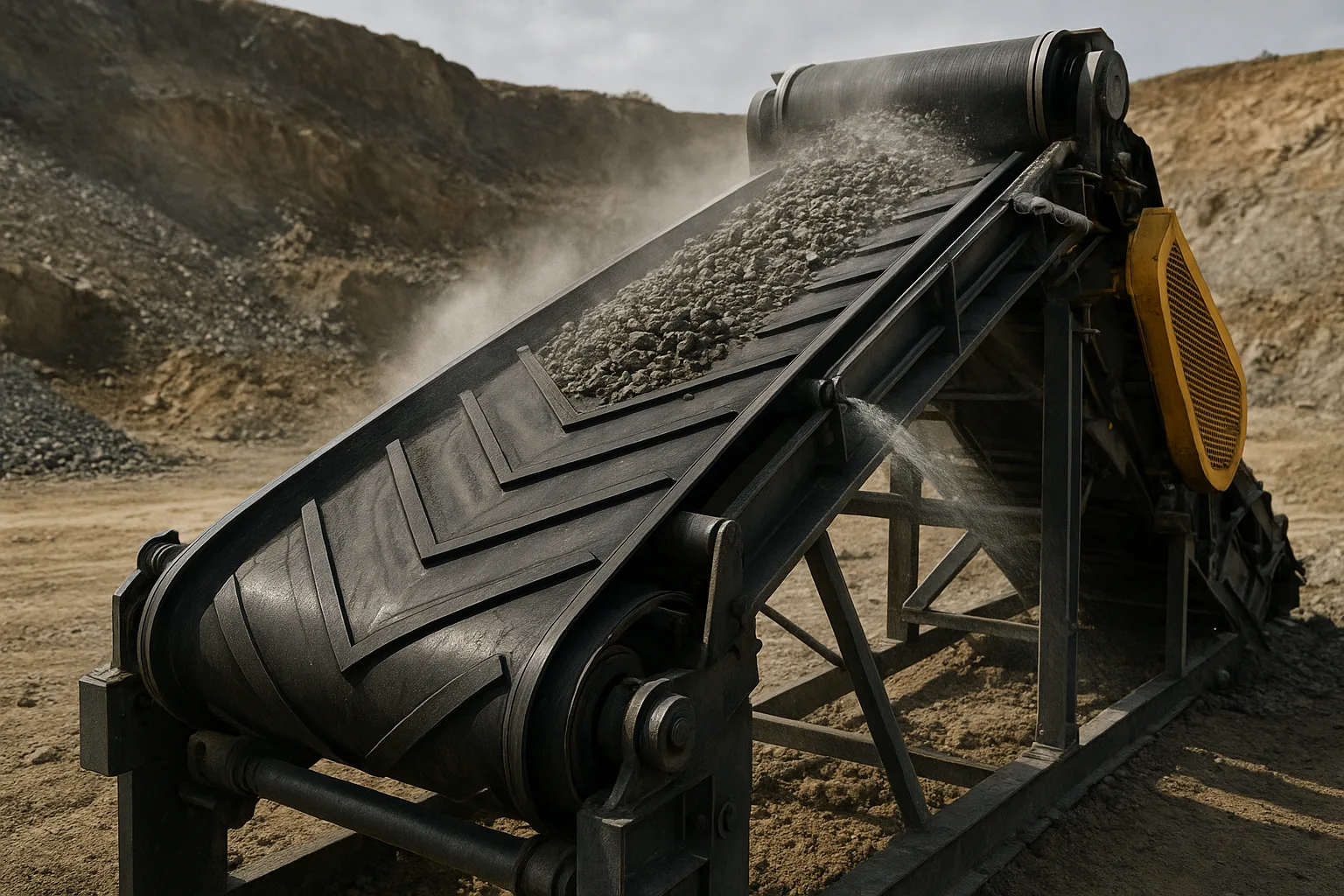
Chevron (V, Y, herringbone): integrally vulcanized patterns that add friction and shallow pockets. Common cleat heights are around 15/25/32 mm in heavy rubber chevrons, with patterns designed for fines, granules, or mixed feeds. Profiles and ranges appear in many product pages, such as the chevron portfolio from manufacturers.
-
Straight/T/scoop cleats: perpendicular flights bonded to the top cover, from low heights used on modest inclines to tall T-cleats matched with corrugated sidewalls for vertical transport. Sidewall arrangements typically use cleat heights from roughly 40 to 360 mm and sidewalls from ~60 to 400 mm, forming discrete pockets.
-
Attached vs. integrally vulcanized: chevrons are usually integral; straight/T/scoop cleats and sidewalls may be hot-vulcanized attachments. Attachment method affects minimum pulley diameter and splice planning.
For cataloged examples of heavy-duty chevrons and sidewalls, see product pages such as the chevron belt patterns and sidewall systems offered by engineering suppliers. As one internal reference point, the chevron and sidewall ranges documented by BisonConvey include 15/25/32 mm chevrons and 60–400 mm sidewalls with 40–360 mm cleats.
- Example references: chevron profiles and heights are shown in manufacturer pages like the chevron conveyor belts overview; sidewall configurations and cleat ranges appear in sidewall conveyor belts.
Belt constructions and cover grades
-
Carcass: EP/NN textile belts are common in bulk handling; steel-cord belts serve long centers and high tensions. Construction influences minimum pulley diameters (see ISO 3684 methodology) and splice choices.
-
Covers and safety properties: Select cover abrasion by DIN 22102 (e.g., X/W/Y classes) alongside ISO 14890 textile belt specification/tolerances. Where required by site rules or risk assessment, specify EN ISO 340 for flame resistance and EN ISO 284 for electrical conductivity. Heat/ageing resistance follows ISO 4195 classes.
Standards context and source anchors:
-
According to the index of CEMA publications, the Belt Conveyors for Bulk Materials text sets conservative design practices for capacity, surcharge angles, and inclined conveying.
-
ISO and DIN references include ISO 14890 textile belts, flammability per EN ISO 340 (2022), conductivity summaries for EN ISO 284, heat/ageing classes in manufacturer overviews of ISO 4195, and abrasion mapping to DIN 22102.
Practical steps for the Cleated Conveyor Belt Selection Guide
- Collect inputs
-
Material family and properties: bulk density, moisture, angle of repose (dry/wet), fines %, max and median lump sizes.
-
Geometry and duty: required incline angle and profile (transitions), belt width, speed, capacity, duty cycle.
-
Environment and compliance: temperature, oil/chemicals, flammability, static control, dust hazards.
-
Mechanical constraints: available pulley diameters, transition lengths, cleaners, return-run clearance, scraper compatibility.
- Check incline feasibility
-
Compare design angle to dynamic/surcharge angle estimates. As a conservative heuristic: design ≤ repose − 5–15°.
-
If the design angle exceeds smooth-belt comfort range, consider chevron/cleated; if well beyond (~>40–45°, or material is very free-flowing), plan for corrugated sidewall pockets.
- Choose belt type and cleat geometry
-
If the shortfall is modest (say +5–10° beyond smooth), a chevron conveyor belt may suffice; match chevron height/pattern to fines vs. lumps.
-
For steeper angles or rollback-prone materials, specify straight/T/scoop cleats and, for very steep routes, add corrugated sidewalls to form pockets.
-
Set cleat height from lump size and incline; pick pitch to avoid bridging (longer pitch for large lumps; shorter for fines to reduce sifting).
- Verify pulleys and transitions
-
Determine minimum pulley diameters by the larger of: base belt per ISO 3684 method (carcass/tension utilization) or the cleat/sidewall geometry from vendor charts.
-
Confirm transition length and return-run clearance, particularly with tall cleats and sidewalls.
- Validate capacity, tension, and power
- Confirm that the selected belt type and speed achieve capacity without overfilling pockets or overtopping cleats. Then compute tensions and drive power. Consider backstop or braking for steep inclines. Isn’t it cheaper to check this now than to fight carryback and downtime later?
Micro-example (neutral, replicable):
- Suppose your design calls for 26° conveying of crushed stone (repose ≈ 37°). A quick check with an incline angle calculator shows a smooth belt may be marginal, while a moderate-height chevron is likely viable. After choosing a chevron height, confirm capacity with the belt capacity calculator and verify drive sizing via the tension/power calculator. If tall chevrons are needed, ensure your head pulley meets the minimum diameter for the selected cleat geometry. For chevron and sidewall ranges available from an engineering supplier, see BisonConvey.
Engineering tables and worked example
Table 1: Typical incline angle envelopes by belt type (ranges, not absolutes)
Citations for context: HH Design Mfg’s incline design summary, Cisco-Eagle’s application guide, and sidewall/chevron product literature.
Table 2: Cleat height and pitch suggestions by material family
Heuristics are synthesized from vendor guides and practice notes (e.g., Dorner cleat ranges; MIPR rule of 1/2–2/3 of material size; Fluent’s ≥0.75× largest lump for sidewall pockets).
Table 3: Representative minimum pulley diameters for T-cleat heights (illustrative)
Interpretation and caution: Always select the larger of (a) the base belt minimum per ISO 3684/your carcass and (b) the cleat/sidewall geometric minimum from vendor charts. Representative charts are published in brochures such as Apache’s sidewall belting PDF and NEC’s sidewall belt guide.
Worked example: 200 t/h limestone at 28°
-
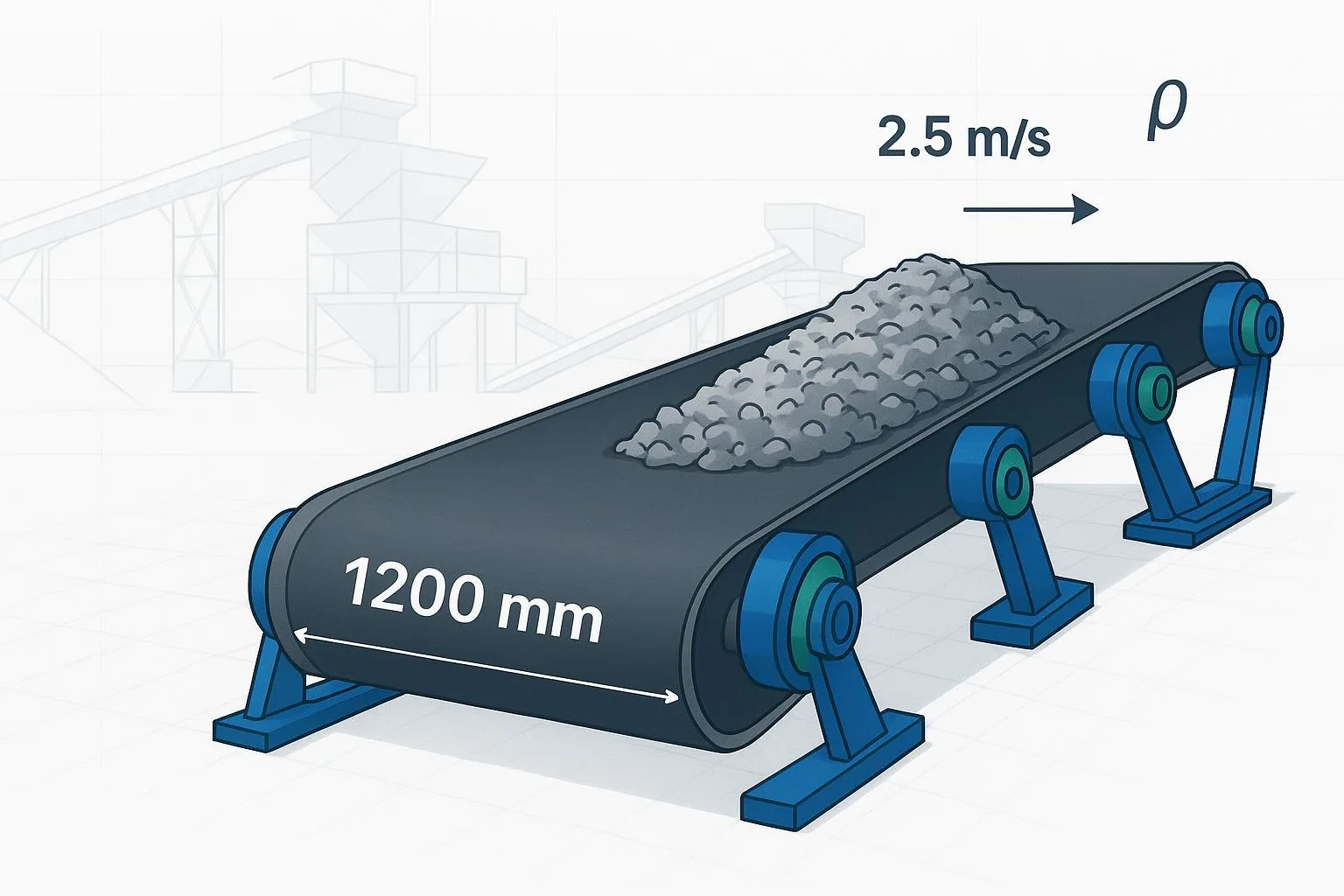
Inputs: ρ ≈ 1.6 t/m³; angle of repose ≈ 37°; incline 28°; top size 50 mm; belt width 800 mm target; speed 2.0–2.5 m/s.
-
Feasibility: Using the conservative heuristic, smooth-belt comfort may top out near low 20s for free-flowing crushed stone. A moderate chevron (~25–32 mm) likely suffices.
-
Geometry: Choose chevron 25 mm; confirm that return idlers and cleaners can run a profiled belt. Verify head/tail pulleys against vendor minimums; most 25–32 mm chevrons work with common pulley series, but check your carcass-based minimums.
-
Capacity & power: Confirm volumetric loading with a belt capacity calculator and check tensions via the tension calculator. If loading approaches 100% of trough capacity, consider increasing width or speed rather than jumping to taller cleats. Think of it this way: it’s cheaper to widen a belt than to live with constant cleanup.
-
Outcome: Design remains within a conservative envelope without resorting to sidewalls. Cleaning provisions and backstop are specified due to incline.
Practical applications and short case vignettes
-
Quarry transfer incline: Switching from smooth to 25 mm chevron cut rollback on a 26° transfer and reduced cleanup labor. The change also required a segmented head cleaner designed for profiles and a return-run clearance check.
-
Cement mill vertical lift: A sidewall conveyor with 120 mm T-cleats and 200 mm sidewalls replaced a bucket elevator on a constrained route. Pulley diameters were increased to satisfy cleat geometry and the base carcass per ISO 3684 method.
-
Port hopper reclaim: Wet sand slipping at 20° on smooth was stabilized with medium chevron; scraper pressure was reduced to avoid accelerated cover wear.
Installation, splicing, and maintenance best practices
-
Splicing: Fabric EP belts can be mechanically fastened or vulcanized; under cleats, plan for hot vulcanization or recessed fasteners with vendor approval. Steel-cord belts generally require hot vulcanized splices.
-
Cleaning: Cleated and chevron belts complicate primary/secondary scraping at the head. Use cleaner systems designed for profiles (softer or segmented blades) and plan secondary cleaners for valleys.
-
Return run and idlers: Provide clearance or use return rollers suited to profiled belts; avoid sidewall/cleat contact. Some sidewall systems use slider beds on the return.
-
Transitions: Ensure adequate transition length from flat pulley to trough to avoid edge overstress, particularly with tall attachments.
-
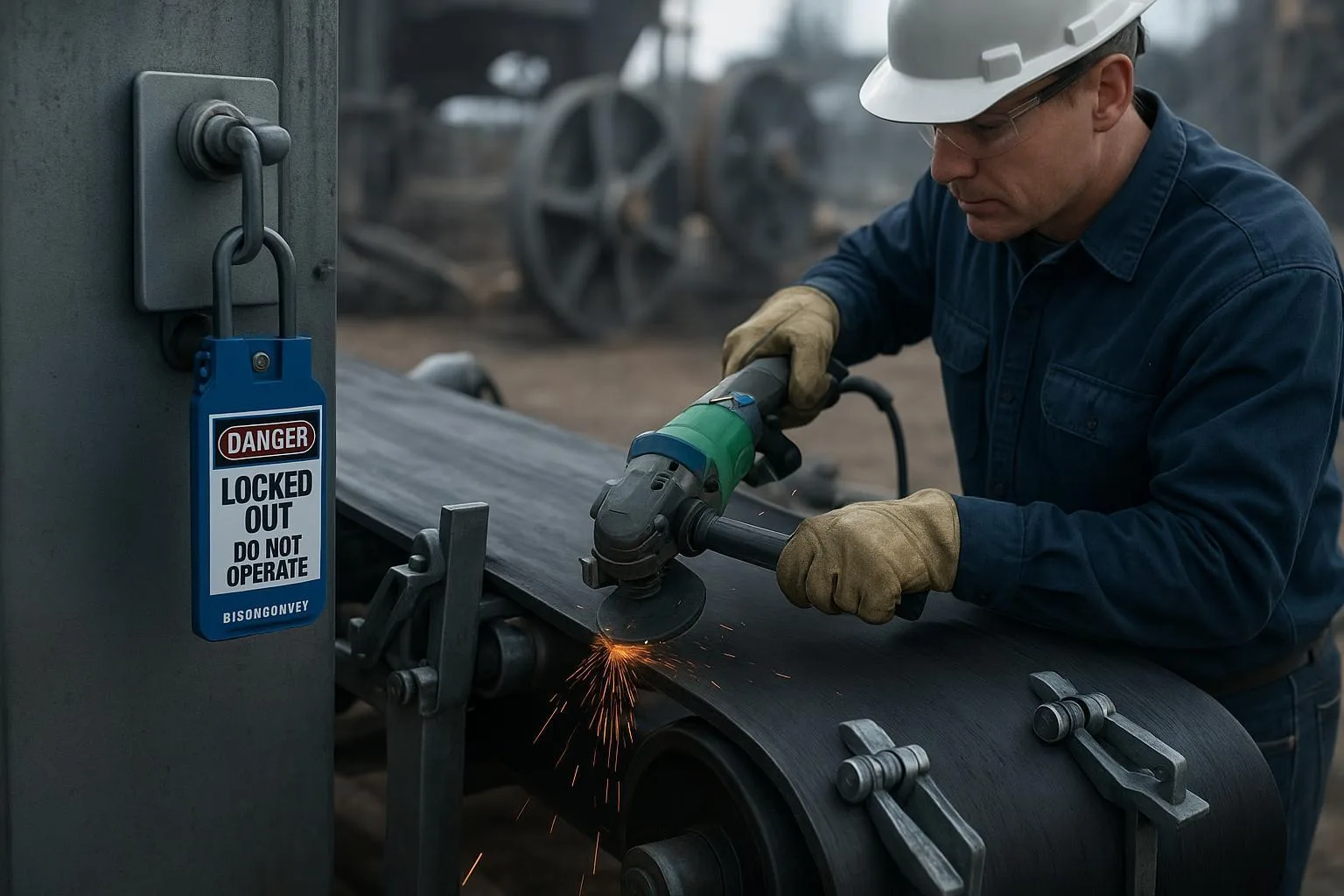
Safety: On steep inclines, specify backstops or dynamic braking to prevent reverse run on power loss.
Industry references include Feeco’s troubleshooting overview for cleaning and tracking practices and general fabric belt engineering guides that discuss transitions and idlers.
Common problems and troubleshooting
For deeper dives into damage modes and fixes, see practical engineering resources such as Martin Engineering’s field notes on belt damage and Feeco’s troubleshooting guidance.
RFQ/specification checklist (embed these fields in your bid documents)
-
Material properties: bulk density, moisture, angle of repose (dry/wet), fines %, top size.
-
Required incline and profile: start/stop, horizontal sections, transitions.
-
Throughput and duty: t/h, belt speed target, hours/day.
-
Belt construction: EP/NN or steel-cord; strength rating; cover grades (DIN 22102), special properties (EN ISO 340/284, ISO 4195).
-
Cleat geometry: type (chevron/straight/T/scoop), height, pitch; sidewall height if used.
-
Pulleys and idlers: diameters, face type, transition length, return-run arrangement for profiles.
-
Cleaning system: primary/secondary cleaner types compatible with profiles.
-
Safety: backstop/braking on incline; guarding.
For terminology, see the glossary of belt terms and an internal comparison of belt types in chevron vs. smooth vs. steel-cord.
References and further reading
-
CEMA publications index for Belt Conveyors for Bulk Materials: CEMA resources.
-
Incline design context and ranges: HH Design Mfg incline guide; Cisco-Eagle incline application guide.
-
Material-specific angles (contextual): Continental Belting table.
-
Standards overviews: ISO 14890; EN ISO 340 flammability; EN ISO 284 summary; ISO 4195 heat/ageing in manufacturer overviews; DIN 22102 abrasion mapping.
-
Pulley and sidewall references: Apache sidewall belting PDF; NEC sidewall brochure; Habasit fabric belts guide.
-
Damage and maintenance notes: Martin Engineering on belt damage; Feeco troubleshooting.
-
Product context and calculators: Chevron conveyor belts; Sidewall conveyor belts; Incline angle calculator; Capacity; Tension.
Conclusion and next steps
You don’t need guesswork to specify cleats. Start with the material’s surcharge/dynamic angle, decide whether smooth, chevron, or sidewall is justified, and then lock in cleat height, pitch, and pulley diameters using conservative, standards-aware constraints. Validate capacity and tension with calculators and plan cleaning and return-run geometry early—before the layout hardens.
If you’d like an engineering review of your incline or custom cleat geometry for difficult materials, an industrial supplier such as BisonConvey can support belt selection, idlers, pulleys, and QA checks in a neutral, application-first manner.