Choosing the right idler roller tube material isn’t just a spec line—it determines uptime, energy use, noise levels, and how often your team is swapping out components. Different sites face different enemies: abrasive fines, corrosive washdown, saline air, sticky product, or strict hygiene requirements. The goal is to match the material to your environment and load class, not chase a one‑size‑fits‑all answer.
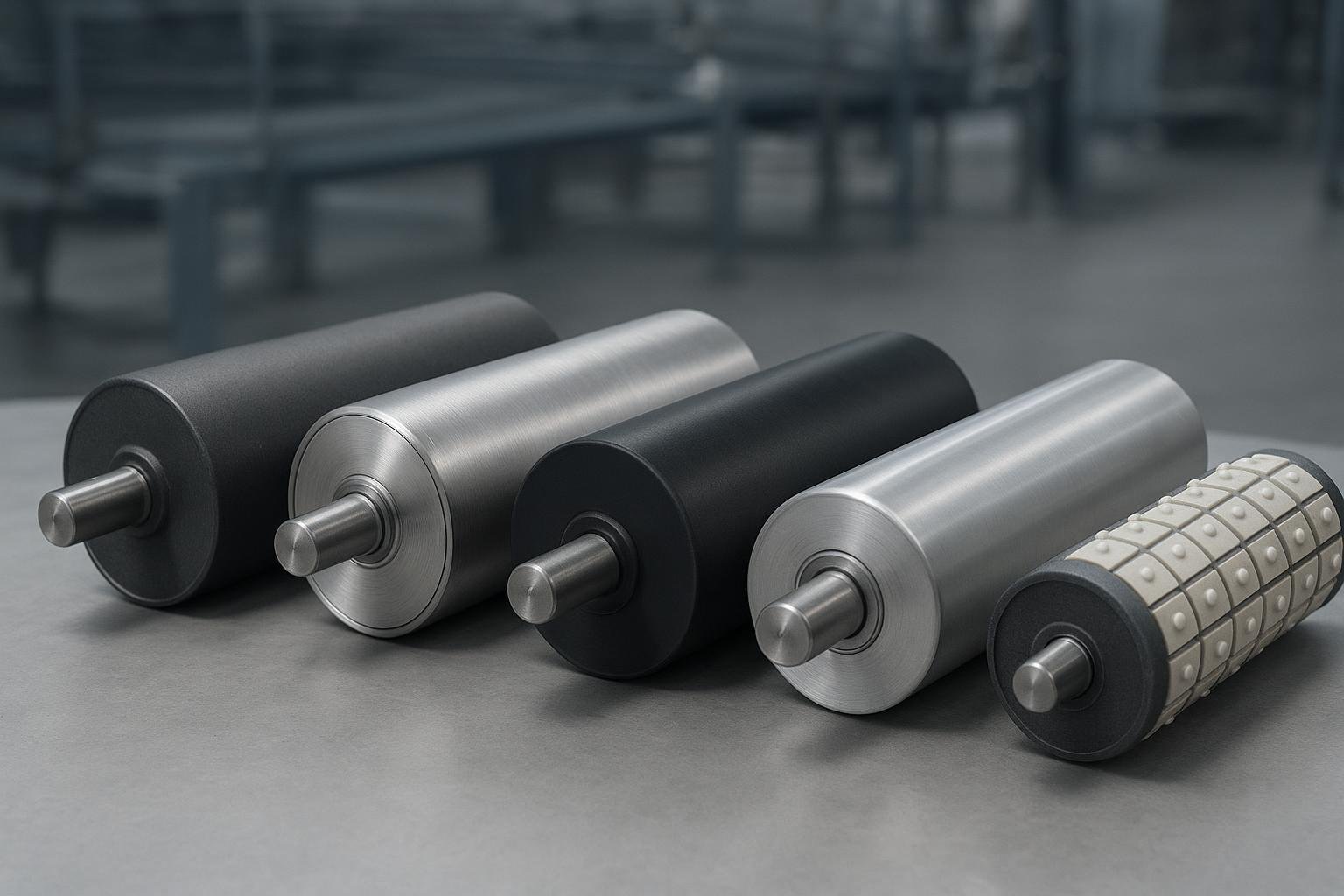
If you’re shortlisting options, this guide compares carbon/mild steel, stainless steel (304/316), HDPE/UHMWPE composites, and aluminum, and explains when rubber or ceramic lagging belongs in the conversation. It’s built for industrial buyers and reliability engineers who want pragmatic, standards‑aware guidance.
Soft CTA: Have a complex mix of abrasion and corrosion? Consult an engineer to model loads, deflection, and lifecycle cost before settling on a tube material.
How we chose: transparent methodology
We evaluated each option using seven criteria common in bulk‑handling decisions and aligned with industry practice:
- Load capacity and structural stiffness (per diameter and wall)
- Abrasion and impact resistance
- Corrosion and chemical resistance
- Noise and energy performance
- Maintenance and service life (MTBF)
- Availability and configuration breadth
- Total cost of ownership
Weights used: 22%, 18%, 15%, 12%, 18%, 8%, and 7% respectively, based on how often these factors drive real‑world selection. Data sources include standards and manufacturer catalogs. According to the PPI idler selection literature, diameter and bearing size correlate directly to allowable load and CEMA class alignment; larger diameters with heavier walls reduce deflection and extend life—see the PPI Idler Selection Guide (2020) for context.
Disclosure: BisonConvey is our product. We evaluated it using the same criteria as other options in this comparison.
Comparison table: materials at a glance
| Material | Strength/load | Abrasion resistance | Corrosion resistance | Weight | Noise/Energy | Typical applications | Relative cost |
|---|---|---|---|---|---|---|---|
| Carbon/mild steel | High with larger OD and heavier wall; widely available per idler catalogs | Good; can pair with impact/rubber variants | Low in wet/saline/acidic unless coated | Heavy | Typically noisier; higher inertia | Mining, aggregates, dry bulk | $ (lowest, economies of scale) |
| Stainless (304/316) | High; similar structural behavior to carbon steel | Good surface; use lagging for extreme wear | Excellent in wet/acidic/chemical | Heavy | Similar to steel | Food/washdown, chemicals, saline/wet | $$$ (premium) |
| HDPE/UHMWPE | Moderate structural; verify class/limits | Good belt‑friendly wear | Excellent (no rust) | Light | Lower noise; reduced rolling inertia | Wet/corrosive, noise‑sensitive zones | $$ (varies) |
| Aluminum | Low–moderate (light duty) | Poor for heavy abrasion | Good (no rust) | Very light | Low noise | Gravity, low‑load specialty | $$ (series‑dependent) |
| Rubber/Ceramic lagging | N/A (surface treatment) | Rubber: good; Ceramic: excellent | Indirect protection | N/A | Can reduce slip‑related losses | Drive pulleys; wet/high slip | $$–$$$ (ceramic premium) |
Soft CTA: Not sure which way to go? A brief consult can compare deflection, expected MTBF, and energy across materials for your belt line.
The best roller tube material, by use case
Carbon/mild steel — Best for heavy, abrasive loads in dry conditions
- Positioning: Robust, economical shells for high loads and harsh, dry bulk duty when corrosion isn’t the dominant risk.
- Key traits: High structural stiffness per diameter/wall; wide availability; compatible with CEMA heavy classes.
- Pros:
- Lowest upfront cost and broad size/part availability
- Handles impact and abrasion well when paired with impact discs or rubber treatments
- Predictable performance aligned to CEMA classes
- Cons:
- Low inherent corrosion resistance; rust in wet/saline/acidic exposure
- Heavier mass increases inertia and noise versus composite options
- Best for: Mining and quarrying transfer points, overland dry belts, cement/raw material lines with minimal moisture.
- Not for: Washdown, coastal/saline, acidic chemicals without robust coating or material change.
- Typical sizes/notes: 4–6 mm wall at 152–178 mm OD for heavy classes; check deflection targets against design load per catalogs like the Rulmeca Idler Roller Catalog.
- Price tendency and maintenance: Generally lowest capex; plan for coatings or replacement intervals in damp/corrosive areas.
- Evidence links: The SANS 657‑3 standard defines welded steel tubes for idler rolls with tight tolerances—see SANS 657‑3 (steel tubes for idlers).
Stainless steel (304/316) — Best for corrosive/wet or hygienic environments
- Positioning: Long‑term corrosion resistance where moisture, cleaners, acids, or saline exposure are routine.
- Key traits: Strong structural performance; excellent corrosion resistance; hygienic finishes possible.
- Pros:
- Resists rust and chemical attack; 316 is stronger against chlorides than 304
- Suitable for washdown and hygiene‑critical sectors
- Compatible with standard bearings/sealing systems
- Cons:
- Premium material cost; weight similar to carbon steel
- For extreme abrasion, may still need rubber or ceramic treatments
- Best for: Food/pharma washdown, fertilizer/chemical plants, coastal ports, dewatering stations.
- Not for: Budget‑constrained dry duty where coatings suffice.
- Typical sizes/notes: Similar OD/wall selections to steel; match bearing/seal materials for full corrosion pathway protection. See the PPI idler catalog guidance on harsh environments.
- Price tendency and maintenance: Higher capex; offsets with longer MTBF in corrosive duty.
- Evidence links: Hygiene/washdown conveyor practices commonly specify stainless—see Ultimation’s food and washdown conveyors overview.
HDPE/UHMWPE composite — Best for corrosion resistance and lower noise/handling weight
- Positioning: Polymer‑composite shells that eliminate rust, reduce noise, and lower handling risk in wet or noise‑sensitive areas.
- Key traits: Excellent corrosion resistance; belt‑friendly wear; lighter mass reduces rolling inertia.
- Pros:
- Up to 50% quieter than traditional steel rollers in field claims
- No rust; improved sealing options reduce water ingress
- Safer handling thanks to lower weight
- Cons:
- Lower structural stiffness than thick‑wall steel at equal OD; verify load class
- Thermal expansion and creep limits at higher temperatures/speeds
- Best for: Underground mines with noise caps, wash plants, saline coastal conveyors, fertilizer/chemical lines.
- Not for: The heaviest impact zones without reinforced designs or correct bearings/frames.
- Typical sizes/notes: Common ODs parallel to steel offerings; confirm speed/load and bearing size. See PROK’s guidance on HDPE rollers and noise/corrosion and PPI full line catalog entries for HDPE idlers.
- Price tendency and maintenance: Often mid‑range pricing; potential savings via reduced noise exposure and corrosion‑related downtime.
Aluminum — Best for weight‑sensitive, low‑load, specialty applications
- Positioning: Very light tubes for gravity and low‑load roles where corrosion resistance and low noise are valued over heavy‑duty strength.
- Key traits: Extremely low weight; good corrosion resistance; precise, low‑noise bearings in gravity/universal series.
- Pros:
- Simplifies handling and reduces structure loads
- Low noise in warehouse/parcel environments
- Clean finishes and aesthetics
- Cons:
- Not suited to heavy dynamic loads or abrasive bulk duty
- Lower stiffness; limited diameters and bearing sizes for industrial idlers
- Best for: Warehousing, sorting, packaging, light accumulation conveyors.
- Not for: High‑load bulk material lines, abrasive fines, impact zones.
- Typical sizes/notes: Interroll Series 1100/1700 Light show per‑roller static loads roughly 85–350 N depending on build—see Interroll Series 1100 Gravity Conveyor Roller and Interroll Series 1700 Light Universal Roller.
- Price tendency and maintenance: Series‑dependent; used where light duty and corrosion resistance matter more than strength.
Surface treatments: Rubber‑ and ceramic‑lagged shells — Best for traction, dewatering, and extreme wear
- Positioning: Applied lagging on rollers/pulleys increases friction, sheds moisture, and resists abrasion—especially on drive pulleys in wet, high‑slip zones.
- Key traits: Rubber patterns (diamond/chevron) improve water shedding and traction; ceramic tiles deliver higher friction and wear life.
- Pros:
- Reduces belt slippage and related energy loss
- Extends wear life in harsh, wet environments
- Multiple installation methods (hot vulcanized, weld‑on, adhesive) to suit maintenance windows
- Cons:
- Ceramic’s aggressive grip can increase belt wear if misapplied
- Must match lagging type to pulley position and cleaner setup
- Best for: Drive pulleys in wet/high‑tension duty, dewatering stations, very abrasive processes.
- Not for: Non‑drive pulleys with sensitive cleaner setups unless specified (smooth ceramics are recommended in some cases).
- Typical sizes/notes: Ceramic coverage and pattern influence dewatering/traction; Flexco recommends medium ceramic coverage options for high moisture. See Flexco’s Flex‑Lag technical overview and their guidance on choosing lagging types.
- Price tendency and maintenance: Ceramic carries a premium; payback is in reduced slip and longer wear life when applied correctly.
Engineering guidance: tube diameter and wall thickness
Tube diameter and wall thickness drive stiffness and allowable load. Larger OD reduces rotational speed for a given belt speed and enables larger bearings; thicker walls increase the section modulus, cutting deflection under load. Practically, CEMA alignment happens through diameter/bearing tables and conservative deflection limits.
Worked example (simplified): Say a CEMA E application requires ~35 mm bearings and a 178 mm OD roll at a given belt speed. Moving up from 152 mm to 178 mm OD lowers RPM and deflection; pairing with a heavier wall (e.g., 6 mm vs 4 mm) increases stiffness further. Manufacturer guides like the PPI Idler Selection Guide show how OD and bearing size map to class.
FAQ
-
Is HDPE/UHMWPE strong enough for mining?
- Often yes for many lines, especially in wet or corrosive areas, provided you verify load and speed against the manufacturer’s CEMA class ratings. Composites trade some stiffness for corrosion resistance and lower noise; check bearing size and frame compatibility.
-
When should I choose stainless over coated carbon steel?
- Choose stainless when moisture, chlorides, cleaners, or acids are routine and you need long‑term corrosion resistance or hygiene. Coated carbon steel works for occasional moisture but typically won’t match stainless longevity in aggressive environments.
-
Do ceramic or rubber‑lagged idlers reduce slippage?
- On drive pulleys, yes—lagging increases friction and sheds water. Ceramic generally grips more and lasts longer than rubber in wet/high‑tension duty, but selection must match pulley position and belt cleaner setup.
-
How does tube diameter and wall thickness affect selection?
- Larger OD and heavier walls increase stiffness and reduce deflection, enabling higher load classes with appropriate bearings. Use manufacturer tables to align your belt line with CEMA classes and deflection targets.
Pricing notes (subject to change)
- Carbon/mild steel: Generally lowest upfront cost; lifecycle costs rise in corrosive duty without coatings.
- Stainless (304/316): Premium capex; value comes from longer life and lower corrosion‑related maintenance in wet/chemical environments.
- HDPE/UHMWPE: Typically mid‑range pricing; savings via zero rust, lower noise, and safer handling.
- Aluminum: Series‑dependent; common in gravity/universal rollers, not heavy bulk idlers.
- Lagging: Ceramic is more expensive than rubber; installation method (vulcanized, weld‑on, adhesive) impacts total cost.
Closing next steps
The “best roller tube material” depends on your load class, environment, and maintenance realities. Steel remains the heavy‑duty baseline for dry, abrasive lines. Stainless excels in wet or hygienic duty. HDPE/UHMWPE shines where corrosion and noise are constraints. Aluminum fits light specialty roles, and lagging solves traction and wear problems on pulleys.
Soft CTA: If you want to map materials to your CEMA class, noise and energy targets, and expected MTBF, consult an engineer. BisonConvey provides steel, stainless, and UHMWPE rollers, with optional ceramic or rubber lagging for demanding environments—see our homepage at BisonConvey for contact details.