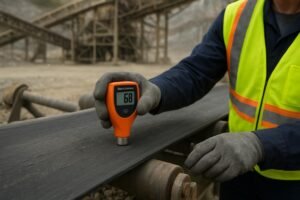
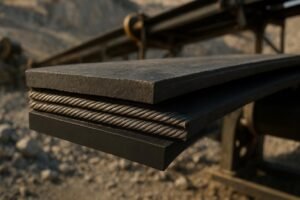
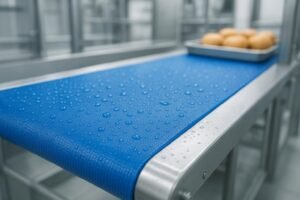
When a process runs hot, the belt is only as reliable as its temperature envelope—and the rest of the system that touches it. Two numbers matter most: continuous service temperature (what the belt can live at all day) and intermittent peaks (short bursts at higher heat). For safety and durability, specifiers also look at standards: ISO 4195 heat aging for rubber covers, ISO 340 small‑scale flammability, EN 14973 for underground mining fire performance, and DIN 22102/ISO 14890 for general cover and textile belt requirements. For a concise overview of heat‑aging validation, see Fenner Dunlop’s summary in the Heat Resistance Standards and Test Methods page, and for standards scope and cataloging, consult the ISO Conveyor Standards Index (ICS 53.040.20).
Below is a quick comparison. Treat values as indicative; always validate with the manufacturer’s datasheet for your duty, geometry, and environment.
| Belt Type | Typical Continuous Temp | Typical Peak Temp | Typical Applications | Evidence |
|---|---|---|---|---|
| Heat‑resistant rubber (EP/NN) | 125–200°C | Up to 400°C (short bursts, certain grades) | Clinker, hot sinter/coke, foundry sand | Fenner Dunlop heat‑aging overview (ISO 4195 context) |
| EPDM/EPM heat‑resistant covers | ≈200°C | ≈400°C | Heavy‑duty hot bulk where abrasion/impact matter | Fenner Dunlop cover grades and Superfort examples |
| Steel cord (ST) + heat covers | Cover‑governed (e.g., ≈200°C) | ≈400°C peaks | Long runs, high tons/hour hot bulk | Fenner Dunlop Steelcord datasheet (cover‑dependent) |
| PTFE‑coated fiberglass/aramid | ≈260°C | ≈316°C | Non‑stick bake/curing, release‑critical lines | Techbelt PTFE‑coated fabrics overview |
| Silicone‑coated belts | ≈80–100°C (fabric systems) to lower‑hundreds when cover/base allow | Model‑dependent | High‑grip food/packaging at moderate heat | Habasit fabric belt ranges; Megadyne silicone examples |
| Polyimide (PI) composites | ≈300°C+ (manufacturer‑specific) | Not widely published | Specialty high‑heat polymer lines | Manufacturer overviews (confirm datasheets) |
| Stainless steel/metal mesh or solid steel | 200–600°C+ alloy‑dependent | 800–1000°C+ with suitable alloys | Baking bands, annealing, cooling/solidification | IPCO steel belt application pages |
| High‑temp modular/chain (HR/HHR nylon, PP) | ≈100–154°C | Material‑dependent | Food spirals, curing where plastics suffice | Intralox materials pages |
| Ceramic pulley lagging (supportive) | Backing limits often ≈80–100°C | Component‑dependent | Traction/wear aid on hot conveyors | Flexco ceramic lagging overview |
Methodology in brief: We prioritized capability match (temperature envelope), wear/impact/chemistry fit, splice and system integration, evidence of standards compliance, and lifecycle value—balancing what you can run continuously against peaks, load, and maintenance reality.
1) Heat‑resistant rubber belts (general classes)
Positioning: The workhorse for hot bulk solids when you still need abrasion, impact tolerance, and conventional splicing/tracking behavior.
Temperature envelope: Manufacturers formulate several classes; in practice you’ll see continuous ratings from roughly 125°C to 160°C for mid‑range compounds and up to around 200°C for higher‑grade covers, with short bursts to 300–400°C depending on the recipe and thickness. Those classes are validated by accelerated aging per ISO 4195, which tracks property changes (tensile, elongation, hardness) after oven exposure.
Traits: Good abrasion performance (often referenced to ISO 4649/ASTM D5963), robust against impact and carryback scrapers, and readily available in EP/NN textile carcasses across widths and plies. Watch for glazing and hardening over time at heat, which can raise rolling resistance and crack at bends.
Evidence: The engineering background and cover class framing are summarized in the Fenner Dunlop Heat Resistance Standards and Test Methods page, which maps how manufacturers position their heat grades against ISO 4195.
Best for: Clinker transfer off coolers, hot sinter/coke, foundry sand, lime; where abrasive wear and impact coexist with heat.
2) EPDM/EPM‑based heat‑resistant rubber belts
Positioning: Rubber belts formulated with EPDM/EPM covers deliver better heat aging than conventional SBR blends at elevated continuous temperatures.
Temperature envelope: Public examples include grade families positioned around ≈200°C continuous service with tolerance for higher short‑term peaks. Fenner Dunlop, for example, describes EPM‑based “Deltahete” covers for continuous operation near 200°C and peaks up to about 400°C, while an SBR‑leaning “Betahete” sits lower on the heat ladder with higher abrasion bias. Manufacturer naming varies; always read the data sheet.
Traits: Improved resistance to embrittlement and shrinkage under heat versus SBR blends; still retains the abrasion/resilience you expect from rubber. Adhesion and splice selection must match cover chemistry and service temperature.
Evidence: See Fenner Dunlop’s Cover Grades (Heat Resistance) overview and the Superfort Deltahete/Betahete page, which provide class context and example ranges supported by ISO 4195 testing.
Best for: Cement, steel, and power plants moving hot bulk where continuous temps push beyond 160°C and impact/abrasion remain significant.
3) Hybrid: Steel cord (ST) belts with heat‑resistant covers
Positioning: When you need long centers, high tensions, and low stretch under hot loads, steel cord belts pair structural capacity with heat‑rated rubber covers.
Temperature envelope: Governed by the cover compound, not the cords. In practice, expect similar envelopes to Section 2 (e.g., ≈200°C continuous, short peaks ≈400°C) when using high heat‑resistant covers.
Integration: Ensure heat‑capable idlers, bearings, and pulley lagging; ceramic lagging is common for traction but check backing temperature limits. Splice construction and cure cycles must be specified for heat exposure.
Supplier example: In heavy‑duty hot bulk applications (clinker/coke), system‑level packages—belt plus matched idlers and pulleys—simplify integration. For instance, BisonConvey supplies steel cord and EP/NN belts paired with idlers and pulleys for harsh environments; heat‑resistant cover options can be specified for hot service. Disclosure: BisonConvey is our product.
Evidence: The Fenner Dunlop Steelcord datasheet outlines mechanical characteristics while noting that thermal limits are cover‑dependent; the Cover Grades (Heat Resistance) page explains the temperature classes.
4) PTFE‑coated fiberglass/aramid belts
Positioning: Excellent release/non‑stick and chemical resistance with stable mechanical behavior at oven temperatures; common across food processing and industrial curing lines where carryover is unacceptable.
Temperature envelope: Industry norms center around ≈260°C (500°F) continuous with peaks ≈316°C (600°F), subject to the base fabric (fiberglass vs. aramid) and splice type. Always match the belt’s thickness and joint design to the oven profile.
Traits: Non‑stick surface reduces buildup and cleaning time; decent dimensional stability; typically lighter than rubber/steel options. Limited abrasion resistance against sharp, heavy bulk.
Evidence: Techbelt’s PTFE‑Coated Fabrics overview details materials and typical operating windows for PTFE belts used in cooking and curing.
Best for: Bake ovens, laminating/curing processes, and any release‑critical application where bulk impact is minimal.
5) Silicone‑coated belts
Positioning: High grip and surface compliance for food and packaging at moderate heat when you need traction more than release.
Temperature envelope: Very product‑ and base‑belt‑specific. Many fabric conveyor systems show continuous limits near ≈80–100°C, while certain silicone‑covered timing/conveyor belts advertise higher peak capability. Treat the cover and carcass together—the lower of the two governs.
Traits: Good traction and gentle handling; food‑compatible variants available. Prone to wear if run against aggressive scrapers or sharp edges.
Evidence: Habasit’s fabric belt product range materials illustrate typical continuous limits for common constructions, while Megadyne provides examples of silicone‑covered products with elevated temperature tolerance on specific builds.
Best for: Check‑weighers, transfer belts, packaging and light bake handling where you need grip without extreme heat.
6) Polyimide (PI) film/fabric‑reinforced belts
Positioning: Specialty polymer belts for sustained high temperatures beyond typical silicone ranges, without the metal weight.
Temperature envelope: Representative public overviews place PI solutions in the ≈300°C+ arena, but continuous versus peak values are manufacturer‑specific and should be confirmed on datasheets alongside splice recommendations.
Traits: High thermal stability and reasonable mechanical integrity; more niche availability and joining options compared with PTFE or rubber.
Best for: Specialty high‑heat industrial lines where polymer belts are preferred for weight, noise, or process reasons and where published data supports the profile.
7) Stainless steel/metal mesh and solid steel belts
Positioning: When temperatures exceed polymer/rubber limits or processes demand dimensional stability through ovens and cooling zones, metal belts become the default.
Temperature envelope: Alloy governs everything. Austenitic grades like 304/316 often serve to ~400–600°C; high‑temperature 310 and nickel‑based alloys extend well above that. Solid steel belts in cooling/solidification systems are commonly run in the 200–250°C range for specific chemistries, while baking bands and annealing lines run substantially hotter depending on design.
Traits: Excellent heat tolerance and cleanability; precise tracking on engineered systems. Higher mass and cost; different wear modes (wire fatigue, link wear) and unique sanitation/inspection routines.
Evidence: IPCO’s steel belt application pages summarize temperature/service examples for cooling, baking, and coating lines; exact continuous/peak limits are grade‑ and thickness‑specific and must come from the chosen alloy’s datasheet.
Best for: Baking bands, annealing furnaces, quench/cool conveyors, and processes where rubber/plastics cannot survive.
8) High‑temperature modular/chain belts
Positioning: Plastic modular systems and spiral conveyors with HR/HHR materials can run “warm” lines efficiently, but they’re not substitutes for true high‑heat belts.
Temperature envelope: Many HR plastics sit in the ≈100–154°C range for continuous service. Polypropylene modules tend to cap near ≈104°C, with specialized nylons extending higher. Stainless‑steel link hybrids improve mechanics but overall limits remain governed by the plastic modules.
Traits: Hygienic designs for food, easy maintenance, modular repair; limited heat headroom and creep at temperature.
Evidence: Intralox’s material reference pages provide continuous temperature guidance for ThermoDrive and modular nylon/PP variants.
Best for: Food spirals, proofing/bake transitions, and curing where temperatures fit within HR/HHR polymer windows.
9) Ceramic‑reinforced interfaces (supportive subtype)
Positioning: Not a belt type, but a system aid. Ceramic pulley lagging increases traction and wear resistance in hot, heavy‑duty service—especially at drive pulleys handling heat‑hardened covers.
Temperature envelope: The rubber backing of many ceramic lagging products sets a practical continuous limit in the ≈80–100°C range at the lagging itself; monitor heat transfer to the pulley shell and bearings.
Traits: Better grip under contamination and heat‑hardened covers; improved belt life via reduced slip. Requires attention to cleaner compatibility and lagging adhesive performance at temperature.
Evidence: Flexco’s Ceramic Pulley Lagging overview details use cases, constructions, and installation notes; always confirm the exact temperature rating of the specific lagging compound and adhesive kit.
Best for: Drives on hot bulk conveyors where traction and abrasion are persistent challenges.
10) Hybrid and custom‑engineered solutions
Positioning: Mixing carcasses (e.g., steel cord) with advanced heat‑resistant covers, or pairing rubber belts with heat‑tolerant components (stainless idlers, high‑temp cleaners), often delivers the most reliable outcome for harsh lines.
Temperature envelope: By definition, tuned to your process. The cover compound, thickness, and splice govern thermal limits; carcass choice sets mechanical capacity and stretch.
Traits: Optimized for your geometry (inclines/turns), impact zones, and cleaners. Requires careful specification and commissioning.
Best for: Plants balancing high heat with abrasion, impact, or long centers—cement clinker, sinter, coke, and similar duties.
System integration and maintenance under heat
Heat shortens the margin for error. A few pragmatic checks save outages:
- Validate continuous vs. peak temperature where the belt actually sees it (transfer point thermography helps). Specify cover compound and thickness for the hot zone, not just the average.
- Match idlers, bearings, skirting, cleaners, and pulley lagging to temperature and chemistry; use ceramic or stainless interfaces where appropriate and confirm adhesive/compound ratings.
- Choose splice/joining methods compatible with heat cycles and your cover chemistry; verify cure profiles and re‑tension after thermal conditioning.
- Monitor for glazing/hardening, shrinkage near edges, increased tracking effort, and scraper chatter—early flags of heat aging.
- Budget for lifecycle, not just unit price: higher‑grade compounds and correct components cut unplanned downtime and cleaner/blade consumption.
Procurement guardrails and compliance notes
- Evidence and standards: For rubber covers, ask for ISO 4195 test class data and any ISO 340 or EN 14973 fire performance requirements relevant to your site. A solid primer on heat‑aging tests and cover classes is available in Fenner Dunlop’s Heat Resistance Standards and Test Methods page. For the wider conveyor standards landscape, the ISO Conveyor Standards Index (ICS 53.040.20) outlines scope and titles for documents like ISO 340 and ISO 14890.
- Datasheet discipline: Treat temperature ranges as manufacturer‑specific; insist on continuous and intermittent ratings under your ambient and loading conditions.
- Application mapping: If your duty looks like clinker, sinter, or coke with long runs, a steel cord carcass with a heat‑resistant cover and heat‑capable components is often the most reliable path. For release‑critical ovens, PTFE/fiberglass or metal belts will outperform rubber.
If you’re evaluating heavy‑duty hot bulk conveying and want system‑level compatibility (belt plus idlers/pulleys) under heat, suppliers like BisonConvey can spec EP/NN or steel cord belts with heat‑resistant covers alongside matched components for the duty. (Disclosure earlier in article.)
Selected sources cited inline:
- Fenner Dunlop: Heat Resistance Standards and Test Methods — https://www.fennerdunlopemea.com/heat-resistance-standards-and-test-methods/
- Fenner Dunlop: Cover Grades (Heat Resistance) — https://www.fennerdunlopemea.com/cover-grades/heat-resistance/ and Superfort Deltahete/Betahete — https://www.fennerdunlopemea.com/conveyor-belt/superfort-deltahete-superfort-betahete/
- Fenner Dunlop: Steelcord overview — https://www.fennerdunlopemea.com/app/uploads/steelcord-en.pdf
- Techbelt: PTFE‑Coated Fabrics — https://www.techbelt.com/us/ptfe-coated-fabrics/
- Intralox: Materials references — https://www.intralox.com/products/thermodrive/options/materials
- Flexco: Ceramic Pulley Lagging overview — https://documentlibrary.flexco.com/X6187_enAU_6187_FlexLagOverview_041223.pdf
- ISO: Conveyor Standards Index (ICS 53.040.20) — https://www.iso.org/ics/53.040.20.html