Selecting the right system for high-velocity parcel and crate handling isn’t just about picking a conveyor. It’s about meeting a throughput target every hour of every shift, integrating scanners and sorters without choking flow, and doing it safely with predictable maintenance and power needs. Here’s the approach we used to shape this guide:
- Capability and throughput match (25%)
- Control and accumulation performance (20%)
- Integration readiness with scanners/sorters (15%)
- Safety and compliance (15%)
- Energy efficiency (10%)
- Maintenance and reliability (10%)
- Value and total cost of ownership (5%)
Before we dive in, a quick reality check: “high speed” in parcel facilities typically means belt or roller conveying around 1–3 m/s (≈60–180 m/min), with system throughput influenced by sorter type and singulation. For reference, cross-belt sorter platforms show speeds up to 3 m/s and throughputs into the five figures per hour, depending on carrier pitch and line design, as outlined in the BEUMER BG Sorter CB datasheet and Interroll sorter portfolio (see the evidence links within relevant sections).
Conveyor and sorter types at a glance for high-speed parcel conveyor selection
| النوع | Typical speed range | Throughput notes | Handling profile | Footprint/complexity |
|---|---|---|---|---|
| Cross-belt sorter | ~1.0–3.0 m/s (vendor dependent) | 10,000+ items/hour with appropriate pitch and induction | Gentle handling, high scalability | Medium–high |
| Narrow-belt/roller with ZPA | ~0.1–2.5 m/s module speeds | Line-rate depends on zones and merges | Good for totes/crates and parcels; accumulation without contact | Low–medium |
| Sliding shoe / tilt-tray | High-capacity (vendor-specific) | Numeric specs vary by model; consult vendor | Positive diverting; handles wide mix | Medium–high |
Notes:
- Interroll indicates cross-belt systems achieving “over 10,000 parts per hour,” with vertical variants up to 10,000 carriers/hour and speeds up to 1.3 m/s; BEUMER lists sorter speeds up to 3 m/s. Actual items/hour depends on induction, pitch, and gap control. See the Interroll sorter portfolio overview and BEUMER BG Sorter CB datasheet for representative parameters: Interroll sorter brochure; BEUMER BG Sorter CB.
Throughput & flow control
- Throughput targets and line speed ranges
- What to decide: Size the system to the peak 15‑minute rate, not just hourly averages. For many high-speed parcel lines, design speeds land between 1–3 m/s; induction and sorter choice set the ceiling. Cross-belt vendor literature shows potential for 10,000+ items/hour at appropriate pitch.
- Watchouts: Bottlenecks often occur at merges/diverts and scanning tunnels when gap control slips. Singulation quality can make or break real-world PPH.
- Evidence: Representative data points from major vendors: Interroll portfolio (10,000+ pph context) and BEUMER BG Sorter CB speed up to 3 m/s (Interroll sorter brochure); (BEUMER BG Sorter CB).
- Accumulation strategy: ZPA vs. contact
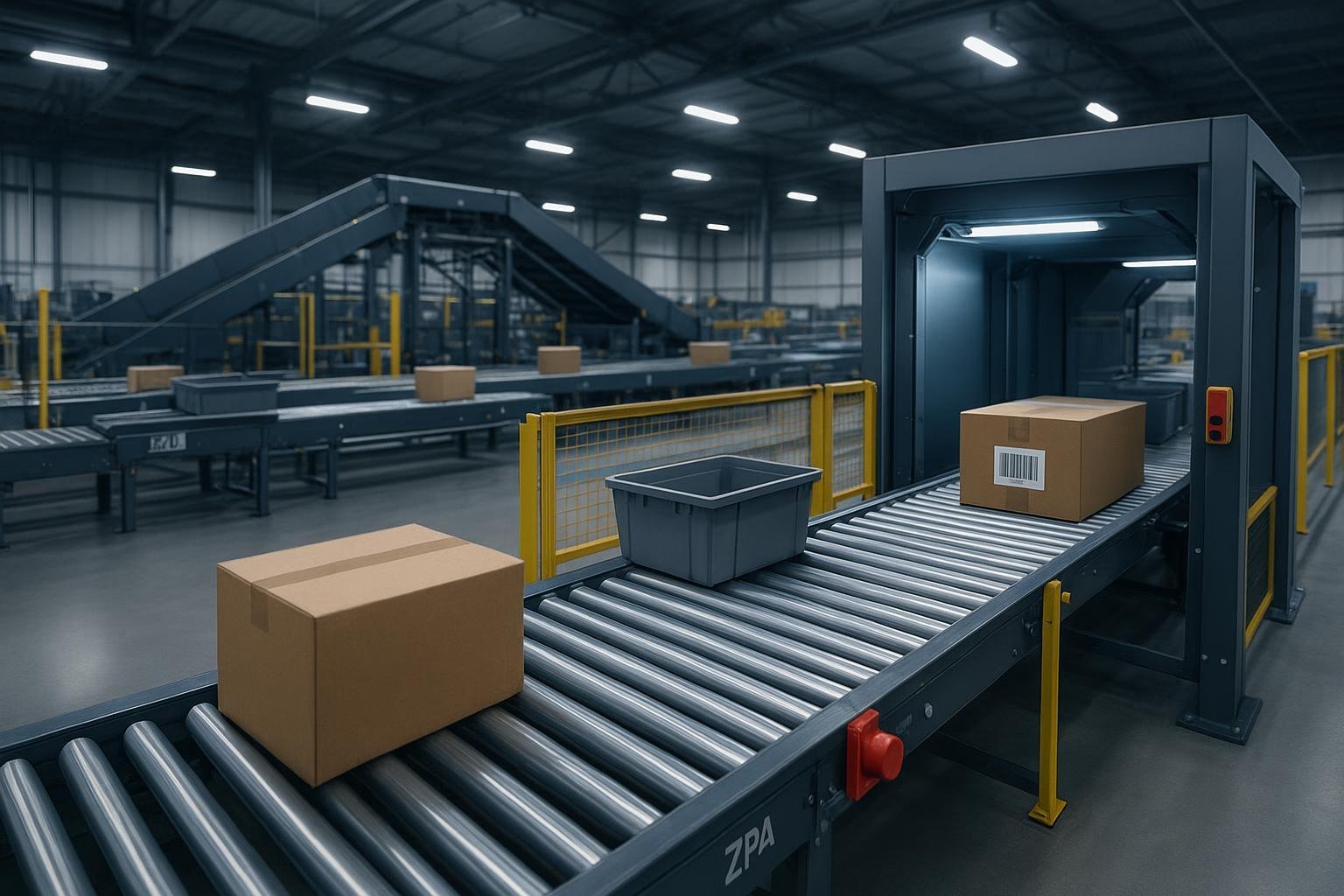
- What to decide: Use zero-pressure accumulation (ZPA) to avoid package-to-package contact at speed. ZPA divides conveyors into independently controlled zones, enabling accumulation without compressing products.
- Benchmarks: Motorized-roller platforms cite module speeds roughly 0.1–2.5 m/s at common load levels, suitable for high-speed merges and buffering when coordinated via zone controllers.
- Pros/cons: ZPA reduces damage and keeps flow stable, but adds sensors, controllers, and tuning. Contact accumulation is cheaper but risks scuffs, jams, and read errors at scanner tunnels.
- Evidence: Zone‑based accumulation and module-level speed ranges in Interroll platforms (Interroll MCP catalog via Ultimation); positioning notes on high‑speed accumulation from Daifuku (Daifuku accumulation overview).
- Sorter type suitability
- What to decide: Match sorter to SKU mix and gentle-handling needs. Cross-belt suits polybags and small cartons at high rates; shoe sorters excel at larger cartons with positive diverts; tilt-tray handles varied item geometry.
- Considerations: Numeric throughput for shoe/tilt-tray varies widely by model and pitch—obtain datasheets rather than relying on generic ranges. Cross-belt vendor literature shows 10,000+ items/hour potential.
- Evidence: Conceptual and portfolio references: Interroll sorter brochure; concept page for sliding shoe (Vanderlande POSISORTER).
- Singulation and gap control for scanners/dimensioners
- What to decide: Define minimum and nominal gaps for your scan tunnel, labeler, and scale at the target belt speed. Aim for stable gapping upstream to avoid choking the sorter.
- Ranges: Device specs influence allowable speeds and gaps. As a reference point, SICK’s ICD890 indicates transport speeds up to 4.8 m/s and a minimum object distance ≥50 mm (device-level capability, application-specific). Cognex vision tunnels support multi‑side reading with flexible gap handling; exact minimum gaps depend on configuration.
- Practical tip: Validate gap and skew tolerance during FAT/SAT with worst-case items (dark polybags, reflective film, bowed cartons).
- Evidence: SICK ICD890 datasheet; Cognex Modular Vision Tunnels.
Mechanical & components
- Conveyor drive and motorized roller choices
- What to decide: Choose between centralized drives (belts/narrow-belt) and decentralized 24/48V motorized rollers for ZPA. Decentralized drives simplify zone control and can reduce wiring and energy in stop‑start accumulation.
- Benchmarks: RollerDrive platforms commonly specify 0.1–2.5 m/s at around 50 kg loads per zone, with modular transfers and merges rated to hundreds of kilograms total module load.
- Integration: Specify BUS-capable controllers for diagnostics and tuneability; align control protocols with your PLC/WES.
- Evidence: Interroll MCP/HPP platform documentation summarizing zone speeds and modular capabilities (Interroll MCP catalog via Ultimation).
- Belt type and surface properties for parcels/crates
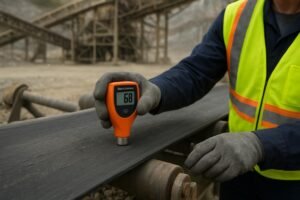
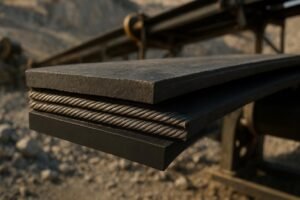
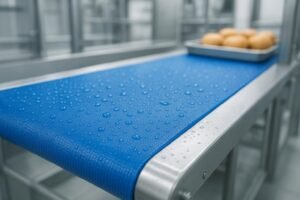
- What to decide: Select belts with permanently antistatic properties, suitable friction on the carry side, and low-noise construction on the pulley side. For crates/totes, ensure the cover resists abrasion and offers stable tracking on slider beds or carrying rollers.
- Benchmarks: Fabric belts with TPU/PVC covers and low-noise backings are common for unit handling. Habasit lists belts with low-noise pulley sides and permanent antistatic properties appropriate for parcels/totes.
- Evidence: Habasit fabric belts portfolio (properties overview).
- Idlers, pulleys, and lagging for energy and noise
- What to decide: On longer belt runs and return strands, choose low‑runout pulleys and lagging suited to your environment; evaluate UHMWPE vs. steel idlers where hygiene and corrosion resistance matter. In parcel settings, noise at merges and transfers often dominates perceived loudness.
- Evidence stance: We did not locate vendor-cited, parcel‑specific energy/noise deltas between idler materials or lagging types in this research round. Treat claims without citations skeptically and verify with measurements during commissioning.
- Practical tip: Include noise (dBA) measurements in FAT/SAT and require suppliers to state test conditions.
Safety & controls
- Safety and standards compliance (ASME/OSHA/ISO)
- What to decide: Bake compliance into specs and acceptance. Require adherence to ASME B20.1‑2024 for design, installation, operation, inspection, and maintenance. Ensure OSHA 29 CFR 1910.147 lockout/tagout (LOTO) energy control procedures are documented and trained, and machine guarding requirements per 1910.219 are met.
- Checklist highlights: emergency stop labeling and accessibility; dust hazard evaluation where applicable; documented definitions of “qualified person;” guarding of nip points and power transmission; validated safe torque off and emergency stop circuits targeting the required Performance Level (PLr) per ISO 13849.
- Evidence: ASME B20.1‑2024 overview (ANSI blog summary); OSHA LOTO overview (OSHA publication OSHA4407); ISO 13849 methodology summaries (Schmersal overview).
- Controls architecture (PLC zoning, safety relays, HMIs)
- What to decide: Define a zone strategy that isolates faults and keeps upstream accumulation stable. Use distributed I/O or zone controllers for fast response and reduced wiring.
- Benchmarks: RollerDrive + MultiControl architectures provide local logic for ZPA and report status upstream; PLC orchestrates merges/diverts and safety. Select HMIs that expose diagnostics, zone states, and quick MTTR workflows.
- Evidence: Interroll platform documentation on zone control and PLC coordination in the MCP catalog (Interroll MCP catalog via Ultimation).
Reliability, energy & integration
- Maintenance strategy and spares
- What to decide: Specify preventive maintenance intervals by component class (rollers, belts, bearings, drives), and stock spares for high‑risk wear items. Plan MTTR by designing for access: hinged guards, quick‑release belts, plug‑and‑play rollers.
- Evidence stance: Audited MTTR/MTBF figures vary by site. Request vendor case data and include mean time to repair targets in acceptance criteria.
- Practical tip: Build a fault code-to-action matrix into the HMI and WES so techs can resolve repeated issues quickly.
- Energy, noise, and facility electrics
- What to decide: Confirm available electrical capacity for peak loads, especially for sorter drives and dense scan tunnels. Consider decentralized drives with sleep modes in accumulation for energy savings. When you evaluate vendors for high-speed parcel conveyor selection, ask for measured kWh/parcel at comparable duty cycles and item mixes.
- Practical tip: Capture baseline kWh/parcel and dBA readings during ramp-up to inform continuous improvement. Some platforms market efficiency benefits, but site measurements are what count.
- Integration readiness (WMS/WES, scanners, scales)
- What to decide: Define data exchanges between WMS/WES and PLC (induction rules, exception handling, divert logic). Align scanner/dimensioner outputs with routing needs and ensure gap control upstream maintains read rates without starving the sorter. Clear integration specs are central to high-speed parcel conveyor selection because they govern real-world PPH and read rates.
- Evidence: Cognex and SICK documentation confirm multi-side reading and high transport speeds, but minimum gaps and skew tolerances are configuration dependent (Cognex Modular Vision Tunnels; SICK ICD890 datasheet).
Economics & scalability
- TCO and ROI framing
- What to decide: Evaluate lifecycle cost beyond capex: consumables (belts, rollers), energy, downtime, spares, and service. Model scenarios for 5–10 years against throughput growth.
- Practical tip: Compare ZPA motorized roller lines vs. centralized drives for your duty cycle; stop‑start accumulation may lower energy, while constant high-rate trunk lines may benefit from centralized efficiency.
- Include in RFQs: kWh/parcel baseline, expected belt life hours, roller MTBF assumptions, spare parts lists, and service response SLAs.
- Site constraints and future scalability
- What to decide: Map ceiling heights, column grids, egress, and mezzanine loads early. Favor modular platforms that can add induction lanes or divert points as volume grows.
- Also consider: aisle clearances for manual access, lift points for maintenance, and future mezzanine or cross‑dock interfaces.
A quick word on component sourcing
If you’re standardizing components for crates/totes and parcel lanes, focus on belts with permanent antistatic properties and low-noise backings, motorized rollers suited for your ZPA speeds, and pulleys/lagging that match your environment. Disclosure: BisonConvey is our product. Where relevant to heavy-duty belt and component selection for parcel/crate conveyors, you can review options and request application-driven quotations at بيسونكونفي. We recommend validating any component’s performance with your line speeds, product mix, and noise targets.
Practical next steps for high-speed parcel conveyor selection
- Establish your peak 15‑minute throughput and translate it into belt speeds and pitch.
- Define minimum/nominal gaps, singulation strategy, and scanner/dimensioner read goals.
- Choose ZPA vs. contact accumulation with a clear zoning plan and diagnostics.
- Bake ASME B20.1‑2024, OSHA LOTO, and ISO 13849 requirements into RFQs and FAT/SAT checklists.
- Specify maintenance access, spares, and MTTR targets in acceptance criteria.
- Confirm power availability, and instrument kWh/parcel and dBA during ramp-up.
- Run a joint design review with your sorter, scanner, and conveyor vendors to confirm gaps, merges, and data flows.
If you want a simple worksheet, build a one-pager that lists target speeds (m/s), pitch (mm), minimum gap (mm), expected PPH, scan tunnel read-rate targets, and safety validation steps. It keeps everyone honest—and your project on schedule.