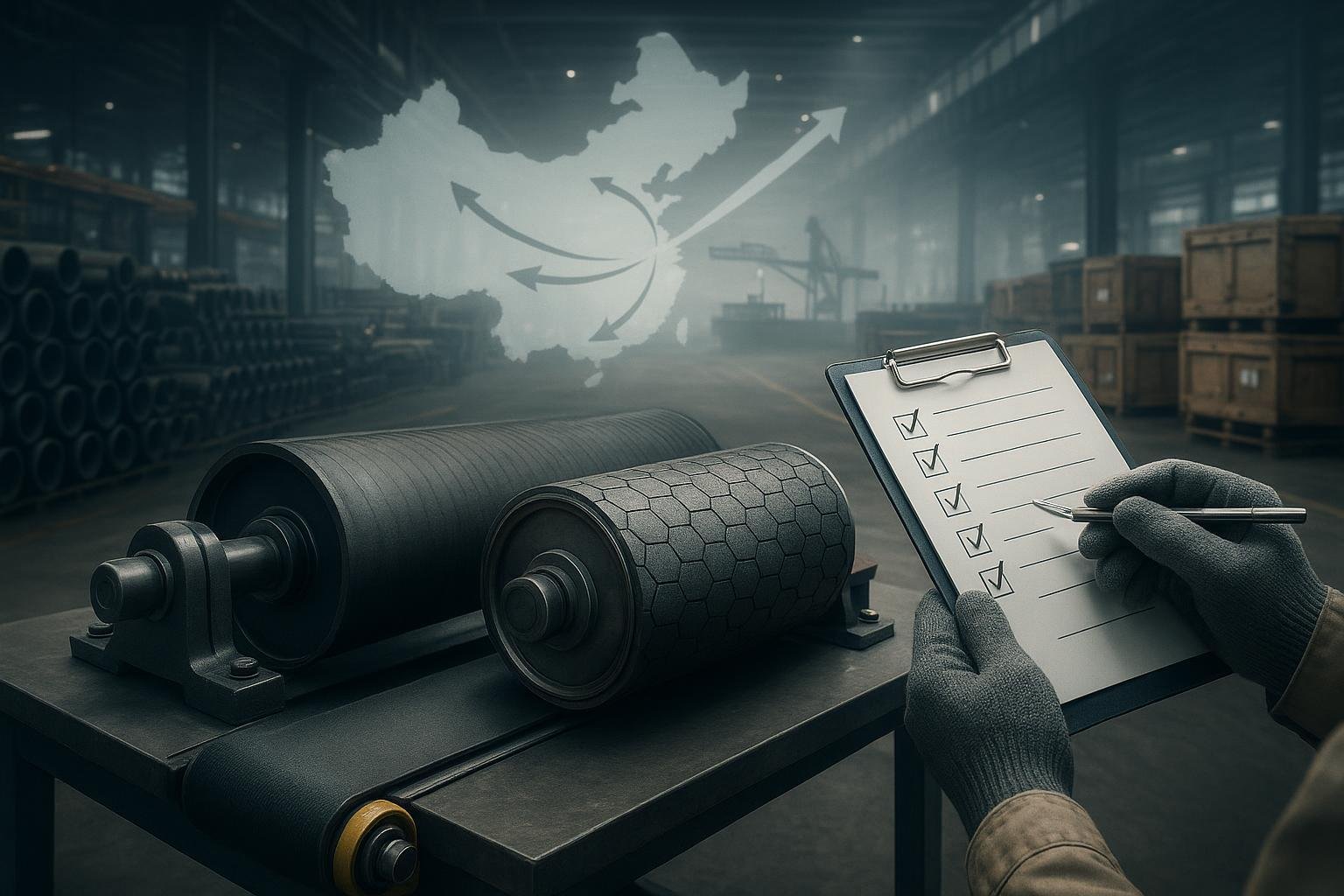
If you’re responsible for uptime and total cost in mining, ports, cement, steel, power, chemicals, or grain handling, this guide is for you. Below is a standards-first, operations-ready playbook for sourcing conveyor belts, idlers, pulleys, and related components from China without guesswork. You’ll find practical RFQ fields, factory audit tips, QC sampling and acceptance tests, plus logistics and Incoterms guidance—all written for practitioners, not theorists.
Quick checklist: 10 must-do actions before you place an order
Use this section to move fast and reduce risk while sourcing conveyor equipment in China.
- Confirm the exact standard for your item: ISO 14890 (textile belts) or ISO 15236 (steel cord), CEMA 502 (idlers), MSHA Part 14 (if underground coal), and align RFQ/PO to test clauses.
- Write a standards-first RFQ specifying belt designation (EP/NN or ST), cover grade/thickness, idler class/diameter/sealing, pulley lagging, tolerances, and acceptance documentation.
- Validate the supplier’s legal entity (Chinese business license), address, bank details, and certificate authenticity (e.g., ISO 9001 with the issuing body).
- Commission a factory audit (capacity, process control, traceability, calibration, export track record) before any mold/tooling or long-lead purchases.
- Build a QC plan with AQL sampling (critical/major/minor defect categories) across PPI, DUPRO, and PSI inspection gates.
- Tie payment milestones to inspections and document packs (CoC, MTRs, test reports). Hold final balance until acceptance criteria are met.
- Choose the right Incoterms and mode: FOB for non-containerized ocean; FCA/CIP for containerized when you want control; define delivery/risk precisely.
- Engineer crates and lashing for heavy/oversize items; confirm handling constraints with the forwarder and receiving site.
- For platform-based buys, mirror the RFQ/PO specs exactly in the online contract to strengthen payment protection.
- Plan spares and consumables (e.g., cleaner blades, fasteners, bearings) in the first shipment to protect commissioning.
The standards that keep you safe
Standards are your enforcement tools. They convert “good quality” into objective specs, test methods, and documents you can accept—or reject. Anchor your RFQ and PO to specific clauses, then ask for the matching test reports.
- Steel-cord belts: See ISO 15236-1 general requirements and referenced acceptance tests in the official text. Public copies of the 2016 edition are viewable via a standards library host: the ISO 15236-1:2016 PDF sample is available through iTeh.
- Textile (EP/NN) belts and AQL sampling previews are accessible on the ISO Online Browsing Platform, which provides official scopes and tables for ISO 14890 and ISO 2859-1.
- Idlers and material classification are covered by CEMA publications (dimensional classes and material codes). Underground coal belts in the U.S. must meet MSHA Part 14.
| Standard | What to specify or verify in RFQ/PO and acceptance |
|---|---|
| ISO 14890 (textile belts) | Carcass (e.g., EP 800/4), top/bottom covers (e.g., 6+3 mm), cover grade/abrasion limits, adhesion tests, tolerances, optional electrostatic properties; require matching test methods in reports. |
| ISO 15236 (steel cord) | ST rating (e.g., ST 2000), cord construction/spacing, min pulley diameters, splice method/efficiency, cord/bond and cover adhesion tests, dimensional checks; include type/acceptance test reports. |
| DIN 22102/22131 | If your plant uses DIN conventions, mirror the designation formats and mechanical requirements; align test methods with ISO where applicable and request prior type tests. |
| CEMA 502 (idlers) | CEMA class (B–F/G), trough angle, roll diameter/face width, TIR/runout, sealing/bearing life claims, noise; dimensional compliance and documentation. |
| ANSI/CEMA 550 | Bulk material classification code in design inputs; lets suppliers propose suitable cover grades, idler classes, and cleaners. |
| MSHA 30 CFR Part 14 | For U.S. underground mines, specify Part 14-approved belts and require approval markings and QA obligations in documentation. |
| ISO 2859-1 (AQL) | Inspection level (I/II/III), lot sizes, AQL values for critical/major/minor; state acceptance numbers by lot and link them to payment release. |
References for the above standards and rules:
- The ISO 15236-1:2016 general requirements are compiled in the publicly viewable sample PDF copy hosted by iTeh: see the ISO 15236-1:2016 document.
- The ISO Online Browsing Platform provides official scopes and tables for ISO 14890 and ISO 2859-1: consult the ISO OBP landing page for details.
- CEMA’s official listing for idler dimensions and selection is in CEMA Standard No. 502-2022.
- Underground belt approvals and test methods are codified in MSHA 30 CFR Part 14 (official CFR PDF).
External resources (authoritative):
- ISO 15236-1:2016 sample PDF (iTeh host): https://cdn.standards.iteh.ai/samples/70276/55a90805873b45ee8b1b03450f4bdb04/ISO-15236-1-2016.pdf
- ISO Online Browsing Platform: https://www.iso.org/obp/ui/
- CEMA 502 publication page: https://cemastore.com/product/cema-standard-502-pdf-bulk-material-belt-conveyor-troughing-return-idlers/
- MSHA 30 CFR Part 14 (official PDF): https://www.govinfo.gov/content/pkg/CFR-2022-title30-vol1/pdf/CFR-2022-title30-vol1-part14.pdf
Product decision matrix (without the jargon)
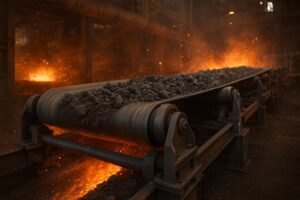
Think of your conveyor like a highway system. Textile EP/NN belts are the multi-lane city roads—versatile, easier to splice, and cost-effective for short to medium runs. Steel-cord belts are your interstates—high tension, long-distance, heavy-load routes where splice efficiency and cord alignment matter. Chevron and sidewall belts are the mountain passes—designed to climb with grip or carry at steep angles when flat belts would slip or spill. For idlers, your “roadbed” stiffness is defined by CEMA class and sealing; heavier classes and better sealing resist shock, dust, and water ingress. Pulleys are the intersections that must be round, balanced, and properly lagged so the “traffic” flows smoothly. Matching these pieces to the conveyed material’s abrasiveness and lump size (per CEMA material classification) prevents a thousand little problems later.
Sourcing conveyor equipment in China: the end-to-end playbook
Supplier discovery and shortlisting
Use multiple channels: trade platforms, industry directories, references from EPCs, and show lists from trade fairs. Confirm the Chinese business license details (registered name, scope, site address) and cross-check bank accounts and company chops. If you buy via a marketplace, consider using the platform’s payment protections for the first order.
For marketplace orders, understand how protections work. Under Trade Assurance, funds are held until shipment and quality match contract terms. Ensure your online order mirrors your technical RFQ/PO details to strengthen any claims. See Alibaba’s official overview of Trade Assurance for coverage and claims steps: https://buyer.alibaba.com/page/trade_Assurance.html
RFQ: what to include (and a neutral example)
Tie your RFQ to standards and acceptance tests so suppliers quote apples-to-apples. Include belt designation, cover grades and thickness, idler class/diameter/sealing, pulley lagging type/thickness, tolerances, documentation (CoC, MTRs, prior type tests), inspection scope/AQL, packing, and Incoterms.
Example RFQ snippet (illustrative only):
- Item 1: Textile conveyor belt, ISO 14890, EP 800/4, 1600 mm, 6+3 mm covers, abrasion spec per ISO method, antistatic per ISO 284 if available; acceptance tests: overall tensile, adhesion, abrasion; documentation: CoC + test reports.
- Item 2: Idlers per CEMA 502, Class D, 35° trough, 152 mm roll dia, labyrinth sealing, TIR/runout limits as stated; require dimensional inspection and bearing noise check.
- Item 3: Drive pulley with ceramic lagging, face width 1600 mm, balance/runout tolerance as quoted; lagging thickness 12 mm nominal; NDT on welds where applicable.
- QC plan: ISO 2859-1, General Level II; AQL 0.65 (critical), 1.0 (major), 2.5 (minor); PPI, DUPRO, and PSI with hold points.
- Logistics: FCA Shanghai, seaworthy crating, corrosion protection, center-of-gravity marked.
Suppliers capable of quoting these specs include established manufacturers such as BisonConvey. The example above is vendor-neutral; any qualified maker should respond to the same RFQ structure.
Quotation evaluation and scoring
Build a simple scoring sheet: mandatory compliance is pass/fail; everything else is scored (e.g., tighter abrasion limits, better sealing life documentation, shorter lead time with evidence). Normalize prices to Incoterms and delivery points for a clean comparison. If a quote includes alternatives, insist they reference the same standard/test clauses so you can compare meaningfully.
Factory audits: what to look for
Audit capacity and control points, not just certificates. Confirm mixing, calendaring, curing presses for belts; tube mills and dynamic balance for idlers; drum fabrication, lagging, and balance for pulleys. Review materials traceability, calibration records, nonconformance/CAPA tracking, and export references. Third parties can help—firms like SGS and Intertek offer manufacturing inspections and factory evaluations, which can be useful on your first order.
Contracting and risk controls
Write acceptance criteria into the PO. Link payment to inspections and documents, not to calendar dates alone. Define what triggers rework vs. rejection. Require prior type test evidence for the proposed belt construction or idler class. For platform orders, align the online contract fields with your PO terms so protections apply to the same deliverables.
QC plan: sampling and inspections
State inspection levels and AQL values so acceptance is objective. ISO 2859-1 uses lot size and your chosen AQLs to set sample sizes and acceptance numbers. If your team needs a quick primer on how AQL sampling works in practice, QIMA’s explainer outlines the concept and lookup approach: https://www.qima.com/aql-acceptable-quality-limit
Use three gates: PPI (pre-production) to lock specs and markings; DUPRO to catch drift on cover thickness, cord alignment, idler runout, and pulley lagging; and PSI to verify marking, dimensions, and crate integrity before shipment release.
Logistics and Incoterms (mode really matters)
Match the term to mode and control. The International Chamber of Commerce’s Incoterms 2020 overview explains each rule and risk transfer points: https://iccwbo.org/business-solutions/incoterms-rules/incoterms-2020/
- Containerized equipment: FCA/CIP often makes more sense than FOB/CIF because handoff is at the forwarder’s terminal, not ship’s rail; it reduces gray areas on who bears risk before loading.
- Breakbulk/oversize: FOB/CFR/CIF are appropriate for non-containerized loads; engineer crates and lifting points, and arrange pre-loading surveys for insurance.
Receipt and acceptance
On arrival, apply the same AQL rules and acceptance tests defined in your PO. Keep a clean NCR/CAPA loop and retain photos and measurements. If your tests match the clauses, arguments become much shorter and faster to resolve.
Testing and acceptance: what “good” looks like
Textile belts (ISO 14890). Expect tensile properties per ply and overall, adhesion between plies and to covers, and cover abrasion test results matching your RFQ class and method. If you specified antistatic per ISO 284, require that report in the same packet. Markings and dimensions should align with your tolerances.
Steel-cord belts (ISO 15236). Acceptance focuses on cord breaking strength, cord-to-coating bond (initial and aged, where specified), cover-core adhesion, and splice efficiency (often ≥ a defined percentage of the rated ST). Minimum pulley diameters and dimensional checks should be verified and documented before shipment.
Idlers (CEMA 502). Check roll diameter and face, shaft size, mounting dimensions, runout (TIR), and noise. Sealing/bearing life claims should be supported by supplier test data. Randomly sample and spin-test idlers at receipt; document anomalies with photos and TIR readings.
Pulleys. Verify face/runout, lagging thickness and integrity (rubber or ceramic), balance test records, and weld NDT results where applicable. Poor balance and out-of-round conditions show up quickly as belt tracking issues and vibration.
Underground mining belts (MSHA 30 CFR Part 14). If applicable, confirm the belt model has Part 14 approval and carries proper approval markings. The Part 14 rules define test methods and QA duties that your supplier must maintain.
Compliance notes: ethics and forced-labor diligence
Many corporate and national import policies require supply-chain diligence. At minimum, obtain supplier declarations on labor practices, map upstream raw materials where feasible, and include audit rights in your contracts. Keep records of factory identity, employee counts, payroll method, and raw-material purchase logs where your compliance team deems appropriate. Align these steps with your in-house legal guidance, and update them as regulations evolve.
FAQs
What HS codes apply to conveyor belts and components?
Most vulcanized rubber conveyor belts fall under HS 4010 at the 4-digit level; national tariff schedules further split to 6- or 8-digit codes. Confirm exact codes with your customs broker to match your belt construction and intended use. Idlers, pulleys, and structures are classified under different chapters; provide drawings and material specs to your broker for accurate assignment.
How do I prevent “spec drift” between RFQ and production?
Bind the exact standard clauses, tolerances, and test methods in your PO. Stage your inspections (PPI/DUPRO/PSI) and hold final payment until documentation matches. A short kick-off call with the factory’s QA lead—reviewing your RFQ spec line-by-line—reduces misunderstandings.
What should my Incoterms choice be for containerized equipment from China?
For containerized freight, FCA or CIP often provides clearer risk transfer points than FOB. Define the delivery location precisely (e.g., your forwarder’s named terminal) and state who books freight and insurance. For oversize/breakbulk, FOB/CFR/CIF remain common; document lifting plans and pre-loading surveys.
How many times should I mention standards in the RFQ?
Once per line item is fine if it’s explicit. Add a documentation section at the end of the RFQ/PO listing required test reports by standard and clause reference. Consistency beats repetition; avoid open-ended phrasing like “per manufacturer’s standard.”
Do I need MSHA approval if my mine is outside the U.S.?
Only if your jurisdiction requires it or your corporate standard mandates MSHA-equivalent performance. Otherwise, use your national mining authority’s applicable rules and the ISO/DIN belt standards that fit your application.
Can I rely solely on certificates like ISO 9001 for supplier selection?
No. Treat quality-system certificates as a starting point. Verify capacity, process control, traceability, and past performance. A targeted factory audit and a small pilot order will tell you more than a wall of certificates.
How do I structure payment to manage risk?
Use milestones: deposit after PPI approval; progress payment after DUPRO passes; balance after PSI, document review, and corrective actions cleared. For marketplace orders, ensure the online contract mirrors these triggers so payment protections apply.
How many suppliers should I shortlist for a new conveyor line?
Two to three qualified suppliers are typically enough to compare cost, lead time, and technical fit without spreading your attention too thin. Keep one as a contingency for spares or expansions to avoid single-source risk while sourcing conveyor equipment in China.
What’s a reasonable AQL for industrial conveyor components?
It depends on criticality. For safety- or function-critical features, set a stricter AQL (e.g., 0.65 for critical, 1.0 for major). For cosmetic issues on non-critical parts, a higher AQL (e.g., 2.5) may be acceptable. Make sure acceptance numbers are clear in your PO.
Should I ship belts and idlers in the same container?
Often yes, but separate and secure heavy items to prevent damage. Use blocking/bracing and keep belts protected from UV and oil/chemicals. Mark center-of-gravity and lifting points on heavy crates; share handling notes with the receiver.
Next steps: operationalize the playbook
Here’s the deal: your best outcomes come from clarity and enforcement. Start by converting this guide into a working RFQ template and QC plan. Shortlist two or three suppliers, run a focused factory audit, and align documentation and payment milestones to objective acceptance tests. With standards bound into the contract—and inspections tied to payment—you’ll protect uptime and budget while sourcing conveyor equipment in China with confidence.
External references used in this guide (each used once):
- ISO 15236-1:2016 sample PDF (iTeh host): https://cdn.standards.iteh.ai/samples/70276/55a90805873b45ee8b1b03450f4bdb04/ISO-15236-1-2016.pdf
- ISO Online Browsing Platform (ISO 14890, ISO 2859-1 scopes): https://www.iso.org/obp/ui/
- CEMA 502 publication page: https://cemastore.com/product/cema-standard-502-pdf-bulk-material-belt-conveyor-troughing-return-idlers/
- MSHA 30 CFR Part 14 official CFR PDF: https://www.govinfo.gov/content/pkg/CFR-2022-title30-vol1/pdf/CFR-2022-title30-vol1-part14.pdf
- ICC Incoterms 2020 overview: https://iccwbo.org/business-solutions/incoterms-rules/incoterms-2020/
- QIMA AQL explainer: https://www.qima.com/aql-acceptable-quality-limit
- Alibaba Trade Assurance overview: https://buyer.alibaba.com/page/trade_Assurance.html