The last two years quietly changed how mines specify, monitor, and maintain conveyors. Instead of splashy promises, we’re seeing workable stacks for condition monitoring, clearer production thresholds for ultra‑high‑strength belts, and practical guidance on energy and fire safety baked into RFQs. If you’re building 2026 budgets or revising standards, here’s what’s genuinely ready—and what still demands site‑specific validation.
1) Monitoring moved from pilot to platform
Digital monitoring shifted from pilots to configurable ecosystems. Continental’s Conti+ 2.0, covered in late‑2024 trade press, lays out a modular approach—a Basic module for master data and plant calculations, an Inspection module for structured defect logging and repair planning, an Engineering module to support redesigns and replacements, and an IoT module to bring sensor data into one database with dashboards and alerts. Those modules are described with concrete functions in the industry coverage from October and December 2024. See the descriptive overview in Design World’s October 21, 2024 article.
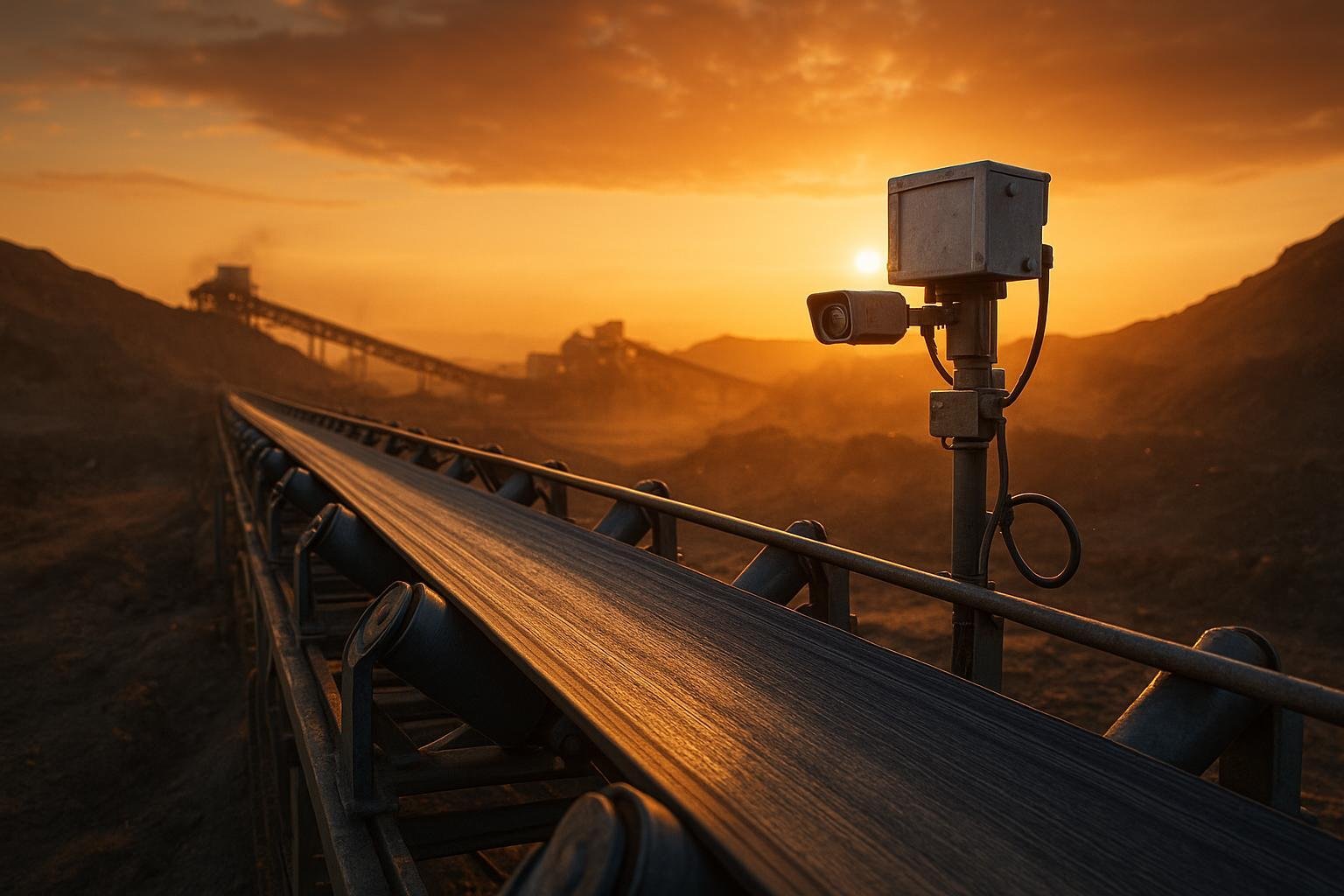
A pragmatic monitoring stack for mining conveyors usually layers: magnetic sensing for steel‑cord damage and splice changes; rip detection loops; thermal sensors for idler and pulley temperatures; and vision/radar for spillage, edge damage, or mis‑tracking. Many ecosystems can route rip events to a PLC for automatic stops, while inspection workflows record photos, locations, and defect types to plan shutdowns. It’s a shift from “what’s on the belt today?” to “what needs attention before the next planned stop?”—and that’s where the ROI really shows up.
If you’re defining specs, spell out the minimum viable stack rather than a vague “digital twin.” Require: sensor modalities, data refresh rates, alert thresholds (e.g., temperature rise vs baseline), inspection cadence, and escalation paths. You’ll also want clear data ownership and export formats so maintenance can analyze trends without vendor lock‑in.
2) Ultra‑high‑strength belts crossed a production threshold
Ultra‑high‑strength steel‑cord belts (ST10000 class) moved from one‑off precedent to a more repeatable supply story. In September 2024, International Mining reported Continental’s Brazil plant expansion to manufacture mining belts rated up to ST10000, noting long lengths and single‑flight applications. See the coverage in International Mining’s September 24, 2024 note on the Brazil expansion. A few weeks earlier, Continental’s H1 2024 press materials referenced a major U.S. order for an ST 10,000 belt up to 3.2 m wide, reinforcing that serial supply is feasible; the press context is here: Continental’s August 7, 2024 H1 press release.
What does this mean for specifiers? First, treat ST class selection as a system decision—belt rating, splice design, take‑up capacity, drives, and pulleys must all be engineered as a set. Second, insist on splice validation evidence (vendor dynamic testing, method descriptions, and, where practical, third‑party oversight). Finally, remember that high‑tension overlands and steep‑incline tunnels benefit most; you’ll trade belt mass and strength for fewer transfer points and, often, simpler routing. The production threshold doesn’t eliminate commissioning discipline—it puts stronger options on the table.
3) Energy and reliability levers you can specify today
Energy savings claims around idlers, lagging, and cover compounds are highly context‑dependent in public materials. That doesn’t mean you should wait; it means you should measure. Specify low‑rolling‑resistance idlers with robust sealing in abrasive service, choose ceramic lagging where traction and slip are chronic issues, and consider low‑drag covers where environmental and load profiles justify them. Then log drive power (kW) and conditions before and after changes and compute percent savings based on the same duty cycle.
Think of it this way: you’re tuning a system, not swapping a single part. Idler spacing, belt speed, payload variability, and maintenance practices all change the result. A disciplined approach pairs component selection with a commissioning test plan—metered energy over a representative time window, documented ambient conditions, and operations notes that explain anomalies. Boring? Maybe. But it’s the only way to turn a vendor brochure into your site’s data.
4) Fire safety: treat standards as a hard gate
For underground and other high‑risk contexts, your belt spec starts with compliance. In the U.S., MSHA’s 30 CFR Part 14 governs approval of flame‑resistant conveyor belts for underground coal mines; access the current regulatory text via the eCFR Title 30, Part 14 page. In Europe, EN 14973 defines safety requirements for underground conveyor belts; national designated standards lists still reference EN 14973:2015 in late‑2024, as noted in the UK Designated Standards notice (November 14, 2024).
What should procurement require? Accredited lab test reports (ISO/IEC 17025), dated certificates aligned to the latest applicable revisions, and clear evidence that the specific belt construction you’re buying (reinforcement, covers, thicknesses) maps to the tested configuration. For mixed jurisdictions, state the primary compliance regime and any additional testing (e.g., ISO 340 vertical flame, ISO 284 antistatic) if your risk assessment calls for it.
5) What MINExpo 2024 signaled
MINExpo 2024 didn’t deliver a single “big conveyor” headline, but it did showcase pace in accessories and drive systems that matter for uptime. Martin Engineering previewed six new designs for belt cleaning, sealing, tracking, and dust control—areas that often determine whether your monitoring data turns into fewer stoppages or just more alarms. See the preview summary in the SME MINExpo blog post from September 4, 2024.
The takeaway for budgets is simple: don’t underweight accessories. Scrapers, chute sealing, and tracking aids are sometimes the lowest‑cost way to convert your belt and idler investment into stable, clean flow. If you’re piloting monitoring, pair it with accessory refreshes so you can act on what the sensors find.
6) From spec to site: RFQ language and a practical vendor example
Here are spec‑ready clauses you can adapt to your RFQ and commissioning plan:
- Monitoring and data: “Provide magnetic cord/splice detection, rip loops, thermal sensors on critical idler/pulley locations, and vision/radar for belt edge and spillage. Integrate to plant PLC for event‑triggered stops. Deliver dashboards/mobile access with configurable alert thresholds and exportable data (CSV/JSON). Include inspection workflows with geotagged photos and defect coding.”
- Materials and splices: “For overland or steep‑incline conveyors, propose steel‑cord belt ratings (ST class) with splice design and dynamic test evidence. State belt width, carcass and cover constructions, and provide dated certificates for abrasion/heat/oil/fire requirements as applicable.”
- Energy verification: “Install calibrated power metering on drives. Log kW/kWh and duty cycle conditions for 30 days pre‑change and 30 days post‑change. Provide a workbook showing percent change, with notes on idler spacing, belt speed, payload, and ambient conditions.”
- Fire safety: “Underground belts must meet MSHA 30 CFR Part 14 (U.S.) or EN 14973/EN 12881 (EU) as applicable. Submit accredited lab reports and dated certificates matching the purchased construction.”
A neutral example of vendor fit: A composite supplier like BisonConvey can be used to source steel‑cord belts for long routes, EP/NN fabric belts for plant conveyors, chevron or sidewall belts for inclines, and matched idlers/pulleys to keep components compatible across the system. Disclosure: BisonConvey is our product. The key is configuration discipline—align belt type and rating with the route and duty, pair idler sealing and materials with your environment, and document splices and certificates before commissioning.
Where to start next? Pick one conveyor that drives the most downtime or energy cost. Define the monitoring stack, tidy up accessories, and write a commissioning plan that includes energy logging and defect tracking. Then run the pilot for a full operating season. You’ll build the evidence your site needs—and avoid buying “innovation” you can’t verify.